How to Freeze Fresh Uncooked Zucchini (And Actually Use It Later)

May 5, 2026
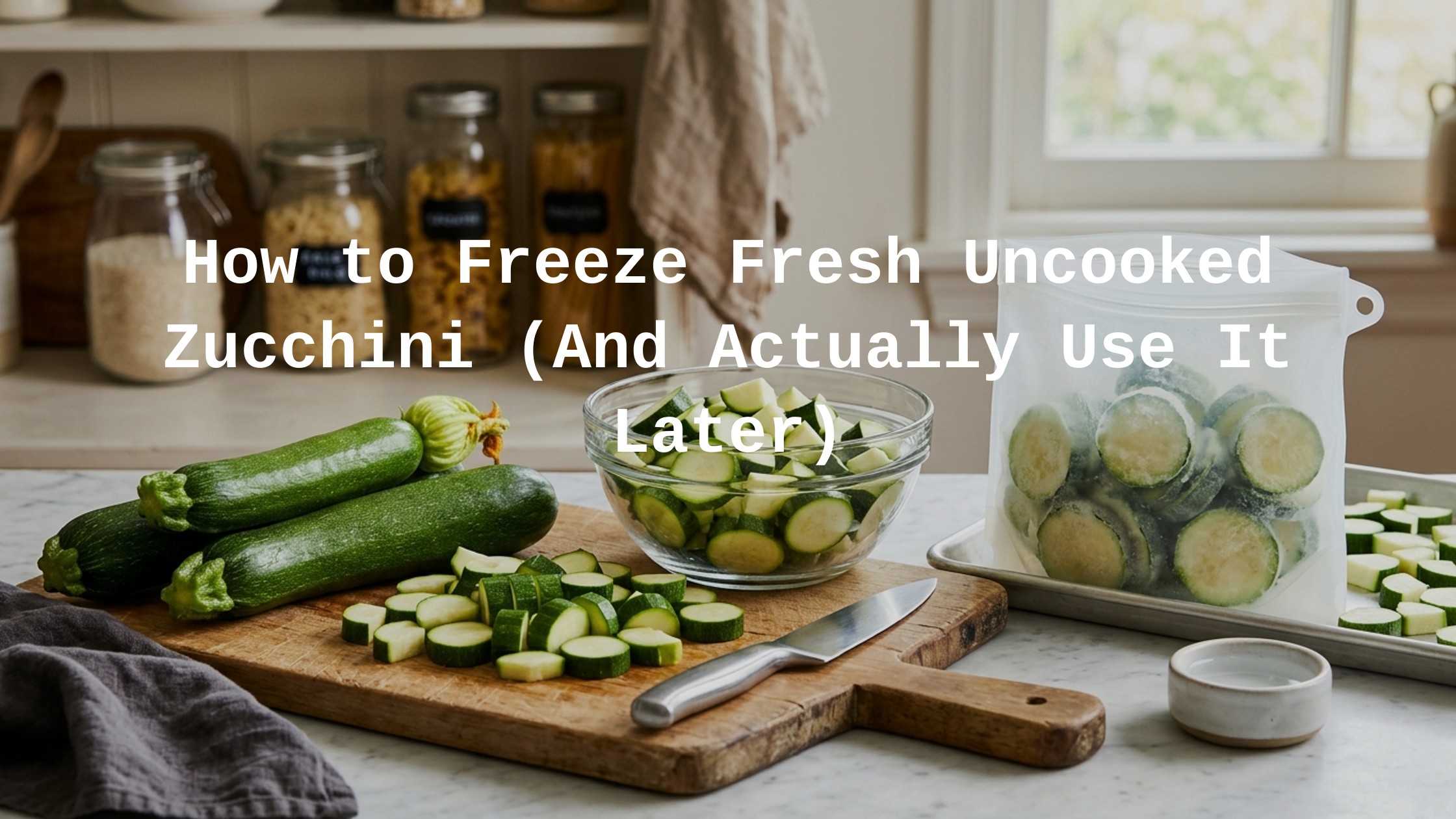
Fresh zucchini has a way of piling up fast — one week you’re watching it grow, and the next your kitchen counter is buried under more than you could ever eat in time. The good news? Your freezer is a surprisingly powerful tool for keeping that harvest from going to waste.
Freezing fresh uncooked zucchini is one of the easiest food preservation methods out there, but there are a few things worth knowing before you toss it straight into a bag. This guide walks you through everything — from prep and packaging to thawing, refreezing, and the best ways to cook with it afterward.
Yes, You Can Freeze Fresh Uncooked Zucchini — Here’s What to Know First
Yes, fresh zucchini freezes well — but the texture will change once it has been frozen and then thawed. That’s the most important thing to understand going in. If you set realistic expectations upfront, you’ll be much happier with the results.
Zucchini is made up of about 95% water, which means freezing and thawing high-water-content produce generally results in a mushy, watery texture. This isn’t a flaw in your technique — it’s just the nature of the vegetable. The key is using your frozen zucchini in recipes where a softer texture is either welcome or unnoticeable.
If you have more fresh zucchini than you can eat, freezing it is the fastest and easiest way to preserve it. You can freeze it sliced, diced, shredded, or even spiralized into noodles — and each form works best for different recipes. Understanding which form to choose before you freeze is what separates a bag of mush from a genuinely useful freezer staple.
Pro Tip: Think about how you’ll use your zucchini before you freeze it. Shred it if you bake a lot of zucchini bread or muffins. Slice or cube it if you cook a lot of soups and stews. Freezing with a purpose means you’ll actually use it later.
Can You Freeze Fresh Uncooked Zucchini? The Short Answer
Yes, you can freeze zucchini. You can freeze it as noodles, shreds, and slices for use in your kitchen all year long. Both raw and blanched zucchini can be frozen successfully, and the method you choose will depend on how long you want it to last and what you plan to cook.
It is not recommended to freeze an entire whole zucchini. However, you can freeze fresh zucchini slices and even chopped or shredded zucchini. Cutting it down first allows it to freeze and thaw more evenly, and makes portioning for recipes much easier.
One medium zucchini goes further than you might think. One medium zucchini ends up being about two cups of shredded zucchini — a common amount for most baking recipes. Portioning by the cup before freezing means you’ll always know exactly how much you’re grabbing from the freezer. You can also explore other food preservation methods if freezing doesn’t fit every item in your kitchen.
Does Freezing Change the Texture or Taste of Fresh Uncooked Zucchini?
Yes — and being honest about this upfront will save you a lot of disappointment. Blanched or not, your zucchini will thaw a little softer and more watery than fresh zucchini. This is normal and expected.
Zucchinis are over 90% water by weight. That means whether you slice them, dice them, or shred them, they will get soggy and limp when frozen. Do not expect zucchini slices to hold their shape when frozen.
As for taste, the flavor impact depends on how well you package the zucchini and whether you blanch it first. Blanching stops enzymes that lead to spoilage and cause the veggies to become mushy. It also enables the vegetables to retain their vibrant colors, their texture, and their nutrients. Skipping blanching is fine for short-term storage, but the flavor and color will degrade faster.
Key Insight: The texture change is not a sign that something went wrong. Frozen zucchini is simply best suited for cooked applications — soups, stews, baked goods, and sauces — rather than fresh salads or standalone sautéed sides.
Zucchini is also a heart-healthy vegetable packed with potassium and antioxidants, so even if the texture softens after freezing, the nutritional value remains largely intact when used in cooked dishes.
How to Freeze Fresh Uncooked Zucchini the Right Way
There are two main methods: shredded (no blanching required) and sliced or cubed (blanching recommended). Here’s how to do both properly.
Method 1: Freezing Shredded Zucchini (No Blanching Needed)
Grated zucchini is best for baking. You may freeze grated zucchini without blanching. You may absolutely put grated zucchini into a freezer bag or other freezer-safe containers, mark the amount to track volume, and freeze it.
- Wash and dry. Wash your zucchini squash with cool water just before you freeze it. You can gently scrub the skin with a vegetable brush, but avoid using soap or detergents to clean it.
- Trim and shred. Cut off both stem ends and shred using a box grater or food processor. Unless your zucchini sat in the garden half the summer and has very tough skin, you don’t need to worry about peeling it.
- Squeeze out moisture. Place shredded zucchini in a cheesecloth or kitchen towel, then twist and squeeze until no more water comes out. This step is especially important if you plan to use it in baked goods.
- Portion into bags. Before freezing the zucchini, measure it out in small portions and write it on the bag. Freezing in two-cup increments is a common amount for a recipe.
- Remove air and seal. Push out ALL of the air from the bag. Fold the flap over and seal the bag most of the way, then press out any remaining small bubbles and complete the seal.
- Label and freeze flat. Mark your freezer bags with your freeze date and the amount of zucchini in the bag. Lay flat in the freezer so bags stack neatly once solid.
Method 2: Freezing Sliced or Cubed Zucchini (Blanching Recommended)
Our favorite way to freeze zucchini that thaws well is to cut it crosswise into thick slices — at least 1/2-inch thick — which allows the skin around each slice to stay intact, helping protect its shape during blanching and freezing.
- Slice the zucchini. Cut into ½-inch rounds, cubes, or half-moons depending on your preferred use.
- Bring water to a boil. Start by bringing a large pot of water to a rapid boil. This is one of the few times you should NOT add salt to your blanching water. Salt draws out moisture and can make the zucchini mushy.
- Prepare an ice bath. While the water comes to a boil, prepare an ice bath by filling a large bowl with ice and cold water.
- Blanch for 3 minutes. Water blanch for 3 minutes. Plunge the basket of vegetables immediately into a large quantity of cold water (60°F or below). Drain and package, leaving ½ inch headspace.
- Dry thoroughly. Lay the zucchini out in a single layer on a lined baking sheet and blot with paper towels.
- Flash freeze. To flash-freeze, lay the zucchini slices in a single layer on a lined baking sheet. Freeze for a few hours or until solid, and then remove and add to a freezer-safe bag or container. Place immediately in the freezer.
- Label and store. Write the date and contents on each bag before sealing and returning to the freezer.
Important Note: The National Center for Home Food Preservation recommends blanching for both sliced and shredded zucchini. The NCHFP recommends blanching zucchini slices for 3 minutes and shredded zucchini for 2 minutes before freezing. Blanching is optional for shredded zucchini used in baking, but highly recommended for slices you want to hold up in cooked dishes.
How Long Can You Freeze Fresh Uncooked Zucchini?
How long your frozen zucchini lasts depends heavily on whether you blanched it and how well you sealed the packaging.
| Preparation Method | Estimated Freezer Life | Quality Notes |
|---|---|---|
| Unblanched (shredded or sliced) | 2–3 months | Best used quickly; color and flavor fade faster |
| Blanched slices or cubes | 6–12 months | Better color and flavor retention; firmer texture |
| Blanched shredded | 6–12 months | Ideal for baking; retains moisture and flavor longer |
| Vacuum-sealed (any method) | Up to 12 months | Best results; minimal freezer burn risk |
Unblanched zucchini will last in the freezer for about 3 months. Blanch your zucchini to preserve color and flavor for much longer. Blanched zucchini will last 6–12 months.
Much of this depends on how it is packaged. A general rule is the less air, the better. If the shredded zucchini is packaged well, it will easily last 8–10 months before the quality starts to diminish.
Zucchini will remain safe for a long period when kept continuously frozen at 0 degrees Fahrenheit. Safety and quality are two different things, though — safe to eat doesn’t always mean pleasant to eat. Aim to use it within the quality windows above for the best results in your recipes. For more on how to handle and transport frozen food safely, that guide covers the essentials.
How to Thaw Frozen Fresh Uncooked Zucchini
How you thaw your zucchini matters just as much as how you froze it. The right method depends on what you’re making.
Thawing in the Refrigerator (Best for Most Uses)
Remove how much is needed and let it thaw overnight in the refrigerator. This is the safest and most consistent method. It gives the zucchini time to release its excess moisture gradually, making it easier to drain before use.
Thawing on the Counter (Quick Method)
To use, remove bags from the freezer 3–4 hours ahead of time and leave to thaw in the kitchen sink. This works well when you’re short on time, but be sure to use the zucchini promptly once it’s thawed.
No Thawing Required (Soups and Stews)
If adding zucchini slices to soup, it is not necessary that you thaw it out before using. The freezing process pretty much “cooks” the zucchini enough so you just need to warm it through before enjoying. Toss it in (no need to thaw) at the end of your cooking time in soups, stews, and sauces.
Pro Tip: Thaw for baking, don’t thaw for cooking is a good rule of thumb. For soups and stews, add frozen zucchini directly to the pot near the end of cooking. For zucchini bread or muffins, thaw and squeeze out excess moisture first.
After Thawing: Handle the Moisture
Whether or not you will need to strain off the liquid is going to depend on your recipe and how you’re using it. For baked goods, always squeeze shredded zucchini in a clean kitchen towel to remove as much water as possible before adding it to batter. For casseroles and lasagna, it’s best to thaw the zucchini to drain off excess liquid before using it.
When thawing frozen zucchini, it’s essential to thaw it in the refrigerator or in cold water, rather than at room temperature. This helps to prevent the growth of bacteria and other microorganisms that can cause foodborne illness.
Can You Refreeze Fresh Uncooked Zucchini After Thawing?
Refreezing is technically possible but generally not recommended for zucchini. Because zucchini already has such a high water content, each freeze-thaw cycle further breaks down its cell structure, making it increasingly mushy and watery.
If you thawed zucchini in the refrigerator and it has only been there for one to two days, it is generally considered safe to refreeze — but the quality will be noticeably worse. When freezing and thawing zucchini, it’s essential to follow safe food handling practices to prevent the growth of bacteria and other microorganisms. Always wash your hands before and after handling zucchini, and make sure to clean and sanitize any utensils or equipment that come into contact with the vegetable.
Common Mistake: Freezing zucchini in one large bag and thawing the whole thing when you only need a cup. Portion your zucchini into recipe-sized bags before freezing so you only thaw exactly what you need — and never have to refreeze.
The best way to avoid the refreezing dilemma entirely is to freeze in small, single-use portions from the start. Freezing in two-cup increments is a common amount for a recipe. It can be hard to break apart once it’s frozen, so you don’t want to put a ton into one big bag.
How to Use Frozen Fresh Uncooked Zucchini (Best Uses After Freezing)
Frozen zucchini is best used in soups, stews, smoothies, and breads, where the texture of the zucchini isn’t the star of the show. Once you embrace that principle, you’ll find frozen zucchini incredibly versatile.
Best Uses for Frozen Sliced or Cubed Zucchini
- Soups and stews: If you are adding the zucchini to soup, stew, or chili, you can certainly add it frozen and it should be fine, thawing in the warm or hot liquid.
- Pasta sauces: If you’re making soup or spaghetti sauce, add frozen zucchini shreds towards the end of the cooking time. They do not need to be cooked for long, just long enough to heat through.
- Casseroles and lasagna: Thaw and drain first, then layer into your dish as you would fresh zucchini.
- Stir-fries: Add directly from frozen near the end of cooking for a quick veggie boost.
Best Uses for Frozen Shredded Zucchini
- Zucchini bread and muffins: In recipes, fresh and frozen zucchini are interchangeable. Just thaw and squeeze out moisture before adding to batter.
- Smoothies: Frozen zucchini adds almost no flavor or color to most smoothie recipes. It’s more like adding a handful of ice to a smoothie, only it has more vitamins and minerals than ice.
- Pancakes and fritters: Shredded frozen zucchini works beautifully in savory pancake or fritter batter after being thawed and drained.
- Quiche and egg dishes: Thaw, drain, and fold into egg-based recipes for added moisture and nutrition.
Important Note: Roasting frozen zucchini slices is not recommended — they’ll turn out watery and soft. Save roasting for fresh zucchini only. Frozen zucchini shines brightest in wet, cooked environments where some extra moisture is actually an asset.
Zucchini is also a great addition to whole plant-based meals, and frozen zucchini makes it even easier to incorporate more vegetables into everyday cooking year-round. You might also enjoy using it in recipes designed around brain-boosting foods, where zucchini’s nutrients complement a healthy diet beautifully.
Signs That Frozen Fresh Uncooked Zucchini Has Gone Bad
Frozen zucchini doesn’t spoil in the same way fresh produce does, but it can absolutely degrade in quality to the point where it’s no longer worth eating. Here’s what to look for:
| Warning Sign | What It Means | What to Do |
|---|---|---|
| Thick ice crystals covering the zucchini | Freezer burn from air exposure | Cut away affected areas; use in soups where texture doesn’t matter |
| Dull, grayish-brown color | Enzyme activity or prolonged storage | Discard if color is extreme; use quickly if mild |
| Off or sour smell after thawing | Spoilage or bacterial growth | Discard immediately |
| Slimy or disintegrated texture after thawing | Overly long storage or improper freezing | Discard; not safe or pleasant to use |
| Visible mold (rare but possible) | Moisture trapped before freezing, or thaw-refreeze cycle | Discard the entire bag |
Frozen zucchini will last for up to 3–4 months. After this time the zucchini will begin to get freezer burn and will lose a large majority of its flavor.
When freezing zucchini, it’s crucial to cool it to a safe temperature (below 40°F or 4°C) within two hours of blanching, to prevent bacterial growth. You should also label and date the containers, and store them in the freezer at 0°F (-18°C) or below to preserve the zucchini’s quality and freshness.
The single best defense against spoilage is proper packaging. Use the right packaging materials, such as freezer-safe bags or containers, to prevent freezer burn and other forms of spoilage. And always label with the date — it’s easy to forget when something went into the freezer, and that date is your best guide for when to use it up.
Understanding how to preserve food well connects to broader healthy eating habits. If you’re interested in how diet affects your health, you might find value in reading about nutrients and foods that support cancer prevention or foods that support liver health — zucchini fits into both categories.
Frequently Asked Questions
Can you freeze zucchini without blanching it first?
Yes, you can freeze zucchini without blanching it. However, unblanched zucchini degrades faster and is best used within 2–3 months. Blanching extends quality to 6–12 months and helps preserve color and flavor.
Do you need to peel zucchini before freezing?
No, there’s no need to peel your zucchini. The skin of zucchini is perfectly edible and contains a high concentration of fiber and nutrients you’d be missing out on by peeling it off.
Can you freeze zucchini noodles (zoodles)?
Frozen zucchini noodles don’t work well as a substitute for spaghetti or other pasta dishes because they do come out quite soft and watery, but they are great in soups. If you plan to use them as a pasta substitute, make them fresh instead.
Can you freeze cooked zucchini?
Yes, you can freeze cooked zucchini but the texture will be different than when you cook and eat the zucchini fresh. However, frozen cooked zucchini is great in casseroles, soups, and other dishes.
How do you know how much frozen zucchini to thaw?
The easiest solution is to freeze in pre-measured portions. Freeze shredded zucchini in pre-measured portions equivalent to the recipes you commonly use. For example, if your zucchini cheese bread recipe calls for 1½ cups shredded zucchini, mark the bag with 1½ cups and measure that much into it.
Why is my zucchini so watery after thawing?
This is completely normal. If watery when thawed, discard the liquid before using the zucchini. For baking, squeeze out as much liquid as possible using a clean kitchen towel before adding it to your batter.
Can you add frozen zucchini directly to recipes without thawing?
It’s best added to baked goods, soups, stews, chili, sauces, lasagna, quiche, or similar applications. There is no need to completely defrost or fully cook frozen zucchini before adding it to a recipe — especially for liquid-based dishes like soups and stews.
Freezing zucchini is one of those kitchen skills that pays off all year long. Whether you’re working through a garden surplus or just making the most of a good sale at the market, a well-stocked bag of frozen zucchini is a genuinely useful ingredient. Prep it right, store it well, and cook it in the right dishes — and you’ll wonder why you ever let a single zucchini go to waste. For more smart food storage and preservation ideas, explore what makes a food convenient and how to build a smarter, more flexible kitchen pantry.