
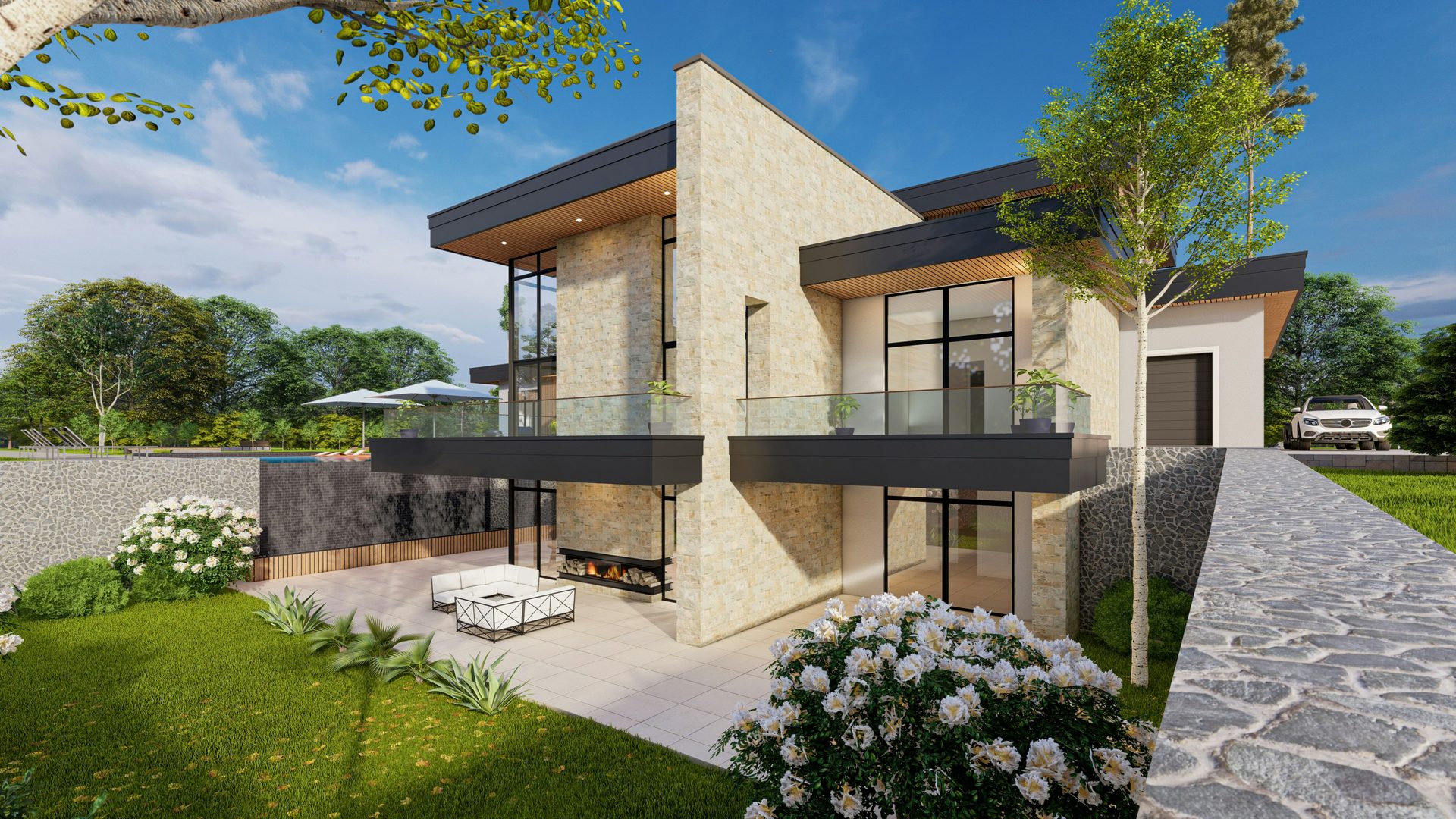
Building a house in Johannesburg gives you something that buying an existing property simply cannot — a home designed exactly the way you want it, with modern materials, no previous owner’s wear and tear, and no transfer duty to pay. But before you break ground, you need a clear picture of what the entire process will actually cost you.
Johannesburg sits in Gauteng, South Africa’s economic heartland, which means construction costs here are among the highest in the country. Whether you’re planning a modest starter home or a spacious family residence, this guide breaks down every major cost you’ll face — from the land itself to the last coat of paint — so you can budget with confidence.
Average Cost to Build a House in Johannesburg
In Johannesburg, the average building cost ranges from R10,000 to R20,000 per square metre, with Gauteng province as a whole averaging R13,330 per square metre. That figure places Johannesburg firmly in the upper tier of South African construction markets.
To put that into practical terms: a standard 146 m² home in Gauteng costs about R1,945,000 to build, while a smaller 90 m² home comes in at around R1,200,000. At the other end of the scale, luxury homes in Johannesburg can cost over R20,000 per square metre, meaning a 250 m² luxury home could run upwards of R5 million.
It’s worth noting that these figures cover construction costs only. Land, professional fees, permits, and connection charges all sit on top of that number — and they add up quickly.
Key Insight: According to procompare.co.za, Africa is projected to have the highest construction cost inflation globally — with South Africa forecast at 5.7% in 2024 and 5.9% in 2025. Always build a contingency buffer into your budget from day one.
Here is a quick summary of average total build costs (construction only, excluding land) at the Gauteng average rate of R13,330/m²:
| Home Size | Build Type | Estimated Total Cost |
|---|---|---|
| 90 m² | Entry-level / small home | ~R1,200,000 |
| 146 m² | Standard 3-bedroom | ~R1,945,000 |
| 200 m² | Mid-range family home | ~R2,666,000 |
| 250 m² | Large / luxury home | R5,000,000+ |
Cost to Build a House Per Square Foot in Johannesburg
A standard 3-bedroom house in Johannesburg costs between R7,000 and R15,000 per square metre, depending on specifications and location. The wide range reflects how dramatically finish quality and design complexity affect the final price.
For reference, building a house in South Africa starts at R6,500 per square metre for a small economic home, while higher-end homes cost upwards of R20,000 per square metre. At the very top of the market, high-end luxury homes can cost R20,000 to R30,000 per m², and super-luxury properties can command rates as high as R61,000 to R75,000 per m².
In square foot terms (1 m² ≈ 10.76 sq ft), the Johannesburg mid-range rate of R13,330/m² translates to roughly R1,239 per square foot. Here is how the per-square-metre tiers break down:
| Build Tier | Cost per m² | Typical Finishes |
|---|---|---|
| Entry-level / economic | R6,500 – R9,000 | Basic, functional finishes |
| Standard mid-range | R10,000 – R15,000 | Good quality, practical design |
| High-end | R15,000 – R20,000 | Premium materials, custom features |
| Luxury / super-luxury | R20,000 – R75,000+ | Bespoke design, top-tier finishes |
Structures with identical square meterage can differ in cost by over 40% due to complexity. A more intricate house design can cost 18% more than a simpler one, and that difference can reach 30% when factoring in high-end finishes. This is why getting a detailed quote — not just a per-m² estimate — matters so much before you commit to a budget.
Pro Tip: Engage a registered quantity surveyor early. Generic per-square-metre rates are insufficient for definitive project budgeting, making the engagement of a registered Quantity Surveyor essential to develop a detailed Bill of Quantities specific to your design, location, and specifications.
Cost Breakdown: What You’re Actually Paying For in Johannesburg
The headline per-m² figure covers the core construction cost, but your total project budget has several distinct components. Understanding each one helps you avoid nasty surprises mid-build.
Materials (40–60% of total budget)
Materials represent the single largest expense, constituting 40% to 60% of the total budget. The prices for basic building materials are subject to constant inflationary pressure. Steel, timber, and concrete prices have fluctuated due to supply chain issues, which makes early procurement planning a smart move. Key material cost indicators in Johannesburg include:
- Foundation and core elements: R7,000 to R15,000 per m²
- Roofing: R500 to R1,000 per m²
- Brickwork and plastering: R500 to R800 and R80 to R150 per m², respectively
Labour (25–30% of total budget)
The cost per square metre usually includes labour costs, which typically account for 25–30% of total building costs. Specialised rooms cost more: bathroom labour fees range from R9,000 to R13,000 for basic installations, R13,000 to R17,000 for medium-scale bathrooms, and up to R25,000 for high-end luxury options. Kitchen labour costs range from R45,000 to R90,000, with high-end kitchens reaching up to R150,000.
Professional Fees
Professionals involved in construction include the quantity surveyor, architect, various engineers, and geologists. Estimated fees include: architect up to 8% of construction cost, land surveyor up to 5%, structural engineer 2%, and quantity surveyor up to 4%.
Permits and Regulatory Compliance
Building permit costs in South Africa typically range from 1% to 5% of the total construction cost. For a 300 m² house, this could mean R50,000 to R250,000 for permits and approvals. It’s crucial to factor these costs in early — failing to obtain proper permits can result in fines or site closures.
Contingency Fund
The widely advised allocation of 10% to 15% of the total construction cost for a contingency fund should be viewed not as a provision for minor issues, but as an essential buffer against systemic cost escalation. Failure to incorporate this buffer represents a significant strategic oversight that can jeopardize project completion.
Additional Features
If you’re planning extras, budget accordingly. The cost to build a swimming pool ranges from R60,000 to R120,000, depending on the size. Bathroom updates cost between R15,000 and R55,000, and kitchen renovations range from R50,000 to R150,000.
Cost of Land in Johannesburg
Before you can build, you need a plot — and in Johannesburg, land costs vary dramatically depending on the suburb and the size of the stand. The city’s diverse neighbourhoods mean you can pay vastly different amounts for land just a few kilometres apart.
As of September 2025, Johannesburg’s property market shows average prices per square metre ranging from ZAR 10,100 for houses to ZAR 15,000 for apartments. However, land prices in premium areas are considerably higher. The most expensive areas centre around Sandton’s business district, where properties command ZAR 25,000 to ZAR 30,000 per square metre. Houghton remains Johannesburg’s most prestigious residential area, with heritage homes reaching ZAR 33,000 per square metre.
As of September 2025, the average house price in Johannesburg stands at approximately ZAR 1.5 million, making it one of South Africa’s most accessible major metropolitan property markets. For raw land (vacant plots), prices vary by area:
| Area / Suburb Type | Approx. Land Cost per m² | Notes |
|---|---|---|
| Affordable outer suburbs | R1,000 – R3,000/m² | Further from CBD, good for larger plots |
| Mid-range suburbs (e.g. Fourways, Randburg) | R3,000 – R8,000/m² | Good infrastructure, family-friendly |
| Premium suburbs (e.g. Bryanston, Midrand) | R8,000 – R15,000/m² | Established areas, high demand |
| Luxury nodes (e.g. Sandton, Houghton) | R25,000 – R33,000/m² | Business district proximity, prestige |
Major cities like Johannesburg, Cape Town, and Durban have higher building costs due to higher land prices and increased demand for skilled labour. More stringent building regulations in urban areas also contribute to higher costs. When you’re selecting a plot, also factor in site preparation: issues like ground blockage, existing structures, underground utilities, uneven terrain, underground pipes, and poor soil will all affect your budget. A problematic site might need demolition, remediation, and site clearance.
Important Note: Hidden costs like transfer duties, connection fees, and clearance certificates should be factored in when calculating the total cost of building a house in South Africa. These are easy to overlook but can add tens of thousands of rands to your total outlay.
Factors That Affect Building Costs in Johannesburg
No two building projects in Johannesburg cost the same. Several variables push your budget up or down significantly, and understanding them helps you make smarter decisions before and during construction.
Location Within the City
Construction prices in Johannesburg differ based on location. Urban areas often have higher costs due to pricier land and labour. Building in Sandton or Rosebank will cost more than building in Roodepoort or Soweto, even for the same house design.
Design Complexity and House Type
A complex house plan demands more labour, materials, and time. For example, a double-storey home costs more than a single-storey one, even when they’re the same size. Double-storey houses cost 10–15% more than single-storey homes, and in Gauteng for 2026, double-storey houses range from R16,500 to R17,250 per square metre.
Material Quality and Finish Level
The single greatest variable influencing the per-square-metre rate is the quality of materials and finishes selected. Choosing imported tiles and custom joinery over standard local materials can add 20–30% to your total cost. Choosing lower-cost materials like wood or concrete blocks can reduce expenses without sacrificing structural integrity.
Labour Market Conditions
The construction industry faces skilled labour shortages, affecting project costs. In a city as active as Johannesburg, competition for experienced tradespeople is fierce, particularly for electrical work, plumbing, and tiling. Delays don’t just waste time — unexpected construction delays lead to higher rates for labourers, contractors, and hired equipment.
Sustainable Building Practices
Sustainable building materials are becoming popular, but often cost more. That said, features like solar panels, rainwater harvesting, and energy-efficient insulation can reduce long-term running costs considerably — the premium placed on properties with solar, inverter, and water backup has increased investor activity and buyer demand in Johannesburg.
Economic Conditions and Inflation
The local economy will show on your balance sheet. Currency fluctuation, supply and demand issues, and inflation all influence construction costs in South Africa. The total construction input price index rose by 7.8% annually in January 2026, which is a significant cost pressure for anyone budgeting a build in the current environment. You can learn more about how housing costs vary in other major cities by checking out apartment costs in Miami or what renters pay in San Francisco for a global perspective.
Building vs. Buying a House in Johannesburg
One of the biggest financial decisions you’ll face is whether to build from scratch or purchase an existing home. Both paths have genuine advantages, and the right choice depends on your priorities, timeline, and budget flexibility.
The Upfront Cost Reality
Building a new home typically costs between 20% and 30% more upfront than buying an equivalent pre-owned house. In Johannesburg specifically, the buying price is around R1,500,000 versus a building cost of R2,250,000 — and while buying is cheaper at the outset, building offers significant advantages.
Transfer Duty Savings
This premium is often offset by long-term benefits such as the absence of transfer duties, reduced initial maintenance, and the ability to customize the property to exact specifications. Transfer duty on a R1.5 million existing home in South Africa can run into tens of thousands of rands — a saving you keep entirely when building new.
Financing Your Build
A building loan is similar to a home loan, with one major difference: the bank does not pay out the loan all at once, but rather in stages — paying out a portion each time a phase of construction is completed. For all new dwellings, the building contractor must be registered with the National Home Builders Registration Council (NHBRC), which is a non-negotiable requirement for most lenders.
| Factor | Building New | Buying Existing |
|---|---|---|
| Upfront cost | Higher (R2.25M+ typical) | Lower (~R1.5M average) |
| Transfer duty | None | Applicable |
| Customisation | Full control | Limited |
| Maintenance (first years) | Very low | Possible repairs needed |
| Timeline | 12–24 months typically | Immediate occupation |
| Technology integration | Built-in from the start | Retrofit required |
If speed of occupation is your priority, buying wins hands down. But if you want a home tailored to your lifestyle with modern energy features built in, building in Johannesburg remains a compelling long-term investment. For a different perspective on housing costs in other markets, see apartment prices in Washington DC or explore what renters pay in Manhattan.
How to Save Money When Building a House in Johannesburg
Building in Johannesburg doesn’t have to stretch your budget to breaking point. With careful planning and a few strategic decisions, you can bring costs down meaningfully without compromising on quality where it counts.
1. Keep Your Design Simple
Design complexity is one of the biggest cost drivers. Simplified designs and cost-effective materials can reduce costs to R6,000–R10,000 per square metre — but balance cost-saving measures with quality and durability for best results. Avoiding unnecessary curves, angles, and multi-level structures can save you 15–20% on construction costs.
2. Choose the Right Plot
Choosing a smaller plot can lead to significant savings, as it requires less material and labour. Also avoid plots with difficult terrain, poor soil conditions, or existing structures that need demolition — site preparation costs can escalate quickly.
3. Hire an NHBRC-Registered Contractor
The National Home Builders Registration Council sets quality standards for South Africa’s home building industry, which directly affects construction costs and ensures consumer protection. All builders must follow NHBRC rules. Using a registered contractor also protects your building loan eligibility and gives you recourse if workmanship falls short.
4. Phase Your Build Strategically
You don’t have to build everything at once. Consider starting with the core structure and essential rooms, then adding features like a pool, entertainment area, or additional bathroom in a second phase once funds allow. The cost to build a swimming pool ranges from R60,000 to R120,000 — that’s a significant saving to defer if cash flow is tight.
5. Source Materials Competitively
Supplier websites like BuildIt, Brick Warehouse, BUCO, and AfriSam provide calculators that offer an estimate of your building material costs. Getting multiple quotes and comparing prices across suppliers — especially for high-volume items like bricks, cement, and roofing sheets — can trim your materials bill considerably. You might also consider the cost efficiencies of prefabricated structures for outbuildings or auxiliary spaces on your property.
6. Build a Realistic Contingency Fund
This sounds counterintuitive as a money-saving tip, but projects that run out of contingency funds often face costly delays, rushed decisions, and substandard substitutions. As a rule, set aside a budget of 10% to 15% of the total construction cost for unexpected developments. Having that buffer means you can handle surprises without derailing the entire project.
7. Consider Sustainable Features Early
Installing solar panels, water-saving systems, and energy-efficient insulation during construction is far cheaper than retrofitting later. These features also reduce monthly utility costs and increase your property’s resale value — a meaningful long-term financial return in Johannesburg’s competitive market.
Common Mistake: Many first-time builders focus entirely on the per-m² construction rate and forget to budget for professional fees, permits, connection charges, and contingency. These “additional” costs can easily add R300,000 to R500,000 on top of a mid-range build — so account for them from the very beginning.
Building a house in Johannesburg is a significant financial undertaking, but it’s one that rewards careful planning. By understanding the true cost breakdown — from land and construction through to professional fees and contingency — you put yourself in the best possible position to bring your project in on time and on budget. Whether you’re comparing options across South Africa or evaluating housing costs in other cities like Seattle or Phoenix, the fundamentals of smart budgeting remain the same: know your numbers before you commit.