How Much Does It Cost to Build a House in Charlotte, NC?

October 21, 2026
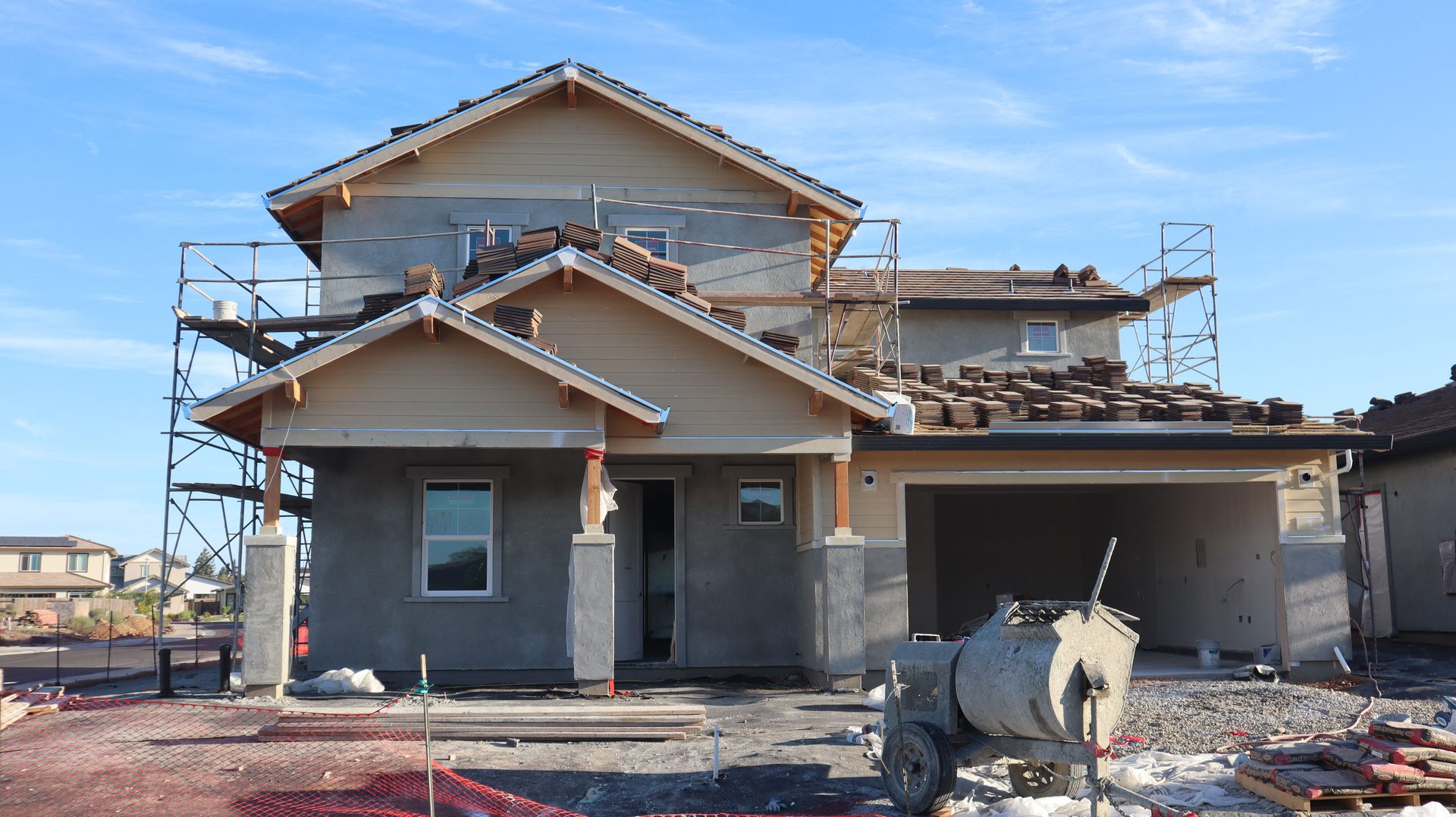
Building a house in Charlotte, NC puts you in one of the fastest-growing cities in the Southeast — but it also means navigating a construction market where costs vary dramatically based on where you build, what you build, and who you hire to build it.
Whether you’re pricing a production-style starter home in Steele Creek or a fully custom build in Myers Park, knowing what drives the numbers before you break ground can save you tens of thousands of dollars. This guide walks you through every major cost category so you can budget with confidence.
Average Cost to Build a House in Charlotte, NC
The cost to build a house in Charlotte, North Carolina averages around $372,692, but it can range from $263,000 to $500,666. That’s a wide spread, and for good reason — the Queen City’s construction market covers everything from modest production homes to multi-million-dollar custom estates.
Building in Charlotte is more expensive than in other parts of the state, with the exception of Raleigh. Urban areas tend to be in higher demand, and land and labor costs are higher. If you’re comparing Charlotte to a smaller North Carolina city, expect to pay a meaningful premium.
For custom luxury builds, the numbers climb significantly. A luxury custom home in Charlotte, North Carolina typically costs between $600 and $1,200 per square foot. At the very top end of the market, the cost of a luxury custom home in Charlotte typically ranges from $1,500,000 to $2,500,000, with size and features impacting the final price.
Key Insight: The “average” build cost in Charlotte covers a huge range of home types. A production home on a flat suburban lot and a custom home in Myers Park are both included in that average — always anchor your budget to your specific build type and neighborhood.
It’s also worth noting that building costs are 7% above the national average in the City of Charlotte, North Carolina. Budget accordingly if you’re using national cost estimators as a starting point.
Cost to Build a House Per Square Foot in Charlotte, NC
The cost to build a house in Charlotte, North Carolina ranges from $120 to $220 per square foot depending on the grade of construction you choose, not including the cost of sitework or land. Here’s how that breaks down by finish level:
| Construction Grade | Cost Per Square Foot | Best For |
|---|---|---|
| Standard | $120 – $140/sq ft | Entry-level production homes |
| Premium | $140 – $180/sq ft | Mid-range homes with upgrades |
| Luxury (production) | $180 – $220/sq ft | High-finish production builds |
| Semi-custom / mid-range | $200 – $300/sq ft | Custom homes with popular upgrades |
| True custom | $350 – $600/sq ft | Fully custom Charlotte metro builds |
| Luxury custom (premium neighborhoods) | $600 – $1,200/sq ft | Myers Park, Eastover, SouthPark |
The typical range for vertical construction on a true custom home in Charlotte, NC in 2026 is $350 to $600 per square foot, exclusive of land and site work. Location within the metro matters enormously: suburban builds in Ballantyne, Highland Creek, or Steele Creek tend to settle in the $350 to $475 range with a comfortable but not luxury finish level.
The median home size in Charlotte, North Carolina is about 1,700 square feet, so if you choose to build a home that falls within the median size, you should expect to spend about $262,500. For a more typical American home footprint, the average home in the U.S. today is 2,200 to 2,500 square feet and has three bedrooms.
Pro Tip: Per-square-foot estimates exclude land and site work — two costs that can add $25,000 to $250,000+ in Charlotte depending on your lot. Always get a parcel-level budget before committing to a build.
Cost Breakdown: What You’re Actually Paying For in Charlotte, NC
Your total build cost splits into two broad categories: hard costs (the physical structure) and soft costs (everything else). New home construction pricing is dependent on hard and soft costs. Anything related to building the physical structure of the house itself — such as framing, foundation, plumbing, roofing, and flooring — is categorized as hard costs. Everything else, such as land, architecture, design, builder fees, and permits, falls under soft costs.
For a custom Charlotte build, here’s how hard costs typically distribute across trades, according to CDG Carolinas:
- Foundation and slab: 8 to 12 percent of hard costs
- Framing, sheathing, and roof decking: 14 to 18 percent
- Roofing, windows, and exterior cladding: 12 to 16 percent
- Plumbing, HVAC, and electrical rough-in plus fixtures: 18 to 24 percent
- Interior finishes — drywall, paint, flooring, trim, tile, cabinetry, and countertops — are the largest single bucket at 22 to 30 percent of hard costs
On the soft cost side, here are the key line items to budget for:
| Soft Cost Item | Estimated Cost |
|---|---|
| Architect fees | $16,000 – $48,000 (or 10–15% of construction cost) |
| Draftsperson / house plans | $817 – $2,682 |
| Building permit (Mecklenburg County) | ~$1,600 average |
| Sewer and water inspections | ~$5,000 |
| Impact fees | ~$2,000 |
| Land survey | $400 – $1,800 |
| Interior finishes (all-in) | $50,000 – $175,000 |
| Utility connections (sewer) | ~$3,000 |
| Electrical line run | ~$12,250 |
Mecklenburg County requires building permits for new construction and any work performed that exceeds $40,000. The average permit fee for a new home in Charlotte is about $1,600. Sewer and water inspections cost about $5,000, while impact fees covering public services like water treatment, road usage, and parks run about $2,000.
You should assume you’ll pay between $50,000 and $175,000 for all interior finishes. This is where budget decisions move the needle most — finish-level choices in kitchens and bathrooms alone can swing your total by six figures.
Important Note: Mecklenburg County plan review typically runs three to six weeks. Factor this into your timeline — permitting delays are one of the most common causes of cost overruns on Charlotte builds.
When budgeting for new home construction, plan for an extra 15% to cover overruns and unexpected costs. In a market as active as Charlotte’s, that contingency buffer is not optional — it’s essential.
Cost of Land in Charlotte, NC
Land cost is one of the most variable inputs in a Charlotte build budget, and it’s changed significantly in recent years. Buildable Mecklenburg County infill lots typically run $400,000 to $1,500,000 as of 2026. Suburban Mecklenburg lots run a wider $150,000 to $500,000.
If you’re looking at the broader Charlotte metro area, the average cost for an acre of land in Charlotte, NC is $20,300, but this price can vary significantly depending on where in the city you purchase your plot. In Myers Park/Eastover, one acre can cost hundreds of thousands of dollars, while rural farmland can be as low as $5,000 per acre.
For North Carolina statewide context, the average cost of land in North Carolina is $23,000 to $34,000 per acre, but prices vary significantly depending on the location. Charlotte commands a significant premium over that statewide average, particularly inside the I-485 loop.
Beyond the purchase price, your land will have preparation costs. Charlotte is known for its hilly terrain, so the area will need to be leveled and graded before a new foundation can be placed. Excavation costs between $1,500 to $10,000 on average, though this can jump to $20,000 or more if you are looking to build on a very steep lot.
For wooded or more complex lots, costs escalate further. Site work on a flat suburban lot runs $25,000 to $60,000; wooded septic lots run $80,000 to $175,000. Lake Wylie, SC and Lake Norman waterfront builds frequently push the upper end of the range because of retaining walls, deeper foundations, and shoreline coordination with Duke Energy.
Common Mistake: Buyers often budget for land purchase but forget site preparation. On a steep or wooded Charlotte lot, site work alone can add $80,000 to $175,000 before a single wall goes up.
You’ll also need a land survey before construction. Land surveys cost $400 to $1,800 on average and include marking property boundaries, utilities, foundations for the construction, and sometimes topographical information. If you need to connect utilities, expect to spend an average of $3,000 to connect the plot to a sewer line or between $3,600 and $12,400 to install a septic system.
If you’re comparing housing costs across different markets while you plan your move, it’s worth looking at apartment costs in North Carolina to understand how renting stacks up against building in the state.
Factors That Affect Building Costs in Charlotte, NC
Several variables can push your Charlotte build budget up or down significantly. Understanding them before you finalize plans helps you make strategic decisions rather than reactive ones.
Neighborhood and Location
Where you build within the Charlotte metro is the single biggest cost driver outside of home size. The same house on a flat interior lot in Indian Trail or Concord can come in $75 to $125 per square foot less than the lake version, simply because the site work is dramatically cheaper. Inside-the-loop neighborhoods carry both higher land costs and higher labor rates.
Home Size and Design Complexity
The overall complexity and cost may be affected by open floor plans, high ceilings, and special rooms like home offices or media centers. More complex rooflines, unusual angles, and specialty rooms all require more labor hours and specialized trades.
Materials and Finish Level
Material costs make up about 50% to 60% of the total cost to build a house, while labor makes up the rest. Many homeowners prefer to combine finish levels, investing in higher-quality materials in their central spaces such as kitchens and main bathrooms, and saving on simpler ones in other places. This hybrid approach is one of the most effective ways to manage your budget without sacrificing the rooms you use most.
Labor Availability
The construction market in Charlotte is active and competitive, and this factor may influence the availability as well as pricing of contractors and trades. A decrease in prices is difficult to foresee, considering the limited pool of skilled workers available. Younger generations tend to lack either the background, knowledge, or ability to work in the field, while the older generation with the experience and expertise required are aging out.
Architectural Style
The architectural style of your home — whether modern, farmhouse, or traditional — will dictate all aspects of it, such as the structural materials and the labor needs. High-end projects with lots of glass, specialty roofing, and intricate millwork command the highest per-square-foot rates.
Foundation Type
Foundation costs vary depending on whether you’re pouring a slab or digging a basement, with a typical price range between $4,039 and $14,848. Only about 10% of new homes in North Carolina have full basements. “Most of the newer homes are built on a concrete slab,” according to one industry expert.
Build Timeline
Most Charlotte metro custom builds run 11 to 16 months from contract to certificate of occupancy as of 2026. Longer timelines expose you to material price fluctuations and additional carrying costs on your construction loan.
For context on how Charlotte compares to other major housing markets, see how Miami housing costs and DC housing costs stack up — both cities face similar labor and demand pressures that drive up construction prices.
Building vs. Buying a House in Charlotte, NC
The build-vs-buy question in Charlotte doesn’t have a universal answer, but the financial math leans toward buying for most people — at least in the short term.
It is usually cheaper to buy a home than to build a new one. However, by building your own home, you have the freedom to customize it to your needs. That tradeoff — cost efficiency vs. personalization — is the core of the decision.
| Factor | Building | Buying Existing |
|---|---|---|
| Upfront cost | Higher (construction + land + soft costs) | Lower (purchase price only) |
| Timeline to move in | 11–16 months (custom build) | 30–60 days (typical closing) |
| Customization | Complete control over layout and finishes | Limited to renovations after purchase |
| Condition | Brand new, no deferred maintenance | May require repairs or updates |
| Energy efficiency | Built to current codes and standards | Varies widely by age of home |
| Financing complexity | Construction loan required (stricter approval) | Standard mortgage |
| Hidden costs | Site prep, permits, contingency | Inspection issues, closing costs |
On the financing side, potential custom home builders should be ready for higher interest rates and stricter approval. Showing strong financial stability, detailed plans, and working with local lenders can help get a loan approved.
New home construction can take up to 9 to 12 months. If you’re renting while you build, those monthly rental payments add to your effective build cost — a factor that rarely shows up in per-square-foot estimates.
Building makes the most financial sense when you have a specific lot in mind, need a layout that doesn’t exist in the resale market, or plan to stay in the home long enough to recoup the premium over buying existing. If speed and cost certainty matter most, buying an existing home in Charlotte is typically the more efficient path.
If you’re weighing housing options across multiple cities, it helps to compare markets. Take a look at San Francisco apartment costs or Seattle apartment costs to see how Charlotte’s overall housing market compares to higher-cost metros.
How to Save Money When Building a House in Charlotte, NC
Building costs in Charlotte are unlikely to drop significantly in the near term. Overall costs are more likely to increase over time, attributed to supply and demand, inflation, and the labor shortage. That makes smart budgeting decisions at the planning stage more important than ever.
Choose Your Lot Strategically
Site work is one of the most underestimated costs in a Charlotte build. Opting for a flat, cleared suburban lot in areas like Indian Trail, Concord, or Steele Creek instead of a wooded or sloped infill lot can save you $50,000 to $150,000 in site preparation alone.
Use a Hybrid Finish Strategy
The choice of materials, finishes, and fixtures significantly affects the final cost. Opting for high-end materials and luxury finishes will drive up expenses, while more economical selections can help control costs. Invest in the rooms you use daily — kitchen, primary bath, main living areas — and use builder-grade finishes in secondary spaces like guest rooms and utility areas.
Simplify Your Floor Plan
Simplifying the design and floor plan of your custom home can help reduce construction costs without sacrificing functionality or aesthetics. Opting for a compact layout and minimizing unnecessary features can save on materials and labor. Simple rooflines, rectangular footprints, and standard ceiling heights all reduce labor hours and material waste.
Value Engineering With Your Builder
Collaborating with your architect and builder to explore cost-effective alternatives for materials and construction methods can yield significant savings. Value engineering involves finding creative solutions to achieve the desired look and performance at a lower cost. Ask your builder specifically which line items have the most cost-effective alternatives without compromising structural quality.
Consider a Production Builder
If full customization isn’t your priority, a production builder offers pre-designed floor plans at a significantly lower per-square-foot cost. Value-conscious or production-style homes tend to be priced from $150 to $200 per square foot, while mid-ranged homes go from $200 to $300 per square foot. Production builds also tend to have faster, more predictable timelines.
Get Multiple Bids
The construction market in Charlotte is active and competitive. Use that competition to your advantage — get at least three bids from licensed general contractors and ask each one to break out their markup separately so you can compare apples to apples.
Build Your Contingency Into the Budget From Day One
Rather than treating contingency as a last resort, build 15% into your initial budget as a non-negotiable line item. When budgeting for new home construction, plan for an extra 15% to cover overruns and unexpected costs. This prevents mid-build decision-making under financial pressure, which is where the most expensive mistakes happen.
Pro Tip: If you’re also considering adding a structure to your property after the main build, it’s worth knowing how much a greenhouse or other outbuilding costs. Check out this guide on greenhouse building costs to plan ahead.
Time Your Build Carefully
Starting construction in late fall or early winter can sometimes mean faster contractor availability and more competitive bids, since demand from other homeowners tends to be lower. Discuss timing with your builder to see whether a seasonal start date could work in your favor.
For more housing cost comparisons across different markets — useful when benchmarking Charlotte against other cities — see what renters are paying in Las Vegas, Phoenix, and Orlando — three Sun Belt metros with similarly active housing markets.