
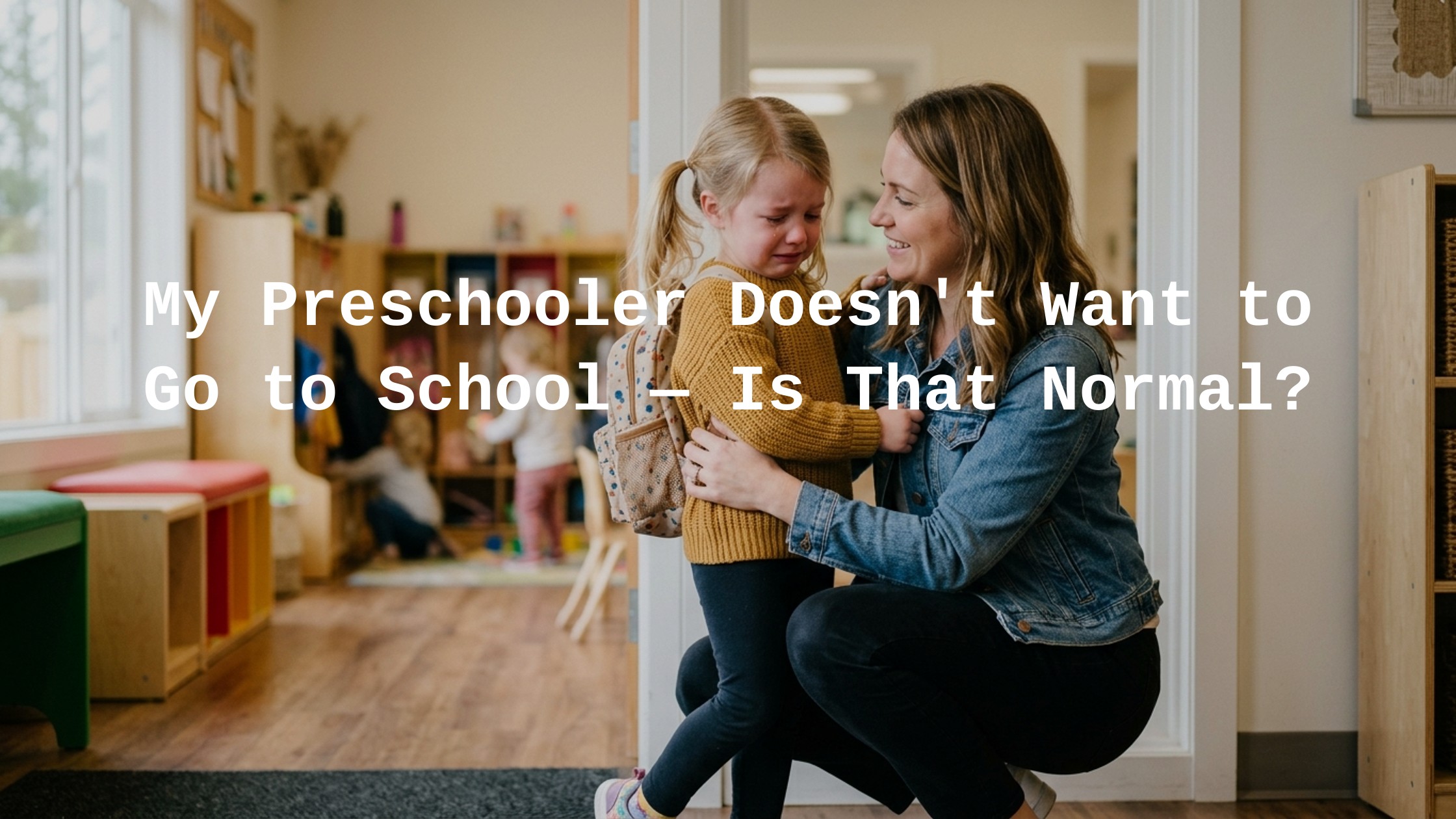
Your little one woke up happy, ate breakfast, and then — the moment you mentioned school — the tears started. Maybe they grabbed your leg, complained of a tummy ache, or simply said “I don’t want to go.” If this sounds familiar, take a breath: you are not alone, and you are not doing anything wrong.
Resistance at drop-off is one of the most common concerns parents of three-, four-, and five-year-olds bring up. Understanding why it happens — and knowing exactly what to do about it — can turn those stressful mornings into something much more manageable. This guide walks you through the developmental reasons behind school reluctance, what’s normal versus what warrants a closer look, and five practical strategies you can start using tomorrow.
The Short Answer
Yes — for most preschoolers, not wanting to go to school is completely normal. Young children going to school for the first time commonly experience this, and it develops alongside a child’s normal separation anxiety, or uneasiness about leaving a parent figure. This type of reluctance often goes away within a few days after the child starts school.
That said, “normal” covers a wide range. A few tears at drop-off that stop once you’ve left is very different from daily meltdowns that last for hours. The sections below will help you figure out exactly where your child falls on that spectrum — and what to do next.
Key Insight: Research consistently shows that most preschoolers calm down quickly once a parent is out of sight. If your child’s teacher says they settle within minutes, that’s a strong sign the resistance is developmentally typical — not a crisis.
Why Preschoolers Resist Going to School
The resistance isn’t stubbornness or manipulation. There are real, brain-based reasons why leaving home feels so hard for a child this age.
Their brain’s “brakes” are still being built. The prefrontal cortex — the “thinking and doing” part near the front of the brain — plays a big role in impulse control, attention, emotional regulation, planning, flexible thinking, and decision-making. Those skills don’t appear overnight; they build gradually through everyday routines, relationships, and practice, especially in early childhood. When your child melts down at the school door, it’s partly because the part of the brain that says “I can handle this” is still under construction.
Prefrontal cortex development is gradual and continues into the mid-20s. In the preschool years, children are just beginning to practice impulse control and emotional regulation, which is why they still need a lot of adult guidance. That’s not a character flaw — it’s neuroscience.
Imagination works against them (for now). Delineating between fantasy and reality is a big part of surviving the preschool years. At age three, a child is simultaneously learning what a word like “ghost” means and whether ghosts actually exist. While trivial to adults, a preschooler’s fears and anxieties are very real to them. An unfamiliar classroom can feel genuinely scary when a child’s imagination fills in the blanks.
Separation anxiety is wired in. Separation anxiety is a form of emotional distress that occurs when a child becomes fearful or upset at being apart from a parent or caregiver. While some level of separation anxiety is developmentally normal — especially in infants and toddlers — prolonged or intense symptoms can interfere with a child’s ability to engage in school activities and routines.
Separation anxiety can start in babies as young as six to seven months old and can peak during the toddler and preschool years. Preschool drop-off lands right in the middle of this developmental window, which is why the timing feels so hard.
They’re also navigating a huge new social world. A child’s separation anxiety might occur despite having a nurturing teacher. School just isn’t home. It’s more challenging — a new place with new situations to cope with every day, and new classmates or social situations to navigate. For a child who has spent most of their life in the safe, predictable rhythm of home, that’s genuinely a lot to take on.
When It Is Normal — and When It Becomes a Concern
Most preschool reluctance falls squarely in the “normal” category. Here’s how to read the signs.
Signs that it’s developmentally typical:
- Tears or clinginess at drop-off that stop within a few minutes of you leaving
- Resistance that’s worse on Mondays or after a long holiday break
- Your child reports having fun once they’re actually at school
- The behavior has been present since the start of the school year and is slowly improving
- Your child may be absolutely fine separating from you one week and then have a meltdown the next, or they may regress on something at home such as refusing to put on their own clothes or having an accident after they’ve already been potty trained. Occasional regression can happen with separation anxiety, especially when young children are exposed to a lot of change at once, and they should adjust over time.
Signs that something more may be going on:
- Children may cling to a parent at drop-off, cry inconsolably, complain of physical symptoms like stomachaches or headaches, or refuse to enter the classroom altogether. When these symptoms are intense and don’t let up, it’s worth paying closer attention.
- Refusal to go to school often begins following a period at home in which the child has become closer to the parent, such as a summer vacation, a holiday break, or a brief illness. It also may follow a stressful occurrence, such as the death of a pet or relative, a change in schools, or a move to a new neighborhood.
- The child may complain of a headache, sore throat, or stomachache shortly before it is time to leave for school. The illness subsides after the child is allowed to stay home, only to reappear the next morning before school. In some cases the child may simply refuse to leave the house. Since the panic comes from leaving home rather than being in school, frequently the child is calm once in school.
Pro Tip: Ask the teacher how your child is doing 10–15 minutes after drop-off. If they’re playing and laughing, the morning resistance is almost certainly a transition issue — not a sign that something is wrong at school.
For more context on how your overall parenting approach shapes your child’s emotional resilience, it’s worth exploring different parenting styles and how each one handles big feelings differently.
How to Handle It: 5 Practical Strategies
The good news is that there are specific, research-backed things you can do to make mornings easier — starting right now.
1. Build a Consistent Drop-Off Ritual
A familiar schedule or routine can help ease fears because children learn what to expect. Finding a few parts of the day you can plan to do every time you take your child to preschool helps create that predictability. It may be the food they eat for breakfast, a song you listen to on the way, or a special handshake at drop-off.
Establishing a daily goodbye routine will help your child set comfortable expectations. Whether it’s a special goodbye phrase or a secret handshake, having a regular habit can help ease anxiety. Keep the ritual short, warm, and consistent every single day.
2. Make Your Goodbye Quick and Confident
This one is hard — but it matters. It’s normal to want to give your child an extra kiss and words of affirmation before you leave. However, lingering can make the separation worse.
For your goodbye at drop-off, have a happy and excited attitude. If they’re crying or yelling, use calming language to soothe them instead of emotionally reacting. Seeing you sad or upset too could increase their distress. If you stay calm and upbeat about the day, it encourages them to do the same.
Also, never sneak out. Tell your child goodbye and make your exit without sneaking out of the room. Sneaking out may cause them more separation anxiety because they won’t know whether you’re still in the building or not. Make a quick, positive goodbye to let them know you are excited for them to have fun at school.
3. Validate Their Feelings Without Amplifying Them
Let your child know it’s okay to feel nervous or sad about going to preschool. Validate their emotions, but reassure them that they will be okay. There’s an important balance to strike here.
Communicating to them that going to preschool is brave or asking them if they’re scared or worried reinforces the idea that separating from you is a big deal. Instead, speak about going to preschool as a normal activity many families do daily. Try something like: “I know you wish you could stay home. You’re going to have a great time — I’ll be back after snack.” Then follow through on exactly what you said.
Common Mistake: Asking “Are you nervous about school today?” before drop-off can plant anxiety rather than ease it. Instead, keep the morning conversation light and forward-focused.
Understanding how to validate emotions while holding firm boundaries is a core principle of gentle parenting — an approach many families find helpful during emotionally charged transitions like this one.
4. Give Them a Comfort Object or a “Connection” Ritual
Sometimes a tangible item can provide comfort and help your child feel more secure in an unfamiliar environment. A favorite stuffed animal, small blanket, or family photo can offer your child a sense of home while at preschool. You can explain that the comfort item’s role is to keep them company while at school.
Another option is what child psychologists sometimes call a “connection ritual” — a small, repeatable action that reminds your child you’re thinking of them. This could be as simple as drawing a small heart on their hand each morning, or telling them you’ll be thinking of them at a specific time of day.
5. Partner with the Teacher
One of the first steps you can take is to talk to the preschool staff about your child’s day. Ask questions about how long they take to settle, how their play and social skills are developing, and how well they are communicating. Staff feedback can provide valuable insights into your child’s ability to share, take turns, and manage frustration with peers.
Teachers are child experts. Your child’s teacher may offer them a hug and be extra comforting if they’re aware of the separation anxiety. They may also have ideas for helping your child cope, like giving them a job in the morning to keep them distracted — for example, passing out toys or supplies.
If you’re also navigating a co-parenting situation and need to coordinate these strategies with another household, co-parenting resources can help you stay on the same page about routines and drop-off approaches. Similarly, if two households use different parenting philosophies, overcoming parenting style differences offers practical guidance for getting aligned.
When It Becomes a Red Flag
While daily reluctance is normal, true school refusal is something different — and it’s important to recognize when that line has been crossed.
Everyone resists going to school once in a while, but school refusal behavior is an extreme pattern of avoiding school that causes real problems for a child. School refusal is distinguished from normal avoidance by a number of factors.
Watch for these escalating warning signs:
| Normal Reluctance | Red Flag Behavior |
|---|---|
| Tears at drop-off that stop within minutes | Inconsolable distress that lasts hours |
| Occasional complaints of stomachaches | Daily physical symptoms that disappear once school is avoided |
| Resistance that improves over weeks | Resistance that intensifies over weeks or months |
| Happy at school once settled | Distressed throughout the entire school day |
| Mild regression at home | Significant regression, sleep disruption, or appetite changes |
It’s important to be aware of the risk of supporting your child’s worry by allowing them to avoid preschool or a feared event as a way of managing their anxiety. This usually exacerbates anxiety rather than diminishing it. Keeping your child home consistently can make the problem significantly harder to resolve over time.
School refusal is not a DSM-5 diagnosis on its own. It is described as a symptom that can be associated with several other diagnoses, such as social anxiety disorder, generalized anxiety disorder, specific phobia, major depression, oppositional defiant disorder, or post-traumatic stress disorder, among others. If you’re seeing the red flag column consistently, professional support is the right next step.
Your parenting style can also play a role in how your child handles transitions. Research on effective parenting approaches and mindful parenting both highlight the importance of balancing warmth with consistent expectations — exactly the combination that helps children build emotional resilience.
When to Talk to Your Pediatrician
Your child’s pediatrician is an important ally here, and there’s no need to wait until things feel completely unmanageable before reaching out.
According to Dr. McKinley, a pediatrician at Mount Nittany Health, “If separation anxiety persists for at least four weeks or is especially distressing to you or your child, it’s time to talk to your pediatrician.” That’s a helpful benchmark to keep in mind.
Specifically, consider calling your pediatrician if your child:
- Has daily physical complaints (stomachaches, headaches) that only improve when school is skipped
- Shows significant regression — bedwetting, baby talk, or sleep disruption — that doesn’t resolve on its own
- Refuses to enter the building entirely, or becomes physically aggressive at drop-off
- Expresses fears that something terrible will happen to you while they’re at school
- Shows signs of persistent sadness, withdrawal, or loss of interest in things they normally enjoy
As one pediatrician notes, “It’s rare for separation anxiety to persist after a routine has been set that first week. But, if you find you or your preschooler are still not adjusting well, talk to a pediatrician. Your pediatrician has supported many families in similar situations and can help put together a plan of support for both of you.”
A referral to a child psychologist or psychiatrist may be needed. Speak with your child’s pediatrician if you are unable to manage your child’s school refusal for more than one week.
Treatment providers working with kids who have school refusal will often use cognitive behavioral therapy, which helps kids learn to manage their anxious thoughts and face their fears. Early intervention makes a meaningful difference, so don’t hesitate to ask for help sooner rather than later.
If your family is also going through a significant transition — like a move, a new sibling, or a change in household structure — those stressors can amplify school anxiety. Exploring resources on parenting through life changes or attachment-based parenting strategies may give you additional tools during a challenging season.
Important Note: If your child mentions being afraid of something specific at school — a classmate, a teacher, or a situation — take that seriously and follow up with both the school and your pediatrician. Sometimes reluctance is a child’s way of communicating that something needs attention.
Frequently Asked Questions
How long does preschool separation anxiety typically last?
Separation anxiety is a normal part of growing up, but it will differ from kid to kid. Usually, separation anxiety peaks at around 18 months but can last through the elementary school years. For most preschoolers starting school, the adjustment period is a matter of days to a few weeks — not months.
Should I stay at school until my child calms down?
Generally, no. Lingering prolongs the transition time and the anxiety. A warm, brief, and consistent goodbye is far more effective than an extended stay. Trust the teacher to help your child settle — they’ve done it many times before.
My child is fine at school once they’re there. Does that mean everything is okay?
That’s actually a very reassuring sign. Since the panic comes from leaving home rather than being in school, frequently the child is calm once in school. If your child’s teacher confirms they’re happy and engaged during the day, the resistance is almost certainly a drop-off transition issue rather than a deeper problem.
Is it okay to let my child stay home when they’re upset?
Occasionally, yes — if your child is genuinely ill. But as a response to anxiety, keeping them home regularly tends to backfire. It’s important for your child to go to school while they’re getting help with the issue that has caused the school refusal. When your child goes to school, it builds their confidence and resilience. It keeps your child connected with learning, and it’s important for social development. It’s often easier for children to return to school if they haven’t been away from school for too long.
Could my parenting style be making the anxiety worse?
Your instinct to comfort your child is healthy and appropriate. The key is balancing warmth with consistency. Some research suggests that over-removing obstacles for children can inadvertently signal that challenges are too big to handle. Approaches like encouraging age-appropriate independence can help build the confidence your child needs to feel okay when you’re not right there. And if you’re curious about how different philosophies compare overall, exploring what parenting styles are most encouraged today can offer useful perspective.
When should I involve a professional?
If the reluctance has lasted more than four weeks without improvement, is intensifying rather than easing, or is accompanied by significant physical symptoms or regression, it’s time to call your pediatrician. They can rule out underlying medical causes and, if needed, refer you to a child psychologist who specializes in anxiety.