How Much Does an Apartment Cost in New Jersey? Rent and Buy Prices Explained

April 9, 2026
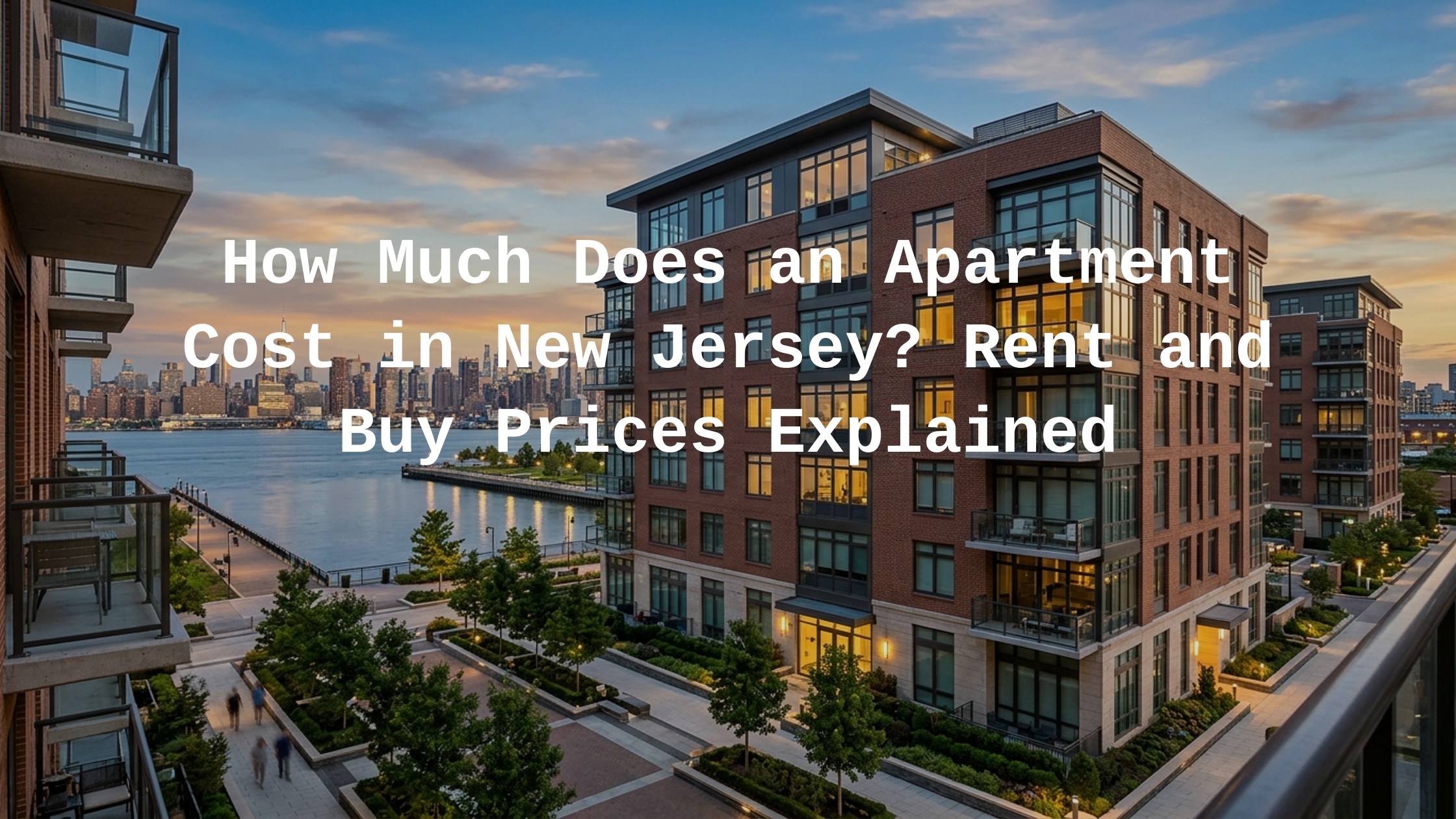
New Jersey sits in one of the most competitive housing corridors in the country, wedged between New York City and Philadelphia — and apartment prices reflect that pressure every single month. Whether you’re relocating, upgrading, or just trying to figure out if you can afford the Garden State, knowing what you’re actually walking into financially makes all the difference.
In this guide, you’ll find up-to-date rental prices broken down by apartment size and city, current purchase prices, a side-by-side look at renting versus buying, the cheapest and most expensive neighborhoods, and practical tips to help you find a place without overpaying.
Key Insight: New Jersey’s median rent is roughly 25% higher than the national median, so budgeting with national averages in mind will likely leave you underprepared.
Average Rent in New Jersey by Apartment Size
As of 2025, the overall average fair market rent for a residential rental property in New Jersey is $2,027 per month. That number, however, moves significantly depending on the size of the unit you’re targeting.
Here’s a breakdown of what you can expect to pay by bedroom count, based on data from multiple sources:
| Apartment Size | Average Monthly Rent (NJ) |
|---|---|
| Studio | $1,446 – $1,987 |
| 1 Bedroom | $1,582 – $2,084 |
| 2 Bedrooms | $1,922 – $2,699 |
| 3 Bedrooms | $2,443 – $3,617 |
| 4 Bedrooms | $2,739+ |
In general, you can expect to pay about $1,987 per month for a studio, $2,084 for a one-bedroom apartment, and around $2,699 for a two-bedroom apartment in New Jersey. If you opt for a three-bedroom rental, you could pay $3,586 or more.
The largest share of rentals in New Jersey (30%) fall between $1,501–$2,000 per month, suggesting that most renters successfully find suitable apartments within this range. That said, location plays a huge role. In New Jersey’s large metropolitan areas such as Jersey City, the average rent prices tend to be higher, while alternative areas such as Toms River can provide more affordable options.
To get a sense of city-level variation, here’s how rent for a one-bedroom apartment compares across major New Jersey cities:
| City | Avg. 1-BR Rent | Avg. 2-BR Rent |
|---|---|---|
| Hoboken | $3,573 | $5,048 |
| Jersey City | $3,212 – $3,811 | $4,272 – $4,682 |
| Newark | $2,595 | $2,688 |
| Princeton | $2,650 | $3,390+ |
| Trenton | ~$1,450 | $1,520 |
| Vineland | ~$1,350 | $1,450 |
Across the state, rental costs went up 5.5 percent between January 2024 and January 2025, and in a majority of New Jersey counties, typical rent prices are $2,000 or more each month. Costs ranged from $1,652 in Cumberland County to $2,990 in Hudson County.
If you’re exploring different types of apartments before committing to a size or layout, that can help you narrow your search and avoid paying for more space than you actually need.
Pro Tip: Rent in New Jersey tends to be highest in the northern counties closest to New York City. If your job allows flexibility, moving even 20–30 miles south can save you $500 or more per month.
Average Apartment Purchase Price in New Jersey
If you’re thinking about buying rather than renting, New Jersey’s purchase market has been on a strong upward trajectory. As of early 2025, the median home price in New Jersey has experienced a significant increase, reaching approximately $565,000 — a rise of over 11% compared to the previous year.
The median home sale price in 2025 is approximately $564,400, representing a year-over-year increase of 5.8%. For condos and apartments specifically, prices vary widely by city:
- Jersey City: The median home price is $635,000, reflecting its appeal as a bustling urban hub with direct PATH train access to New York City.
- Newark: With an average rent of $2,595 for a one-bedroom, Newark offers a relatively accessible entry point for those seeking proximity to New York City without paying Manhattan prices. The median home sale price here is $528,000, making it more affordable than nearby Jersey City.
- Trenton: Trenton offers a median home price of around $255,000, making it one of the most affordable housing options in the state.
- Atlantic City: Atlantic City offers approximately $170,000 in median home price, among the lowest in New Jersey.
New Jersey property taxes are the highest in the nation — a fact that surprises many first-time buyers and significantly impacts affordability calculations. The average New Jersey property tax bill reached $9,490 annually in 2022, and many counties exceed this average significantly. This is a critical number to factor into your monthly housing budget before signing anything.
Important Note: When calculating the true cost of buying in New Jersey, always add property taxes to your mortgage estimate. In Bergen County, for example, homeowners average over $11,000 per year in property taxes alone.
Cost of Renting vs. Buying in New Jersey
The rent-versus-buy question is especially pointed in New Jersey, where both sides of the ledger carry real financial weight. In 2025, renting in New Jersey averages $2,500/month. Buying a $538,400 home runs about $3,500/month — that’s $1,000 more, but it goes toward equity.
Here’s a side-by-side comparison of the key financial trade-offs:
| Factor | Renting | Buying |
|---|---|---|
| Avg. Monthly Cost | ~$2,500 | ~$3,500 |
| Upfront Cost | 1–1.5x monthly rent (deposit) | 20% down (~$107,680 on median home) |
| Equity Building | None | Yes, as prices rise |
| Tax Benefits | Limited | Mortgage interest + property tax deductions |
| Maintenance Costs | Landlord’s responsibility | Owner’s responsibility |
| Flexibility | High | Low short-term |
Owning a home means you handle upkeep costs. In contrast, renting shifts those maintenance duties to the landlord. If you plan to reside in the area for several years, buying may be more cost-effective. You’ll need about $120K–$130K per year to afford a $500,000 home with 20% down at 7% interest.
To comfortably live in New Jersey, it’s generally recommended that your housing costs don’t exceed 30% of your monthly income. Given the state’s relatively high rent and home prices, this rule can be a useful guideline. For instance, with an average rent of $2,310 for a one-bedroom apartment, you’d need to earn at least $7,700 per month, or about $92,400 annually, to stay within the 30% threshold.
You can also check out ways to cut your grocery costs to offset some of New Jersey’s higher overall living expenses once you’ve settled in.
Key Insight: The National Low Income Housing Coalition reports that a full-time worker in New Jersey must earn at least $39.99 per hour to afford the average fair market rent for a two-bedroom unit without spending more than 30% of their income on housing.
Cheapest and Most Expensive Neighborhoods in New Jersey
Where you live within New Jersey matters enormously to your monthly costs. Higher rent prices are common in the northern parts of New Jersey, while lower rent rates are often available in southwestern areas.
Most Expensive Areas
Hoboken and Jersey City share the same overall cost of living index at 139.5, placing them well above the national average of 100. In Hoboken, renters can expect to pay an average of $4,447 per month. One-bedroom apartments average $3,573, while two-bedroom units reach around $5,048.
Hoboken tends to skew more expensive due to its boutique feel, limited space, and proximity to Manhattan. Jersey City, on the other hand, offers a broader range of rental options across its neighborhoods. Within Jersey City itself, Colgate Center, Exchange Place North, and Powerhouse Arts District are the most expensive neighborhoods.
Most Affordable Areas
On the more affordable end, Vineland averages $1,450 and Trenton $1,520 for two-bedroom apartments. Vineland offers a notably affordable cost of living compared to both state and national averages. With an overall cost of living index of 85.6, expenses in Vineland are 14.4% lower than the U.S. average and 34.2% lower than New Jersey’s average of 119.8. Housing is a significant contributor to this affordability, with an index of 70.3.
More affordable areas like Camden and Vineland offer significant savings. Camden’s overall cost of living index is 94, well below the state average, with housing indexed at just 28 — nearly 70% below the U.S. norm.
Within Jersey City, if you’re looking for budget-friendly pockets, West Slope, The Hill, and Centre Hill are the most affordable neighborhoods. Bergen Hill presents a lower-cost alternative, with average rents around $2,399, and maintains a community feel with access to local parks and schools.
For ideas on making the most of a smaller or more budget-friendly space, explore these urban living essentials every apartment must have — especially useful if you’re downsizing to save on rent.
Common Mistake: Many renters focus only on rent price and overlook commuting costs. An apartment in Trenton or Vineland may save you $800/month in rent but add $200–$400/month in transportation if you commute to a northern job center.
What Affects Apartment Prices in New Jersey
New Jersey apartment prices don’t move in a vacuum. Several interconnected forces push rents and purchase prices up or keep them elevated, and understanding them helps you time your search and set realistic expectations.
Proximity to New York City
New Jersey is a popular place to live as it combines suburban tranquility with urban accessibility. The Garden State boasts diverse communities, proximity to major metropolitan areas like New York City and Philadelphia, and a long, beautiful coastline. The closer a neighborhood is to Manhattan, the higher its rent tends to be — often dramatically so.
Mortgage Rates and Buying Power
Current mortgage rates hovering between 6.5% and 7% significantly impact purchasing power compared to the sub-3% rates of 2020–2021. A buyer who could afford a $600,000 home at 3% rates may only qualify for a $450,000 home at current rates.
Low Inventory
Inventory remains tight and well below pre-pandemic levels. This “inventory crunch” continues to be the primary factor keeping prices stable, even with higher mortgage rates. When new homes are built in New Jersey, most of the time they are high-end luxury dwellings. “We don’t have enough affordable homes, either to rent or purchase.”
Property Taxes
Affordability challenges continue, driven by high home prices, elevated mortgage rates, and the nation’s highest property taxes. These taxes directly affect what landlords charge in rent, since they’re factored into the cost of owning a rental property.
Population and Job Growth
The current population of New Jersey is 9.6 million, continuing its steady incline. The employment rate is 63.8%, higher than the U.S. average of 62.3%. Strong demand combined with only modest supply growth signals continued upward pressure on New Jersey’s housing market.
Inflation and Cost Pressures
In New Jersey, the consumer price index recorded a 3.4% year-over-year inflation rate in late 2025, which keeps cost pressures elevated for homeowners — meaning fewer people can truly afford to limit housing costs to less than the recommended 30% of their monthly income.
If you’re also weighing the costs of setting up your home once you move in, it’s worth browsing resources like apartment-friendly lifestyle options and budget-conscious choices to keep your overall monthly spend in check.
Is New Jersey Affordable Compared to the Rest of the US?
The honest answer: New Jersey is expensive by national standards, but it’s not the most expensive — and it offers real value compared to neighboring states and cities.
Average rent prices in New Jersey sit above the national average rent of $1,274, and New Jersey ranks as the 6th highest rent among all 50 states. Rent in New Jersey is 25% higher than the national median.
New Jersey’s cost-of-living index stands at 114.2 in 2025, placing it as the 11th most expensive state in the nation. This translates to expenses that are roughly 14–20% higher than the national average across most categories.
However, context matters. When compared to cities like New York or San Francisco, New Jersey provides a relatively affordable alternative while still offering access to similar urban benefits. Despite high costs, New Jersey remains less expensive than Massachusetts, Vermont, New York, Maryland, and New Hampshire.
For renters specifically, housing costs in New Jersey are notably high, with a median home sale price of $538,800 — well above the national median of $428,000 — and an average rent of $2,310 compared to the U.S. average.
Utility costs in New Jersey also tend to be higher than the national average, with residents typically spending around $656.78 per month on essentials like electricity, water, and heating. The average electric bill is about $114.08, while water bills come in around $72.00 monthly — higher than the national average household utility bill of $609.90 per month.
You may also find it useful to compare apartment costs in other markets — for instance, see how much an apartment costs in Kathmandu to understand just how widely housing prices vary globally.
Key Insight: New Jersey’s higher costs come with real trade-offs — top-ranked public schools, excellent transit access, and a strong job market. For many households, the premium is worth it. For others, South Jersey or inland areas offer a better value equation.
Tips for Finding an Apartment in New Jersey
Finding the right apartment in New Jersey requires more than just browsing listings. With a competitive market and prices that vary dramatically by neighborhood, a strategic approach saves you both time and money.
1. Define Your Budget Using the 30% Rule
It’s generally recommended that your housing costs don’t exceed 30% of your monthly income. For instance, with an average rent of $2,310 for a one-bedroom apartment, you’d need to earn at least $7,700 per month, or about $92,400 annually. Keep in mind, this doesn’t include other living expenses, such as utilities, groceries, and transportation.
2. Compare Neighborhoods — Not Just Cities
Even within cities, prices can shift depending on the amenities and neighborhoods, so it’s worth doing an in-depth comparison before committing. A few blocks can mean hundreds of dollars difference per month in places like Jersey City or Newark.
3. Factor in Commuting Costs
Gas prices in New Jersey are slightly below the national average, at $2.91 per gallon compared to $3.08. For those relying on public transit, NJ Transit provides a range of options, such as the train fare from Newark to New York City, which is approximately $15.75. Calculate your total monthly transportation cost before deciding how far from work you can realistically live.
4. Look at South Jersey for Better Value
While certain areas like Hoboken and Jersey City come with higher housing costs, other regions in the state offer more affordable options, particularly in South Jersey. Cities like Vineland, Trenton, and Camden offer significantly lower rents without sacrificing access to everyday amenities.
5. Check for Assistance Programs
New Jersey’s flagship ANCHOR Property Tax Relief program provides direct rebates to eligible homeowners and renters. The state also offers various programs for energy-efficient improvements and multiple tax relief programs specifically designed for residents 65 and older, including the Senior Freeze Program.
6. Search During Off-Peak Seasons
Rental demand in New Jersey peaks in the spring and summer, especially near college towns and commuter hubs. Searching in fall or winter often means less competition, more landlord flexibility, and sometimes lower move-in costs.
7. Understand What’s Included in Rent
Always ask whether utilities, parking, and laundry are included in the listed rent. In New Jersey, where utility costs tend to be higher than the national average, with residents typically spending around $656.78 per month on essentials, a unit that includes heat or water can represent real monthly savings.
8. Use Multiple Listing Platforms
Cross-reference listings on Zillow , Apartments.com , and Redfin to get a full picture of what’s available in your target area. Prices listed on one platform may differ from another, and some landlords list exclusively on smaller local sites.
If you’re also setting up a new household from scratch, check out these urban living essentials every apartment must have to budget for furnishings and setup costs alongside your rent.
Pro Tip: Before signing a lease, research the specific municipality’s rent control rules. Several New Jersey cities — including Jersey City, Hoboken, and Newark — have rent stabilization ordinances that may limit how much your landlord can raise your rent each year.
New Jersey’s apartment market is demanding, but it’s navigable with the right information. New Jersey’s affordability, entertainment options, and year-round recreational opportunities make it a comfortable place to live, work, and play. With the right approach, you can find an apartment in New Jersey that meets your needs, whether you’re moving from out of state or just across town. Start with a clear budget, research neighborhoods thoroughly, and account for the full cost of living — not just the rent line on your lease.