Dog Allergies in Spring in Connecticut: Timing, Triggers, and What to Do

April 8, 2026
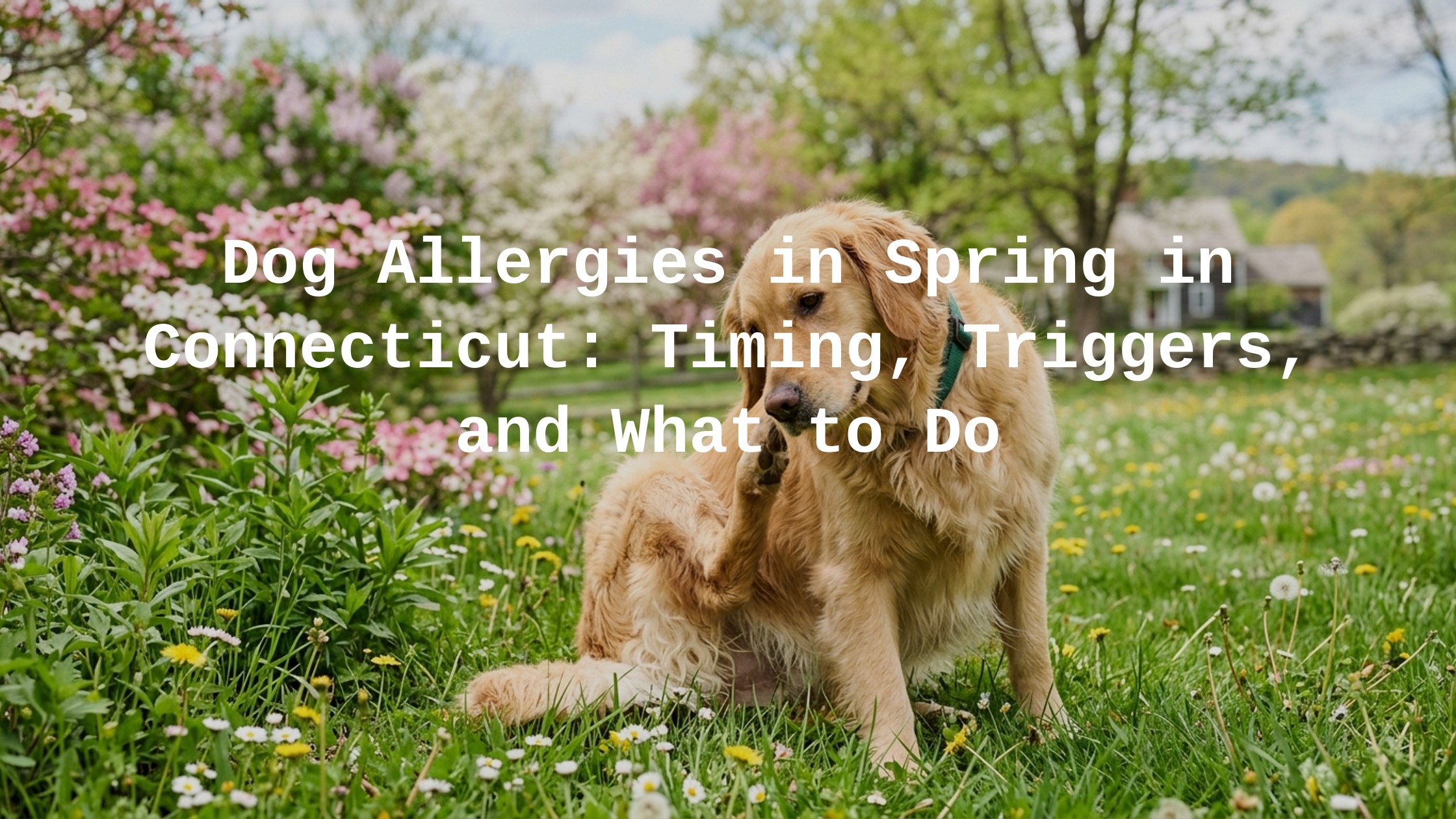
Spring in Connecticut is beautiful — maple trees leaf out, birches release their pollen, and the whole state seems to come alive after a long winter. But if your dog starts scratching, licking their paws, or rubbing their face as soon as the weather warms up, that seasonal renewal may be working against them.
Spring in Connecticut brings blooming trees, warming temperatures, and a surge of airborne allergens that can make your dog miserable from March through June. If your dog starts scratching, licking their paws, or rubbing their face as soon as the weather warms up, seasonal allergies are likely the culprit.
Unlike food allergies, which persist year-round, spring allergies follow a predictable seasonal pattern tied to Connecticut’s pollen calendar. Understanding what triggers them, how to recognize the signs, and what you can do about them puts you in a much stronger position to help your dog get through the season comfortably.
Key Insight: Connecticut’s spring pollen season runs roughly February through June, with the most intense period falling between mid-April and late May.
When Does Spring Allergy Season Start for Dogs in Connecticut
Connecticut’s spring allergy season typically begins in late February or early March, when tree pollen starts rising even before the last frost has fully passed. The season builds steadily through April and peaks in May, when a combination of tree, grass, and mold spore counts can reach their highest levels of the year.
The Connecticut allergy season starts around late February and will usually end by late October or whenever the first hard frost happens. The worst months are March, April, May, June, and September.
The state’s humid climate and dense tree cover — particularly in the Hartford, New Haven, and Litchfield County areas — create ideal conditions for prolonged, high pollen seasons. Warm, dry, and windy days tend to push pollen counts to their highest, while rainy days provide temporary relief by washing allergens out of the air.
By late June, tree pollen tapers off significantly, though grass pollen can extend allergy symptoms into early summer for sensitive dogs. This means that for many Connecticut dogs, the effective allergy window stretches well beyond what most owners expect.
Pro Tip: The Connecticut Agricultural Experiment Station and local news outlets like CT Insider often publish regional pollen forecasts during spring. Bookmarking a reliable local pollen source lets you plan higher-exposure days more carefully and adjust your dog’s outdoor time accordingly.
What Causes Dog Allergies in Spring in Connecticut
Seasonal allergies in dogs, also known as atopic dermatitis, occur when a dog’s immune system mistakes harmless substances in the environment for threats. These reactions typically occur during certain times of the year, but timing varies depending on where you live, the allergens present, and the triggers to which your dog is sensitive.
In Connecticut, most spring allergies are the result of tree pollen. Tree pollen represents one of the most significant seasonal allergens for dogs. Common culprits include oak, maple, birch, and cedar trees. Tree pollens typically peak in early spring but can extend into late spring depending on the species and local weather patterns.
Grass pollen affects dogs during late spring and summer months. Bermuda grass, timothy grass, and Kentucky bluegrass are frequent offenders. Since dogs spend considerable time on grass during walks and play, exposure levels can be substantial.
Beyond pollen, other environmental factors compound your dog’s spring exposure:
- Mold spores: Mold spores thrive in damp conditions and can be present year-round, though concentrations often peak during warm, humid periods. Outdoor molds like Alternaria and Cladosporium become airborne and easily contact dog skin and fur during outdoor activities.
- Dust mites: Dust mites represent year-round allergen sources but often worsen during humid seasons when mite populations increase. These microscopic creatures live in bedding, upholstery, and carpeting, feeding on shed skin cells.
- Insects: Connecticut’s spring also brings active populations of beetles, ants, and other insects that emerge alongside the pollen season. While these are not allergens in the traditional sense, insect contact can cause localized skin reactions in allergy-prone dogs that compound existing spring symptoms.
It’s also worth understanding how dogs absorb these allergens. Dogs don’t primarily absorb allergens through their nose the way humans do — they absorb them through their skin, which is why itching and skin irritation, not sneezing, are the hallmark signs of canine environmental allergies.
Signs Your Dog Has Spring Allergies in Connecticut
Unlike humans who usually get respiratory symptoms, dogs usually show symptoms through their skin and ears. Common signs include persistent itching, excessive licking of the paws, redness or inflammation, and frequent ear infections.
Here are the most common signs to watch for as Connecticut’s pollen season ramps up:
- Excessive scratching or licking — One of the most common signs your dog has allergies is excessive scratching or licking. If your dog is constantly scratching at their face, paws, or belly, it could be a sign that they are reacting to seasonal allergens.
- Red, irritated skin — Allergies can irritate your dog’s skin, leading to red, inflamed patches. If left untreated, these itchy spots may develop into hot spots — painful, infected areas that require veterinary attention.
- Hives or bumps — Hives can develop anywhere on the skin, though it is easier to see them on sparsely haired areas such as the belly and armpits. Hives are also commonly seen on the head, face, or sides of the legs. Dogs may have on-and-off development of bumps based on exposure to pollen or other allergens.
- Watery eyes or sneezing — When your dog has spring allergies, you might notice watery eyes or frequent sneezing. Environmental allergens like pollen and dust can trigger these symptoms.
- Hot spots and skin chewing — Dogs with allergies might compulsively chew on their skin, which can lead to several issues. Obsessive licking can result in raw, exposed areas known as hot spots. These areas can quickly become infected if left untreated.
- Anal gland issues — Scooting and licking around the rectum is a very common issue noted with allergic dogs. The anal glands are scent marking glands inside the rectum which can become inflamed due to allergies. Dogs may show signs of scooting, licking around their rectum, and the gland can even abscess out through the skin.
Important Note: If signs only occur during the spring and summer, pollen allergies are likely the problem. If your dog shows these symptoms year-round, this does not rule out pollen allergy — a combination of multiple allergies may be affecting your pet with non-seasonal skin or ear problems.
The most common areas of your dog’s body affected by pollen allergies are the paws (especially between their toes), limbs, around their eyes and mouth, ears, armpits, belly and groin, and tail. Paying attention to where your dog is itching is just as important as noting when the symptoms appear.
Which Dog Breeds Are Most Prone to Spring Allergies
The exact reason why pollen allergies develop in some dogs and not in others is not fully understood, but there’s likely a genetic component that makes some dogs more vulnerable than others. Typically, dogs start showing signs of seasonal allergies between one and three years of age, but it can be as early as six months or as late as six years. Additionally, if dogs move from one climate to another, they may develop seasonal allergies later in life due to new allergens in the environment.
The following breeds have the highest documented rates of environmental allergies and are commonly seen by Connecticut vets during spring allergy season:
| Breed | Common Allergy Manifestations |
|---|---|
| Golden Retriever | Notorious for food sensitivities and environmental allergens; often show symptoms through ear infections and itchy, flaky skin. |
| Labrador Retriever | One of the most allergy-prone breeds; Labs often deal with food and environmental allergies that cause dry skin, hot spots, and excessive paw licking. |
| West Highland White Terrier | High incidence of atopic dermatitis; Westies are especially sensitive to environmental triggers like mold and grasses. |
| Bulldog | Prone to skin fold dermatitis, contact allergies, and yeast infections in their wrinkles. |
| German Shepherd | Prone to skin allergies, especially flea allergy dermatitis. Their thick double coat can hide inflammation until it gets severe. |
| Boxer | Can have both food and environmental allergies; symptoms include itching, excessive licking, and frequent ear infections. |
| Shih Tzu | Prone to skin allergies and particularly sensitive to environmental allergens such as pollen and dust mites. |
| Poodle | Despite being considered hypoallergenic, Poodles are prone to allergies; their curly coat can trap allergens. |
While purebreds with known genetic predispositions carry higher risk, any dog with a family history of allergies — even an unknown one — can develop seasonal sensitivities. Body size and coat type also influence how much allergen contact a dog experiences, with short-coated dogs and those who spend significant time outdoors generally having more direct skin exposure to pollen and grasses.
How Vets Diagnose Seasonal Allergies in Dogs in Connecticut
Diagnosing seasonal allergies in dogs is rarely a single-test process. Your vet will typically use a combination of clinical history, physical examination, and elimination of other possible causes to arrive at a diagnosis. The seasonal pattern of symptoms — consistently appearing in spring and improving in summer or fall — is one of the most important diagnostic clues.
The diagnostic process generally involves several steps:
- Medical history review — The vet will start by asking you questions about your dog’s history and symptoms. Knowing when the symptoms started, which areas of the body are most severely affected, and if these symptoms seem to be worse at certain times of the year can help the vet distinguish between seasonal allergies and other types of allergies, like food allergies or flea allergies.
- Physical examination — Your vet will review when symptoms occur, such as spring or fall flare-ups, and look for signs like red skin, hair loss, ear infections, or nasal discharge.
- Ruling out other causes — Other skin conditions that can cause similar symptoms must also be ruled out, such as skin mites, fleas, ringworm fungal infection, or a food allergy, before a seasonal allergy diagnosis is confirmed.
- Blood testing — A blood test, such as Heska’s Allercept or Nextmune’s Pet Allergy Xplorer, is performed by your vet to determine what environmental allergens your dog is most allergic to based on where they live.
- Intradermal skin testing — Because intradermal testing can be uncomfortable, dogs are typically sedated for this procedure and a section of their coat is shaved to allow the injection sites to be monitored for a reaction. It involves injecting a small amount of a pure allergen under the skin and measuring the allergic response. Intradermal testing is the gold standard when it comes to diagnosing environmental allergies.
Connecticut has board-certified veterinary dermatologists available at specialty practices and university veterinary hospitals, including Tufts University’s Cummings School of Veterinary Medicine in nearby Massachusetts. A referral to a dermatologist is often recommended for dogs with moderate to severe or treatment-resistant allergies.
Important Note: Over-the-counter allergy tests sold online or through non-veterinary channels have not been validated for accuracy in dogs. If you want reliable allergy testing, pursue it through a licensed veterinarian or board-certified veterinary dermatologist.
How to Treat Spring Allergies in Dogs in Connecticut
Treatment for spring allergies in dogs has advanced considerably over the past decade, and you now have access to several effective options that can meaningfully improve your dog’s quality of life. Your vet will recommend a treatment plan based on symptom severity, your dog’s overall health, and how they have responded to previous interventions.
Seasonal allergies in dogs are a chronic condition, which means there is no cure. However, there are ways to treat and manage symptoms to keep your dog comfortable. Here are the main treatment options your Connecticut vet may recommend:
- Apoquel (Oclacitinib) — An immuno-modulatory drug that manages itching associated with allergic dermatitis or atopic dermatitis triggered by environmental allergens. Apoquel is only used for dogs over one year of age and is administered orally twice a day or once a day, depending on the veterinarian’s instructions.
- Cytopoint — Cytopoint contains a caninized monoclonal anti-IL-31 antibody and is an effective treatment against allergic dermatitis triggered by environmental allergens like pollen, mold, and dust. One of the unique advantages of Cytopoint is that it can be given to a dog of any age and it is a long-lasting seasonal allergy treatment, administered every 4–8 weeks via injection.
- Antihistamines — Antihistamines are often used, but they’re not as effective for dog and cat seasonal allergies compared to other treatments. They may still be appropriate for mild cases and can be discussed with your vet.
- Steroids — Steroids like prednisone or prednisolone might be prescribed short-term for severe allergy cases. Steroid use increases hunger, thirst, and urination. Long-term steroid use may weaken the immune system, cause Cushing’s disease, and contribute to diabetes. Because of the dangerous long-term effects, systemic steroids should only be used for short-term control of symptoms.
- Immunotherapy (Allergy Shots) — If your dog’s allergies are persistent, allergy shots might be the answer. This treatment helps desensitize your dog to specific allergens over time, providing lasting relief and helping them build a tolerance for seasonal triggers. Improvement can take six months to one year, so dogs taking allergy shots often receive other treatments in the meantime.
- Omega-3 Fatty Acids — Omega-3 fatty acids are often used in combination with other treatments for dogs with itchy skin due to seasonal allergies. These fatty acids are important components of cells and are thought to improve the skin barrier.
- Medicated Baths — Frequent bathing with a hypoallergenic shampoo can be soothing to itchy, inflamed skin. Some shampoos are available over the counter, while others may require a prescription. Bathing also removes allergens from the skin and coat.
Pro Tip: Starting treatment — whether Apoquel, Cytopoint, or immunotherapy — before symptoms peak is consistently more effective than waiting until your dog is already in the middle of a severe flare.
How to Reduce Your Dog’s Exposure to Spring Allergens in Connecticut
Medication alone works best when paired with practical steps to reduce how much pollen and other allergens your dog encounters each day. Pollen tends to be at its highest in the morning and afternoon in Connecticut. Evening hours will be the best time to go outside during the Connecticut allergy season.
Here are the most effective environmental management strategies for Connecticut dog owners:
- Wipe paws and coat after walks — Since pollen and dust cling to your dog’s fur and paws, wiping them down with a damp cloth or pet wipes after walks can help reduce allergy flare-ups.
- Bathe regularly during peak season — Regular bathing — once a week or every two weeks during peak season — is one of the most effective and underused tools for managing environmental allergies. Bathing physically removes allergens from the skin and coat before they can penetrate the skin barrier. Use a gentle, veterinarian-recommended shampoo formulated for sensitive or allergic skin rather than a standard pet shampoo, which can strip protective oils and worsen the skin barrier.
- Clean your home frequently — Vacuum frequently, wash your dog’s bedding weekly, and use air purifiers to reduce allergens in your home.
- Use air conditioning strategically — Air conditioning allows you to keep windows closed during peak pollen times while maintaining comfortable indoor temperatures. Set systems to recirculate mode to filter indoor air rather than bringing in outdoor allergens.
- Keep up with flea prevention — Year-round flea prevention is essential because flea saliva represents a major dog allergen. Even dogs without seasonal allergies can develop severe reactions to flea bites.
- Maintain ear health — Preventive ear cleaning every 2–3 weeks during allergy season helps prevent secondary yeast and bacterial infections that commonly complicate environmental allergies.
- Trim outdoor vegetation — By keeping tree branches trimmed, grass short, and your lawn free of weeds, you can reduce the pollen that will be released directly around your home in Connecticut.
Common Mistake: Many dog owners only start managing allergen exposure after symptoms appear. In Connecticut, where pollen season begins as early as late February, starting these habits at the first signs of warming weather — before your dog is already reactive — makes a meaningful difference in how severe the season becomes.
When to See a Vet About Your Dog’s Spring Allergies in Connecticut
Mild seasonal sneezing or occasional paw licking may not require an immediate vet visit, but there are clear situations where professional evaluation is important. Delaying treatment when symptoms are significant often leads to secondary infections, chronic skin damage, and a dog that becomes increasingly miserable as the season progresses.
You should schedule a vet appointment if you notice any of the following:
- Scratching or licking that disrupts your dog’s sleep or daily routine
- Your dog is scratching and chewing on itchy spots, which can lead to secondary infections when bacteria or yeast come into contact with irritated skin.
- Recurring ear infections each spring
- Hot spots that are raw, weeping, or spreading
- Symptoms that don’t improve with basic at-home management after a few days
- Severe, persistent allergies or those causing secondary infections require professional veterinary care.
If your dog has been diagnosed with seasonal allergies in previous years and you know their pattern well, you may be able to contact your vet at the start of allergy season to refill a prescription before symptoms peak. Many veterinary practices are familiar with the local pollen calendar and can work with you proactively rather than reactively.
A referral to a dermatologist is often recommended for dogs with moderate to severe or treatment-resistant allergies. For dogs with moderate to severe allergies that haven’t responded well to standard treatments, asking for a referral to a veterinary dermatologist is a worthwhile step. Specialists can perform intradermal skin testing and formulate allergen-specific immunotherapy — the closest thing to a long-term solution currently available for canine atopic dermatitis.
Spring allergy season in Connecticut is real, predictable, and manageable. Spring allergies in dogs are manageable with the right approach and professional guidance. Being proactive about your dog’s allergy symptoms and consulting with your veterinarian can make a world of difference in their comfort and quality of life. The earlier you act each season, the better your dog’s chances of getting through it comfortably.
Disclaimer: This information is for educational purposes only and is not intended as veterinary medical advice. Always consult with a qualified veterinarian before making decisions about your dog’s health or treatment plan.