
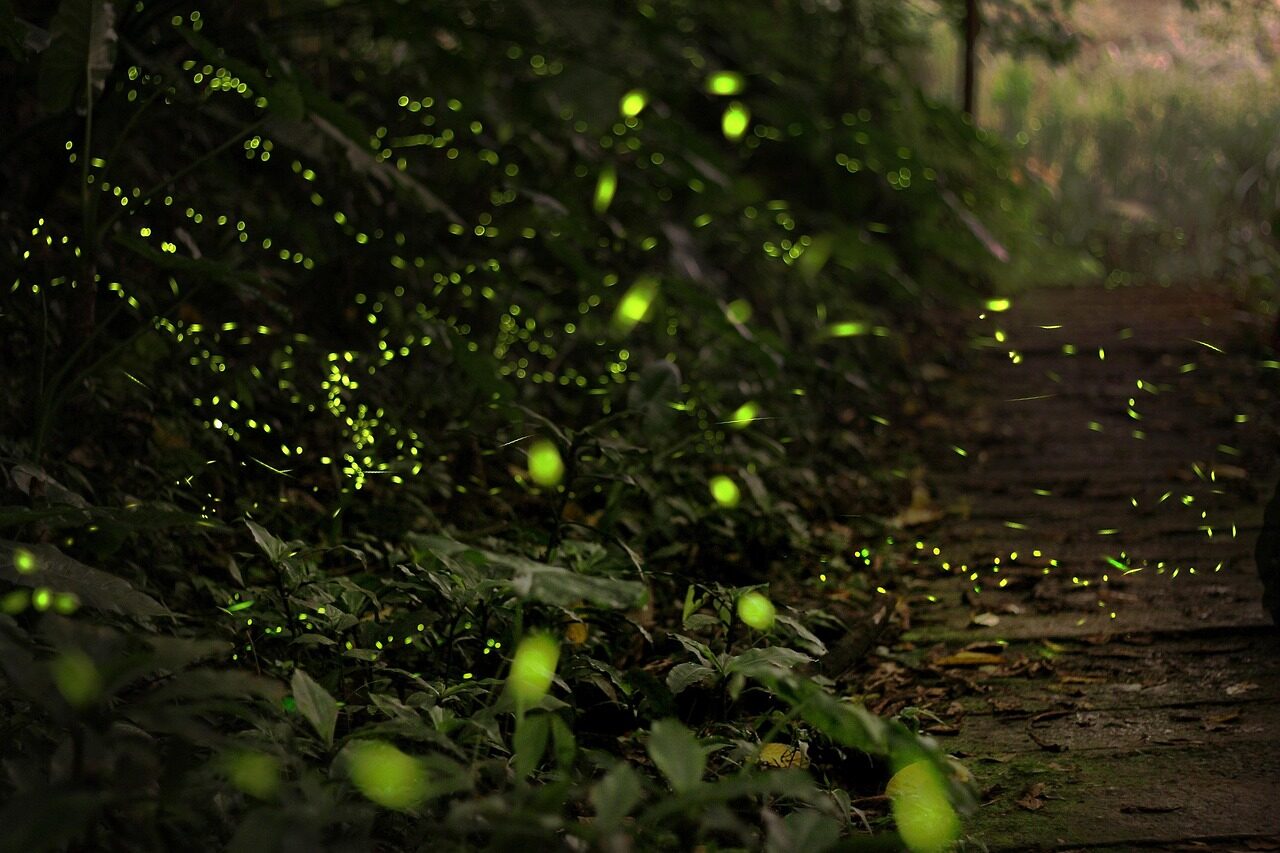
Most people assume fireflies are strictly an East Coast phenomenon — those magical blinking lights you chase through humid summer nights in the Midwest or the Carolinas. Oregon, with its cool forests and Pacific-influenced climate, rarely enters the conversation. But the Pacific Northwest has its own quiet, fascinating firefly story, and it’s one that deserves far more attention than it gets.
Oregon is home to six documented firefly species, each with its own biology, behavior, and conservation status. Some glow, some don’t. Some are active in winter, some during the day. And a few haven’t been officially recorded in over 70 years — raising urgent questions about extinction, habitat loss, and what we might have already lost.
Whether you’re a backyard naturalist, a beetle enthusiast, or simply curious about the wildlife sharing your state, these six species will change how you think about Oregon’s insect life.
Key Insight: Unlike the flashy bioluminescent fireflies of the eastern United States, most Oregon firefly species are either non-bioluminescent or produce only faint light — making them easy to overlook but no less remarkable.
1. Western Banded Glowworm
The Western Banded Glowworm (Zarhipis integripennis) is arguably Oregon’s most visually striking firefly — though you’d be forgiven for not recognizing it as one at first glance. This species belongs to the family Phengodidae, a group sometimes called “railroad worms” due to the bioluminescent segments that line the bodies of females. It’s the only truly glowing species on this list that you still have a reasonable chance of encountering in Oregon today.
The sexual dimorphism in this species is dramatic. Males are winged beetles with feathery, comb-like antennae and a fairly typical beetle appearance. Females, however, are larviform — meaning they retain a larval body shape throughout their adult lives, never developing wings. Female Western Banded Glowworms emit a greenish-yellow bioluminescent glow from paired light organs along their abdominal segments, making them look like tiny strings of living lights crawling through the leaf litter at night.
You’re most likely to spot this species in oak woodlands, chaparral, and foothill habitats in southwestern and western Oregon. Females are ground-dwelling and hunt millipedes, which they paralyze with a venomous bite before consuming. Males are occasionally drawn to lights at night, which is one of the few ways observers tend to notice them. If you’re hiking in the Coast Range or the foothills of the Cascades on a warm spring or early summer evening, scanning the ground with a red-light flashlight gives you the best chance of a sighting.
Pro Tip: Use a red-light headlamp rather than a white flashlight when searching for glowworms at night. Red light is less likely to startle insects and preserves your own night vision while scanning the forest floor.
The Western Banded Glowworm is one of the more well-documented western firefly relatives, and it offers a fascinating window into the diversity of firefly species found across North America . Its presence in Oregon is a reminder that bioluminescence in beetles isn’t exclusively a humid-climate phenomenon — it simply takes a different, subtler form out west.
2. Blind Firefly
The Blind Firefly (Pterotus obscuripennis) is one of Oregon’s most enigmatic beetle species. As its common name suggests, this firefly has reduced or vestigial eyes — a striking adaptation that sets it apart from virtually every other member of the family Lampyridae. It’s a genuinely unusual insect, and relatively little is known about its day-to-day ecology in the Pacific Northwest.
Unlike the glowworm discussed above, the Blind Firefly does not produce bioluminescent light as an adult. This is more common among western firefly species than most people realize — many firefly species in the western United States have lost the ability to flash as adults, likely because the dense, dry, or open habitats they occupy make visual signaling less effective for finding mates. Instead, these species are thought to rely on chemical signals, or pheromones, to locate one another during the breeding season.
The Blind Firefly tends to be associated with moist, wooded habitats in western Oregon, particularly areas with decaying wood and leaf litter where its larvae can develop. Larvae of most Lampyridae species are predatory, feeding on soft-bodied invertebrates like snails, slugs, and earthworms. Given the Blind Firefly’s reduced visual capacity, it’s likely that its larval stage relies heavily on chemosensory cues to locate prey.
Important Note: Because the Blind Firefly produces no adult light display and has reduced eyes, it is almost never identified by casual observers. Most records of this species come from targeted entomological surveys rather than citizen science sightings.
Sightings of Pterotus obscuripennis are infrequent, and the species’ current population status in Oregon is not well established. If you’re interested in contributing to what is known about this species, submitting verified observations to platforms like iNaturalist can help researchers track its distribution across the state.
3. Diurnal Firefly — Winter Firefly
The Diurnal Firefly (Ellychnia corrusca), commonly known as the Winter Firefly, breaks nearly every rule you might associate with fireflies. It’s active during the day — “diurnal” means daylight-active — and it’s most commonly observed in late autumn and winter rather than on warm summer nights. It produces no bioluminescent light as an adult. In almost every behavioral sense, it’s the opposite of what most people picture when they think of a firefly.
Despite this, the Winter Firefly is a true member of the family Lampyridae and shares the same evolutionary lineage as its light-producing cousins. Adults are dark-colored, somewhat flattened beetles, typically around 10–15 mm in length. They are most often found resting on tree bark — particularly on the trunks of maples, birches, and other hardwoods — where they feed on tree sap, nectar, and occasionally other small invertebrates. This bark-resting behavior makes them surprisingly easy to overlook, as their coloration blends well with rough tree surfaces.
In Oregon, the Winter Firefly is one of the more reliably encountered firefly species, particularly in forested areas west of the Cascades. You might spot adults on mild winter days when temperatures climb just enough to bring insects out of dormancy. This cold-season activity is thought to be an adaptation that reduces competition with other firefly species and predator pressure, since fewer insectivores are active in winter.
Pro Tip: On mild winter days between November and February, check the bark of large deciduous trees in Oregon’s Coast Range and Willamette Valley forests. The Winter Firefly is one of the few beetles you’re likely to find active during this season.
The Winter Firefly’s range extends well beyond Oregon — it’s one of the most widespread firefly species in North America, found from the Pacific Coast to the Atlantic. If you’ve explored firefly diversity in other states, you may have already encountered this species. Its presence in Oregon connects the state’s firefly fauna to a much broader continental story, similar to the firefly species documented in neighboring Washington .
Because it’s active during daylight hours and doesn’t flash, the Winter Firefly is an excellent entry point for observers who want to study fireflies without needing to venture out at night. It’s also a valuable reminder that “firefly” as a category encompasses far more behavioral and ecological diversity than the classic summer light show suggests. For a broader look at how firefly diversity plays out across different regions, the firefly species of Pennsylvania offer an interesting contrast to Oregon’s more subdued assemblage.
4. Obscured Firefly — Oregon Endemic, Last Seen 1946
The Obscured Firefly (Ellychnia obscurevittata) holds a sobering distinction: it is the only firefly species known to be endemic to Oregon, meaning it exists — or existed — nowhere else on Earth. The last confirmed specimen was collected in 1946, making this species one of the most pressing conservation concerns in the state’s entomological record. No verified sightings have been reported in nearly 80 years.
Like its close relative the Winter Firefly, the Obscured Firefly belongs to the genus Ellychnia and is presumed to be a non-bioluminescent, diurnal species. Beyond that, remarkably little is known about its ecology, preferred habitat, or behavior. The limited historical specimens provide some morphological data, but the species’ life history — how it found mates, what it ate, where it bred — remains largely a mystery. This knowledge gap makes assessing its current status even more difficult.
The fact that no one has confirmed a sighting in almost eight decades does not automatically mean the species is extinct. Oregon’s forests, particularly in the Coast Range and Klamath region where historical collections were made, contain vast tracts of habitat that receive minimal entomological survey effort. It’s entirely possible that small, isolated populations persist in areas that simply haven’t been searched. However, the absence of records despite growing citizen science activity and increased interest in Pacific Northwest insects is not encouraging.
Important Note: The Obscured Firefly has never been formally assessed by the IUCN or listed under any state or federal protection. Its potential extinction would represent the permanent loss of a species found nowhere else on the planet — a uniquely irreversible outcome.
If you spend time in older, undisturbed forest habitats in western Oregon — particularly in the Klamath Mountains or along the Coast Range — keeping an eye out for Ellychnia-type beetles on tree bark during daylight hours could contribute meaningfully to what is known about this species. Any potential sighting should be carefully photographed and submitted to entomologists or natural history databases for expert verification. Oregon’s broader insect diversity, including its wide variety of beetle species , makes the state a rewarding destination for invertebrate observers willing to look carefully.
5. Autumnal Firefly — Last Recorded 1951
The Autumnal Firefly (Photinus autumnalis) represents a different kind of rarity in Oregon’s firefly fauna. Where the Obscured Firefly was an Oregon endemic, the Autumnal Firefly belongs to the genus Photinus — the same group responsible for the classic blinking light shows of eastern North America. Its presence in Oregon, however brief in the historical record, suggests that at least one bioluminescent flashing firefly once called this state home. The last confirmed Oregon record dates to 1951.
Members of the genus Photinus are among the most studied fireflies in the world. Males typically fly at dusk and produce species-specific flash patterns to attract females waiting in the vegetation below. The fact that Photinus autumnalis carries “autumnalis” in its name suggests it was active later in the season than most of its relatives — a trait that would have made it unusual even within a well-documented genus.
Whether this species ever maintained a substantial breeding population in Oregon, or whether the historical specimens represent range-edge stragglers from populations centered further south or east, is unknown. The Xerces Society for Invertebrate Conservation has highlighted the broader decline of firefly species across North America, noting that habitat loss, light pollution, and pesticide use have contributed to population collapses in many regions. Any of these pressures could plausibly explain the disappearance of a marginal population like Oregon’s Autumnal Firefly.
Key Insight: The Autumnal Firefly’s disappearance from Oregon’s record may reflect a genuine local extinction, a historical range contraction, or simply a lack of targeted survey effort in suitable habitats. Without renewed fieldwork, it’s impossible to know which explanation is correct.
The loss of a flashing Photinus species from Oregon — if it is indeed a loss — would mark the end of a visible, nighttime light display that most Oregonians never knew existed. Comparing Oregon’s situation to states with more robust firefly populations, such as the diverse firefly assemblages found in Tennessee or the species documented in North Carolina , underscores just how much the Pacific Northwest’s firefly fauna has contracted — or how little of it was ever formally documented to begin with.
6. Granular-Necked Firefly — Last Officially Seen 1953
The Granular-necked Firefly rounds out Oregon’s firefly species list with another deeply uncertain conservation story. Last officially recorded in 1953, this species takes its common name from a distinctive textured or granular pronotum — the plate-like structure covering the thorax — that distinguishes it from other Oregon fireflies. Like the Autumnal Firefly and the Obscured Firefly before it, the Granular-necked Firefly has vanished from the state’s entomological record for over seven decades.
Details about this species’ biology are sparse. Historical specimens provide morphological clues, but behavioral data — flash patterns, habitat preferences, larval ecology — are essentially absent from the scientific literature. This is a common problem with firefly species that were collected during the early and mid-twentieth century, a period when entomologists were focused primarily on taxonomy and specimen collection rather than field ecology. The result is a catalog of names and physical descriptions attached to insects whose lives remain almost entirely unknown.
The three species on this list with no confirmed sightings since the mid-twentieth century — the Obscured Firefly, the Autumnal Firefly, and the Granular-necked Firefly — collectively represent a significant gap in our understanding of Oregon’s biodiversity. Their disappearance from the record coincides with major land use changes across western Oregon, including widespread timber harvest, agricultural expansion in the Willamette Valley, and increasing urbanization along the I-5 corridor. Whether these pressures drove population declines or whether the species were always rare and simply fell out of survey focus is a question that only renewed fieldwork can begin to answer.
Common Mistake: Assuming that a species not seen in decades must be extinct. Many invertebrates go undetected for long periods simply because they occupy hard-to-survey microhabitats or require specialized search methods. “Not seen” and “gone” are very different things in entomology.
The story of Oregon’s lesser-known firefly species connects to a much broader conversation about invertebrate conservation and the limits of our ecological knowledge. Insects like the Granular-necked Firefly rarely receive the attention given to charismatic vertebrates, yet their presence or absence tells us something important about the health of the ecosystems they inhabit. Oregon’s rich invertebrate fauna — which includes everything from diverse wasp species to a wide array of native beetles — deserves the same careful documentation that we give to birds and mammals.
If you’re passionate about Oregon’s insect life and want to contribute to what is known about these rare and potentially lost species, consider joining a local entomological society, participating in bioblitz events, or simply submitting careful observations from the field to iNaturalist . Every verified record matters — and in the case of Oregon’s missing fireflies, a single confirmed sighting could rewrite what we think we know.
Conclusion
Six species. Three potentially lost to history. One endemic found nowhere else on Earth. Oregon’s firefly fauna is small in number but enormous in ecological and conservation significance. Understanding which species still persist — and which may have quietly disappeared — requires the kind of sustained, community-driven observation that citizen science platforms now make possible for anyone willing to spend time outdoors with a notebook and a camera.
Fireflies are not just a novelty. As larvae, they are important predators of soil-dwelling invertebrates, helping regulate populations of snails, slugs, and worms. As adults, they serve as prey for bats, spiders, and other insectivores. Their presence or absence is a meaningful indicator of habitat quality, particularly the health of moist woodlands, riparian corridors, and undisturbed forest floors. Oregon’s frogs , salamanders , and bats all share habitat with these beetles — and all benefit from the same ecosystem conditions that fireflies require to thrive.
The next time you’re walking through an Oregon forest at dusk, or scanning a mossy tree trunk on a cool December afternoon, remember that you’re in firefly country. You might not see a blinking light show, but you could be sharing the trail with one of the most quietly fascinating insects in the Pacific Northwest — or, if you’re very lucky and very observant, you might just rediscover a species that the scientific record has been missing for over 70 years. For a deeper look at firefly diversity across the country, exploring firefly species in Texas or firefly types found across North America puts Oregon’s unique assemblage into fascinating perspective.