
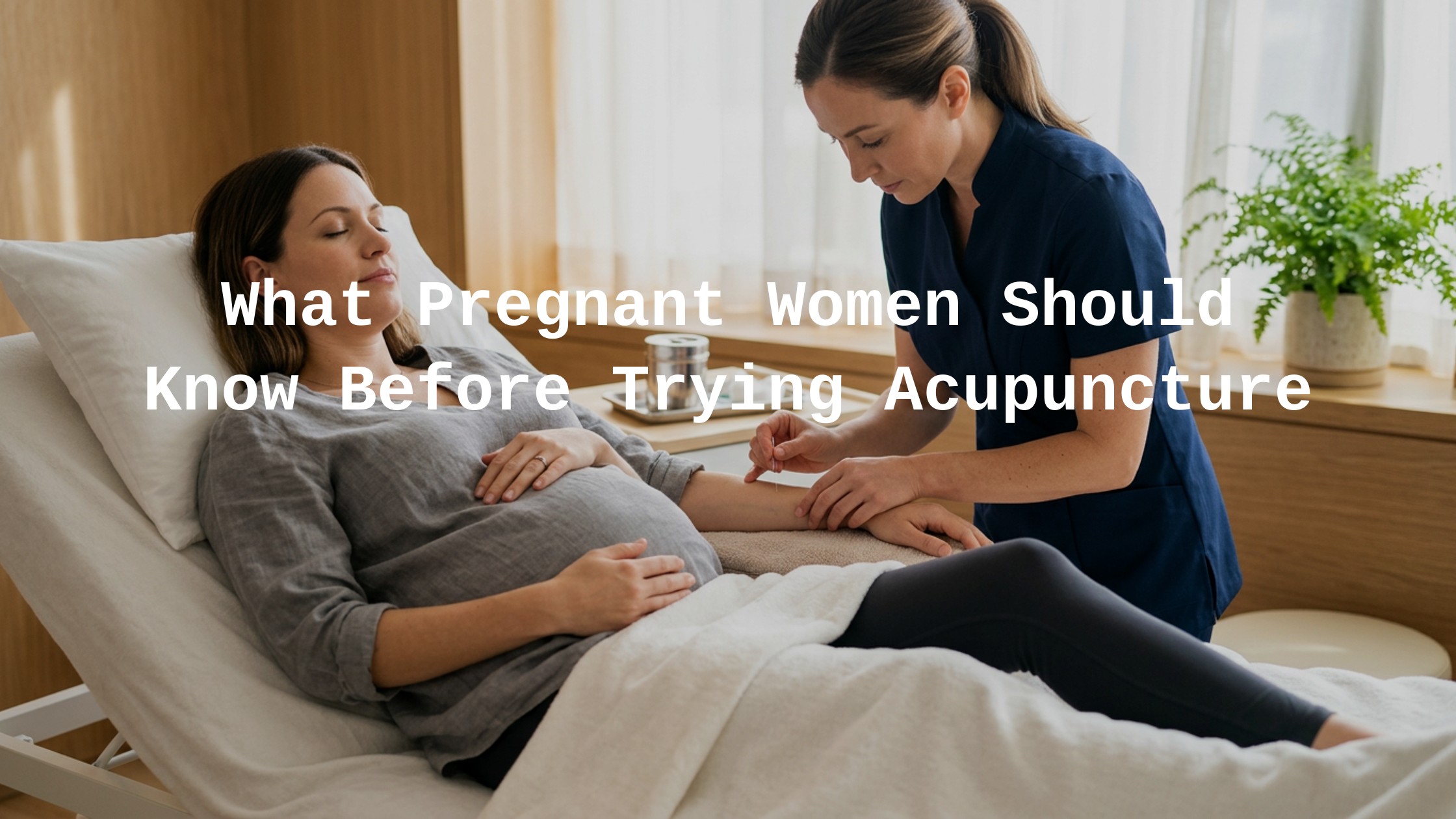
Acupuncture has been practiced for thousands of years, but when you’re pregnant, every wellness decision feels weightier — and rightly so. You’re not just thinking about yourself anymore. So when a friend recommends acupuncture for your morning sickness or your back feels like it’s staging a full rebellion at 28 weeks, it’s completely reasonable to stop and ask: is this actually safe?
The good news is that acupuncture during pregnancy is generally considered safe when performed by a qualified practitioner who understands prenatal care. But there are real nuances — specific points to avoid, trimester considerations, and situations where you should skip it entirely. This guide walks you through all of it so you can make a confident, informed decision.
The Short Answer
Yes — for most pregnant women, acupuncture is considered safe throughout all three trimesters. Medical organizations including the American College of Obstetricians and Gynecologists acknowledge it as one of the more commonly used complementary therapies during pregnancy, and a growing body of clinical research supports its use for specific pregnancy-related conditions.
That said, the answer comes with an important condition: it depends heavily on who is performing it. Acupuncture during pregnancy is not a one-size-fits-all treatment, and the difference between a beneficial session and a harmful one often comes down to your practitioner’s training in prenatal protocols. Certain acupuncture points are contraindicated during pregnancy — meaning they can stimulate uterine contractions or affect fetal positioning — and only a licensed acupuncturist with prenatal experience will know which points to avoid.
Important Note: Always inform your acupuncturist that you are pregnant before your first session — even if you think it’s obvious. A qualified prenatal acupuncturist will adjust their point selection and needle technique accordingly.
So the short answer is: yes, with the right provider, at the right time, for the right reasons. The rest of this article gives you the detail you need to get all three of those right.
Why It’s Safe
Acupuncture works by inserting very fine, sterile needles into specific points on the body to stimulate the nervous system, promote circulation, and encourage the body’s natural pain-relieving and regulatory responses. During pregnancy, these same mechanisms can address some of the most common and frustrating symptoms you may experience — without the pharmaceutical concerns that make many pregnant women hesitant to reach for medication.
Here’s why prenatal acupuncture has earned its place as a trusted complementary therapy:
- Non-pharmacological relief: Acupuncture offers a drug-free option for managing nausea, pain, and anxiety — all conditions where medication options during pregnancy are limited.
- Minimal physical intervention: The needles used are hair-thin and cause little to no tissue disruption, making the procedure low-risk when performed correctly.
- Adaptable by trimester: A trained prenatal acupuncturist modifies point selection and positioning at each stage of pregnancy to match your body’s changing needs.
- Broadly endorsed by midwives and integrative OBs: Many midwives and integrative obstetricians actively recommend acupuncture as part of a holistic prenatal care plan.
- Established safety record: Large-scale studies involving thousands of pregnant patients have reported no significant increase in adverse pregnancy outcomes from acupuncture treatment.
The key distinction is always provider qualification. When you work with a licensed acupuncturist (L.Ac.) who has specific training in obstetric or prenatal acupuncture, the risk profile is very low. The safety concerns that do exist are almost entirely tied to untrained or under-informed practitioners using contraindicated points.
Pro Tip: Look for an acupuncturist who holds a license from the National Certification Commission for Acupuncture and Oriental Medicine (NCCAOM) and who has documented experience treating pregnant patients. Don’t hesitate to ask directly: “Have you treated pregnant patients before, and do you know which points to avoid?”
What the Research Actually Says
The research on acupuncture during pregnancy is more robust than many people realize. While it’s not a field with decades of large randomized controlled trials the way pharmaceutical treatments are, the evidence that does exist is consistently encouraging — particularly for a handful of well-studied conditions.
Nausea and vomiting are the most thoroughly researched application. A Cochrane systematic review examining interventions for nausea and vomiting in early pregnancy found that acupuncture — particularly stimulation of the P6 (Neiguan) point on the inner wrist — showed meaningful benefit compared to sham treatments. This is one of the most cited findings in prenatal acupuncture research and has contributed to its widespread adoption among midwives.
Pelvic girdle pain and lower back pain are the second major area of evidence. A study published in the American Journal of Obstetrics and Gynecology found that acupuncture provided significantly greater relief from pelvic girdle pain during pregnancy than either physiotherapy or a standardized exercise program. Given that pelvic pain affects up to 50% of pregnant women , this is a meaningful finding for a large portion of expectant mothers.
Labor preparation and cervical ripening have also been studied, with some evidence suggesting that acupuncture in the final weeks of pregnancy may support cervical readiness and reduce the need for medical induction — though this area of research is still developing and results are mixed.
Mental health and sleep represent a growing area of prenatal acupuncture research. Preliminary studies suggest acupuncture may help reduce symptoms of prenatal depression and anxiety, as well as improve sleep quality — both of which have significant implications for maternal and fetal wellbeing. If you’re navigating the emotional weight of pregnancy, finding support in multiple forms can make a real difference.
Key Insight: The strongest research evidence for prenatal acupuncture exists for nausea and vomiting (especially in the first trimester) and pelvic/lower back pain (especially in the second and third trimesters). These are the conditions where you can feel most confident about its effectiveness.
It’s worth noting that research quality varies. Some studies have small sample sizes or methodological limitations, and the placebo effect in acupuncture research is notoriously difficult to control for. That said, the overall picture from systematic reviews is that acupuncture is both safe and moderately effective for several common pregnancy complaints — a conclusion that aligns with the clinical experience of most prenatal practitioners.
How to Do It Safely
Doing acupuncture safely during pregnancy comes down to four things: choosing the right provider, knowing what to expect at each trimester, understanding which points are off-limits, and preparing your body properly for each session.
Choosing Your Provider
This is the single most important step. You want a licensed acupuncturist — not a chiropractor, massage therapist, or wellness coach who offers acupuncture as an add-on service. Look specifically for someone with prenatal or obstetric acupuncture training, and confirm they are familiar with the contraindicated points list used in pregnancy protocols.
What to Expect by Trimester
Your acupuncturist should adjust their approach at every stage of your pregnancy. Here’s a general overview of how treatment typically differs:
- First Trimester (Weeks 1–12): Sessions are typically shorter and gentler. The focus is often on managing nausea, fatigue, and anxiety. Many practitioners are conservative in this trimester due to the higher baseline risk of miscarriage, even though acupuncture itself has not been shown to increase that risk.
- Second Trimester (Weeks 13–27): This is often considered the most comfortable trimester for acupuncture. Treatment can address back pain, round ligament discomfort, heartburn, and sleep issues. Positioning shifts to side-lying as your belly grows.
- Third Trimester (Weeks 28–40): Acupuncture in this stage often focuses on musculoskeletal pain, edema, and — closer to your due date — labor preparation. Specific points used near term are different from those used earlier in pregnancy, so communication with your provider is essential.
Points That Are Always Avoided During Pregnancy
A trained prenatal acupuncturist will automatically avoid these, but it’s worth knowing them yourself. The most commonly cited contraindicated points include:
- Spleen 6 (SP6): Located above the ankle; known to stimulate uterine contractions
- Large Intestine 4 (LI4): Located in the webbing between thumb and index finger; associated with labor induction
- Bladder 60 (BL60): Located behind the ankle; another point associated with uterine stimulation
- Governing Vessel 4 (GV4): Located on the lower back; avoided due to its effect on reproductive organs
- Stomach 12 (ST12): Located near the collarbone; avoided in pregnancy due to proximity to lymphatic structures
Common Mistake: Some pregnant women visit acupuncturists who primarily treat non-pregnant patients and don’t proactively mention their pregnancy. Always disclose your pregnancy upfront — even in the first trimester before you’re visibly showing — so your practitioner can modify their protocol immediately.
Practical Preparation Tips
- Eat a light meal 1–2 hours before your session — never go on an empty stomach
- Stay well-hydrated before and after treatment
- Wear loose, comfortable clothing that allows easy access to your arms, legs, and lower back
- Plan to rest for 15–20 minutes after your session if possible
- Let your OB or midwife know you are receiving acupuncture as part of your prenatal care
Acupuncture pairs well with other evidence-based prenatal wellness practices. If you’re building a holistic approach to your pregnancy, gentle exercise during pregnancy and nutrient-rich nutrition are two other pillars worth exploring alongside complementary therapies.
When to Avoid It Completely
Even though acupuncture is broadly safe during pregnancy, there are specific circumstances where you should not pursue it — or at minimum, should get explicit clearance from your OB or midwife before proceeding.
Medical Conditions That Warrant Caution or Avoidance
- Placenta previa: Any therapy that could stimulate uterine activity is contraindicated. Avoid acupuncture unless specifically cleared by your care team.
- Preterm labor risk or history: If you have a history of preterm labor or are currently at risk, avoid any acupuncture points associated with uterine stimulation — and consider avoiding acupuncture entirely until your provider confirms it’s safe.
- Threatened miscarriage or active bleeding: Do not pursue acupuncture during an episode of active bleeding or if you have been diagnosed with a threatened miscarriage.
- Severe preeclampsia: This condition requires close medical management, and complementary therapies should only be introduced with full medical oversight.
- Blood clotting disorders: If you have a condition that affects blood clotting or are on anticoagulant therapy, discuss the risks of needling with your doctor before booking a session.
Situational Red Flags
- The practitioner is not licensed or cannot confirm prenatal training
- The practitioner does not ask about your pregnancy history, gestational age, or current complications
- You are offered acupuncture as part of a package with other treatments (e.g., cupping, moxibustion, electrical stimulation) without a clear explanation of how each is modified for pregnancy
- You feel unwell, dizzy, or experience cramping during or after a session — stop and contact your midwife or OB
Important Note: Moxibustion — a technique that involves burning dried mugwort near acupuncture points — is sometimes used alongside acupuncture and has a specific application in pregnancy for turning breech babies (at point BL67). However, it should only be performed by a practitioner experienced in obstetric moxibustion and only after 34 weeks, under guidance from your care provider.
If you have a high-risk pregnancy — including twin or multiple pregnancies — the threshold for caution is higher. Always loop in your specialist before adding any complementary therapy to your care plan.
Quick Reference Chart
Use this chart for a fast, scannable overview of acupuncture safety during pregnancy across common conditions and situations.
| Condition / Situation | Acupuncture Status | Notes |
|---|---|---|
| Morning sickness / nausea | ✅ Safe | Well-researched; P6 point stimulation is most effective |
| Lower back pain | ✅ Safe | Strong evidence; avoid stimulating points near sacrum in first trimester |
| Pelvic girdle pain | ✅ Safe | Clinical trials show benefit; side-lying positioning recommended |
| Anxiety and sleep issues | ✅ Safe | Emerging evidence; gentle protocols used |
| Labor preparation (near term) | ✅ Safe | Only after 37 weeks; specific points used — different from general pregnancy protocol |
| Headaches and migraines | ⚠️ With Caution | Safe when LI4 and other contraindicated points are avoided |
| Heartburn / digestion | ⚠️ With Caution | Beneficial for many; ensure practitioner avoids abdominal points |
| Breech baby (moxibustion) | ⚠️ With Caution | Only after 34 weeks; requires experienced obstetric practitioner |
| Placenta previa | ❌ Avoid | Risk of stimulating uterine activity; get medical clearance first |
| Active bleeding / threatened miscarriage | ❌ Avoid | Do not proceed until bleeding has stopped and provider clears you |
| Preterm labor risk | ❌ Avoid | Uterine-stimulating points pose too great a risk; consult OB first |
| Severe preeclampsia | ❌ Avoid | Requires full medical management; no complementary therapy without clearance |
| Unlicensed or untrained practitioner | ❌ Avoid | Never receive acupuncture from someone without prenatal training during pregnancy |
Frequently Asked Questions
There is no credible evidence that acupuncture performed by a trained prenatal practitioner causes miscarriage. The concern stems from the fact that certain acupuncture points — particularly SP6 and LI4 — are known to stimulate uterine contractions and are therefore avoided during pregnancy. When a qualified practitioner follows proper prenatal protocols and avoids contraindicated points, the risk of acupuncture contributing to miscarriage is considered negligible. That said, many practitioners choose to be especially conservative in the first trimester, when miscarriage risk is naturally higher, regardless of cause.
Frequency depends on what you’re treating and how your body responds. For acute conditions like severe morning sickness, weekly sessions in the first trimester are common. For ongoing maintenance and pain management in the second and third trimesters, many women find biweekly or monthly sessions sufficient. Your acupuncturist will recommend a treatment schedule based on your specific symptoms and response to treatment. Always align this schedule with your overall prenatal care plan.
Yes, acupuncture can be safely performed in the first trimester, and it’s actually one of the most beneficial times to use it — particularly for managing nausea and fatigue. However, most experienced prenatal acupuncturists use a more conservative approach in the first 12 weeks, with shorter sessions, fewer needles, and strict avoidance of all contraindicated points. If you have a history of miscarriage or are considered high-risk, discuss the timing with both your acupuncturist and your OB or midwife before beginning treatment. You may also want to review what else to avoid during pregnancy as part of your first-trimester planning.
This is one of the most searched questions about acupuncture near the end of pregnancy. Some practitioners do offer “labor preparation” acupuncture in the final weeks, using specific points that are intentionally avoided earlier in pregnancy. The evidence for acupuncture as a labor induction method is mixed — some studies show modest effects on cervical ripening, while others show no significant difference compared to sham treatment. It’s generally considered safe after 37 weeks under the care of an experienced practitioner, but you should discuss it with your midwife or OB before pursuing it as an alternative to medical induction.
Most people describe acupuncture as producing a mild sensation — sometimes a dull ache, tingling, or warmth — rather than sharp pain. During pregnancy, some women find they are more sensitive to needle sensations, particularly in areas affected by pregnancy-related nerve changes or swelling. A good prenatal acupuncturist will check in with you throughout the session and adjust needle depth and placement based on your comfort. If you experience anything more than mild discomfort, speak up immediately. Acupuncture should never be painful.
Acupuncture is often used as part of a broader traditional medicine approach that may include herbal remedies. However, herbal therapies during pregnancy require their own careful evaluation — some herbs that are commonly used in traditional medicine are contraindicated during pregnancy. If you’re exploring complementary therapies more broadly, read up on saffron during pregnancy and always consult your healthcare provider before combining multiple alternative treatments. The same caution applies to dietary choices — knowing what’s safe to eat during pregnancy is just as important as knowing what treatments are safe.
Be straightforward and proactive. Tell your OB or midwife that you’re considering acupuncture, what condition you’re hoping to address, and who you plan to see. Most OBs and midwives are supportive of acupuncture when it’s performed by a licensed practitioner — and many will have referrals or preferences. Your care team needs a complete picture of everything you’re doing to support your pregnancy, including complementary therapies, lifestyle adjustments, and nutritional choices, so they can give you the most informed guidance possible.