Can You Meditate While Pregnant? Yes — and Here’s How to Do It Right

March 3, 2026
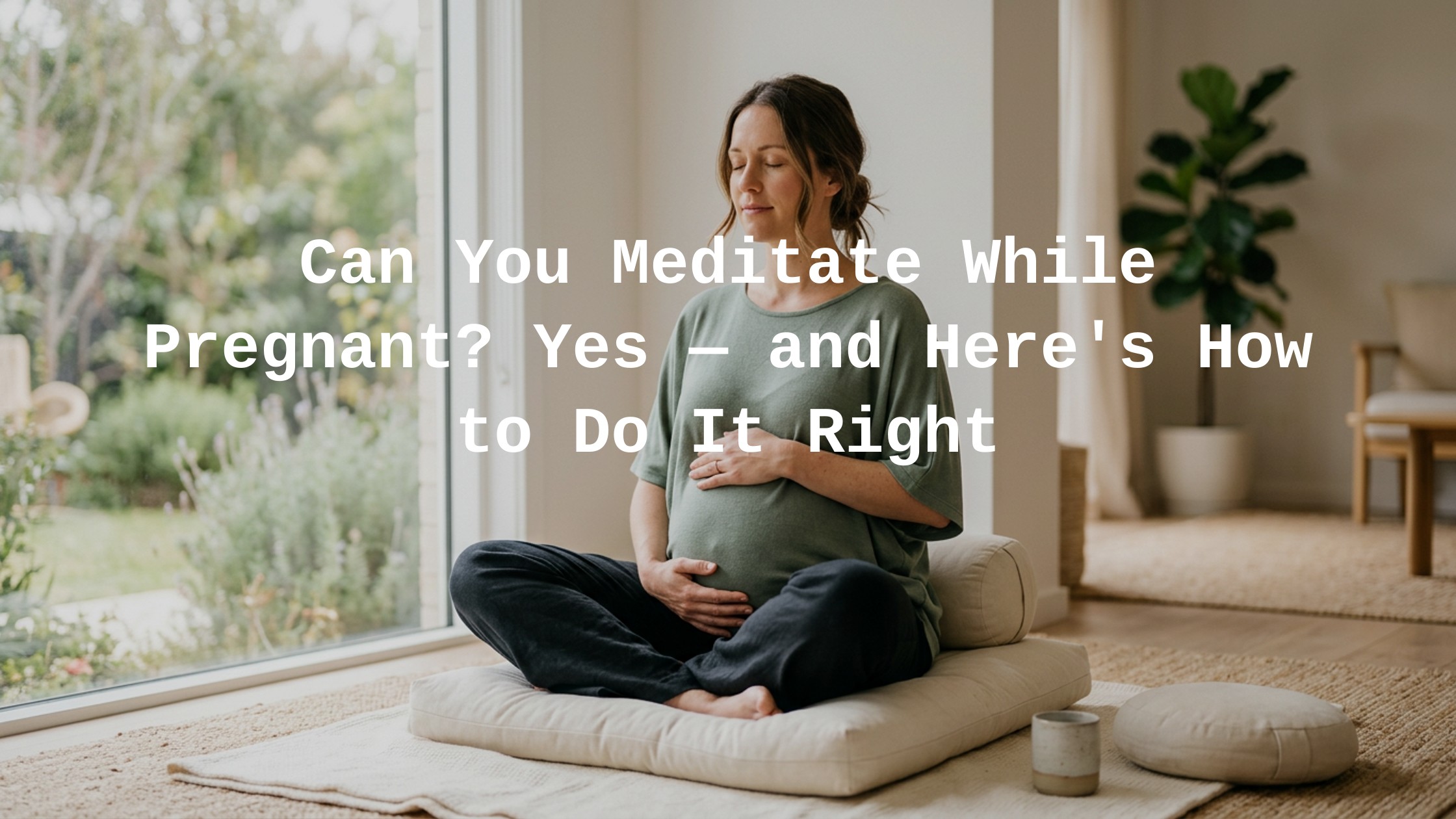
Pregnancy brings a flood of questions about what’s safe, what’s helpful, and what you should avoid entirely — and meditation is one topic that deserves a clear, confident answer. The good news? Not only is meditation safe during pregnancy, but research consistently shows it can make a meaningful difference in how you feel physically and emotionally throughout all three trimesters.
Whether you’re brand new to mindfulness or you’ve had a regular practice for years, pregnancy changes a few things about how, when, and where you meditate. This guide walks you through everything you need to know — from what the science actually says to trimester-specific techniques, safe positions, and the handful of situations where you should pause and check with your provider first.
The Short Answer
Yes — you can meditate while pregnant, and in most cases, it’s not just safe but actively encouraged. Meditation is a low-impact, non-invasive practice that carries no known risks for the vast majority of healthy pregnancies. Unlike some wellness practices that require modification or medical clearance, basic mindfulness and breathing-based meditation can typically be started or continued at any point during pregnancy without special permission from your doctor.
That said, “it depends” applies to a few specific scenarios. If your pregnancy is considered high-risk, if you’re experiencing severe anxiety or depression, or if certain physical positions become uncomfortable as your bump grows, some adjustments are worth making. The core practice itself, however, remains accessible and beneficial from the first trimester through the final weeks before birth.
Key Insight: Meditation during pregnancy isn’t a trend — it’s a well-studied, evidence-supported tool that midwives, OBs, and mental health professionals increasingly recommend as part of prenatal care.
Why It’s Safe
Meditation is safe during pregnancy for a straightforward reason: it works with your body’s own systems rather than introducing anything external. There are no substances, no physical strain, and no interventions involved. At its core, meditation activates the parasympathetic nervous system — your body’s “rest and digest” mode — which directly counteracts the stress response that can be harmful during pregnancy when chronically elevated.
Chronic stress during pregnancy is associated with elevated cortisol levels, which research has linked to preterm labor, low birth weight, and increased risk of postpartum depression. Meditation reduces cortisol, lowers heart rate, and regulates breathing — all of which benefit both you and your baby. The American College of Obstetricians and Gynecologists recognizes stress reduction as a meaningful component of prenatal wellness, and mindfulness-based practices are among the most commonly cited non-pharmacological approaches.
Beyond stress reduction, regular meditation during pregnancy has been associated with:
- Reduced pregnancy-related anxiety and fear of childbirth
- Improved sleep quality, particularly in the second and third trimesters
- Lower perceived pain during labor and delivery
- Greater emotional resilience and mood stability
- Stronger mind-body connection that supports labor preparation
- Reduced symptoms of prenatal depression
It’s also worth noting that meditation supports the kind of intentional breathing that’s central to many prenatal exercise practices — making it a natural complement to other healthy habits you’re already building.
Pro Tip: Even five minutes of focused breathing each morning can meaningfully shift your baseline stress level over the course of a week. You don’t need an hour-long session to feel the benefits during pregnancy.
What the Research Actually Says
The scientific literature on prenatal meditation has grown substantially over the past decade, and the findings are consistently encouraging. A landmark study published in the journal Mindfulness found that pregnant women who completed a mindfulness-based stress reduction (MBSR) program reported significantly lower levels of anxiety, depression, and negative affect compared to control groups. Crucially, these benefits persisted into the postpartum period.
Research from the National Institutes of Health has examined mindfulness-based interventions specifically designed for pregnant women and found measurable improvements in psychological wellbeing, perceived stress, and self-compassion. Participants also reported feeling more prepared for childbirth and more confident in their ability to manage labor pain.
A 2019 systematic review analyzing multiple controlled trials concluded that mindfulness meditation interventions during pregnancy were associated with significant reductions in depression and anxiety symptoms, with no adverse effects reported across any of the studies reviewed. That last point matters: across a substantial body of research, meditation has not been linked to any negative outcomes for mother or baby when practiced appropriately.
Some studies have gone further, examining whether prenatal meditation influences birth outcomes. While results are mixed on outcomes like gestational age and birth weight, several studies suggest that women who meditated regularly during pregnancy reported shorter labor times and lower use of pain medication during delivery — findings that align with the broader research on pain perception and mindfulness.
Key Insight: The research doesn’t just say meditation is “probably fine” during pregnancy — it actively demonstrates measurable benefits for mental health, stress hormones, and labor preparedness. That’s a meaningful distinction.
For further reading on managing stress and mental wellbeing during pregnancy, particularly during periods of isolation or uncertainty, you may find it helpful to explore strategies for staying grounded at home and coping with emotional stress during confinement.
How to Do It Safely
Meditation during pregnancy is largely intuitive, but a few practical adjustments make a real difference — especially as your body changes across trimesters. Here’s what you need to know to practice safely and comfortably from week one through your due date.
Safe Positions for Prenatal Meditation
Position matters more as your pregnancy progresses. In the first trimester, most standard meditation positions — seated cross-legged, lying flat, or in a chair — are comfortable and safe. By the second trimester, lying flat on your back for extended periods is worth reconsidering, as the weight of the uterus can compress the inferior vena cava and reduce blood flow.
Instead, try these alternatives:
- Supported recline: Use pillows or a wedge to elevate your upper body at a 30–45 degree angle
- Left-side lying: Lying on your left side with a pillow between your knees is comfortable and circulatory-friendly
- Seated in a chair: A supportive chair with feet flat on the floor works well throughout all trimesters
- Cross-legged with back support: Sitting against a wall or sofa reduces lower back strain
- Pregnancy bolster position: A full-body pregnancy pillow supports a semi-reclined position that works beautifully for longer sessions
Trimester-by-Trimester Guidance
First Trimester (Weeks 1–12): Fatigue and nausea are common, and meditation can actually help. Short sessions of 5–10 minutes focused on slow, diaphragmatic breathing are ideal. Body scan meditations help you tune into early physical changes without anxiety. Most positions are still comfortable at this stage.
Second Trimester (Weeks 13–26): Many women feel their best during this trimester, making it an excellent time to establish a consistent practice. You can extend sessions to 15–20 minutes. Begin transitioning away from flat-on-back positions. Loving-kindness (metta) meditation — which involves directing compassion toward yourself and your baby — is particularly well-suited to this stage and has been shown to strengthen the maternal-infant bond.
Third Trimester (Weeks 27–40): Physical discomfort increases, and anxiety about labor often peaks. This is when meditation earns its keep most dramatically. Focus on breath-awareness practices that mirror labor breathing techniques, visualization meditations that help you mentally rehearse a calm birth, and body-scan practices that help you release tension in specific muscle groups. Sessions of 10–20 minutes in a supported seated or side-lying position work best.
Types of Meditation That Work Well During Pregnancy
Not all meditation styles are equally suited to pregnancy. The following approaches are well-researched, widely recommended, and easy to adapt as your body changes:
- Mindfulness-Based Stress Reduction (MBSR): The most extensively studied approach for prenatal use; focuses on present-moment awareness without judgment
- Breath-focused meditation: Simple, adaptable, and directly applicable to labor breathing — ideal for all trimesters
- Body scan meditation: Helps identify and release areas of physical tension; particularly useful in the third trimester
- Loving-kindness meditation: Cultivates compassion for yourself and your baby; supports emotional bonding
- Guided visualization: Mentally rehearsing a positive birth experience; shown to reduce fear of childbirth
- Yoga nidra (yogic sleep): A deeply restorative guided practice that’s safe in a supported reclined position
Pro Tip: Apps like Calm, Headspace, and Expectful offer guided meditations specifically designed for pregnancy. Expectful in particular is built entirely around prenatal and postpartum mindfulness, with trimester-specific sessions that adapt as you progress.
Pairing meditation with other intentional self-care practices — like nourishing pregnancy-supportive nutrition and wearing comfortable, supportive clothing — creates a holistic foundation for a healthier pregnancy experience.
When to Avoid It Completely
For most pregnant women, there is no reason to avoid meditation entirely. However, there are specific circumstances where you should pause your practice, modify your approach, or speak with your healthcare provider before continuing.
Medical Situations That Warrant a Conversation First
If you have a high-risk pregnancy — including conditions like placenta previa, preeclampsia, or a history of preterm labor — check with your OB or midwife before starting any new wellness practice, including meditation.
Not because meditation is likely to cause harm, but because your provider may have specific positional recommendations or want to know what you’re doing as part of your overall care plan. If you’re experiencing severe prenatal depression or a diagnosed anxiety disorder, meditation can still be beneficial — but it works best as a complement to professional mental health support, not a replacement for it.
Some individuals with trauma histories find that certain types of deep body-focused meditation can surface difficult emotions unexpectedly. If that happens, trauma-sensitive mindfulness approaches or guidance from a mental health professional familiar with prenatal care is worth seeking out.
Positions and Practices to Stop Immediately
- Lying flat on your back for more than a few minutes after the first trimester — the supine position can compress major blood vessels and reduce circulation to the baby
- Breath retention practices (kumbhaka in yoga/pranayama) — holding your breath, even briefly, is not recommended during pregnancy as it temporarily reduces oxygen availability
- Hyperventilation-based techniques — practices like holotropic breathwork that intentionally alter breathing patterns are contraindicated during pregnancy
- Any practice that causes dizziness, lightheadedness, or nausea — stop immediately and rest in a comfortable side-lying position
Important Note: If you feel dizzy, short of breath, or experience any unusual physical sensation during meditation, stop the session and rest on your left side. If symptoms persist, contact your healthcare provider.
It’s also worth being thoughtful about the emotional content of guided meditations. Some visualization practices focus heavily on fear, pain, or worst-case scenarios — these are not appropriate during pregnancy. Stick with practices that are explicitly designed to be calming, affirming, and positively focused. For inspiration and a grounded emotional perspective on pregnancy, pregnancy-focused affirmations and reflections can complement your meditation practice beautifully.
Quick Reference Chart
Use this chart as a fast reference guide when you’re deciding whether a specific meditation practice or scenario is safe, needs modification, or should be avoided during pregnancy.
| Practice / Scenario | Status | Notes |
|---|---|---|
| Breath-focused meditation (seated or side-lying) | ✅ Safe | All trimesters; ideal foundation practice |
| Body scan meditation (supported position) | ✅ Safe | Avoid flat-on-back after first trimester |
| Loving-kindness (metta) meditation | ✅ Safe | All trimesters; excellent for bonding |
| Guided visualization (positive birth prep) | ✅ Safe | Particularly beneficial in third trimester |
| Mindfulness-Based Stress Reduction (MBSR) | ✅ Safe | Most researched prenatal approach |
| Yoga nidra (supported recline) | ✅ Safe | Use pregnancy bolster or left-side position |
| Meditation apps (Calm, Headspace, Expectful) | ✅ Safe | Choose prenatal-specific programs when available |
| Lying flat on back (2nd/3rd trimester) | ⚠️ With Caution | Limit to under 5 minutes; use incline support |
| Meditation with high-risk pregnancy | ⚠️ With Caution | Consult OB/midwife first; likely still fine |
| Meditation alongside prenatal depression treatment | ⚠️ With Caution | Use as complement to professional care, not replacement |
| Trauma-focused or deep body-scan work (trauma history) | ⚠️ With Caution | Seek trauma-sensitive mindfulness guidance |
| Breath retention / kumbhaka practices | ❌ Avoid | Reduces oxygen availability; not safe during pregnancy |
| Holotropic breathwork or hyperventilation techniques | ❌ Avoid | Contraindicated during pregnancy |
| Practices that cause dizziness or lightheadedness | ❌ Avoid | Stop immediately; rest on left side |
| Fear-focused or negative visualization | ❌ Avoid | Increases anxiety; counterproductive |
Frequently Asked Questions
No — standard mindfulness and breathing-based meditation poses no known risk to your baby. In fact, by reducing maternal cortisol and stress hormones, regular meditation creates a more favorable hormonal environment for fetal development. The only exceptions are specific breathwork techniques like breath retention or hyperventilation, which should be avoided.
You can start at any point — including before you even know you’re pregnant. There’s no “too early” when it comes to mindfulness. Many practitioners recommend beginning in the first trimester so you have an established practice to lean on as pregnancy progresses and discomfort or anxiety increases in later weeks.
Even five to ten minutes daily produces measurable benefits. Most research studies on prenatal meditation use sessions of 20–45 minutes, but consistency matters more than duration. A ten-minute daily practice is more valuable than an occasional hour-long session. Start with whatever feels manageable and build gradually.
Yes, most mainstream meditation apps are safe during pregnancy. Look for apps that offer prenatal-specific programs or allow you to filter by session type. Expectful is designed exclusively for pregnancy and postpartum. Calm and Headspace both offer sleep and stress-reduction meditations that are appropriate for prenatal use. Avoid any guided sessions that include breath retention or intense emotional processing work.
Meditation won’t eliminate nausea, but diaphragmatic breathing and relaxation practices can help reduce its intensity by calming the nervous system and reducing the anxiety that often amplifies nausea symptoms. Short, gentle breath-focused sessions in a comfortable position are best when you’re feeling unwell. For a broader look at what you’re putting into your body during pregnancy, reviewing foods and beverages to avoid alongside your wellness routine is worth doing.
Absolutely — and many women find it one of their most powerful tools during labor. Breath-focused meditation, body scan techniques, and positive visualization are all used in evidence-based childbirth preparation programs like Hypnobirthing and Bradley Method. The breathing patterns you practice during prenatal meditation translate directly to labor management. The more familiar the practice feels before labor begins, the more accessible it will be in the moment.
Falling asleep during meditation — especially in the third trimester — is completely normal and nothing to worry about. Pregnancy fatigue is real, and if your body needs sleep, it will take it. Yoga nidra and body scan practices actually hover at the edge of sleep intentionally. If you consistently fall asleep and want to stay more alert, try meditating seated rather than lying down, or choose a shorter session earlier in the day.
Pregnancy is one of the most transformative experiences of your life, and building a meditation practice during this time gives you a tool that serves you not just through birth but well into parenthood. For more support on navigating the emotional and relational dimensions of pregnancy, explore how to maintain connection with your partner and find community through shared pregnancy experiences. You’re not just preparing your body — you’re preparing your mind, and that investment pays forward in ways that are hard to overstate.