44 Tourist Attractions in Texas for First-Timers and Repeat Visitors Alike

March 12, 2026
Texas doesn’t do anything small. From the Gulf Coast’s white-sand shores to the rugged peaks of the Guadalupe Mountains, from world-class museums in Houston to ghost towns baking in the West Texas sun, this state holds more variety than most people expect — and more surprises than even longtime visitors can exhaust.
Whether you’re mapping out your first road trip through the Lone Star State or returning to check off a few more items on your list, these 44 tourist attractions in Texas give you every reason to keep coming back. You’ll find natural wonders, living history, space exploration, world-class cuisine, and small-town charm all packed into one unforgettable destination.
1. The Alamo (San Antonio)
No trip to Texas is complete without standing in front of the Alamo , the iconic 18th-century mission that became the site of one of history’s most defining battles. In 1836, a small group of Texan defenders held the fort against Mexican General Santa Anna’s forces for 13 days — a sacrifice that rallied the Texas Revolution and ultimately led to independence.
What surprises many first-time visitors is how compact the grounds feel surrounded by downtown San Antonio. The restored church and Long Barrack museum hold original artifacts, weapons, and documents that put the battle in sharp human focus. Admission to the shrine itself is free, making it one of the most accessible historic landmarks in the country.
Pro Tip: Visit early in the morning on weekdays to avoid the midday crowds. The surrounding Alamo Plaza fills up fast, especially during summer and holiday weekends.
The Alamo sets the tone for understanding Texas identity — a mix of defiance, pride, and multicultural heritage that runs through nearly every corner of the state.
2. River Walk (San Antonio)
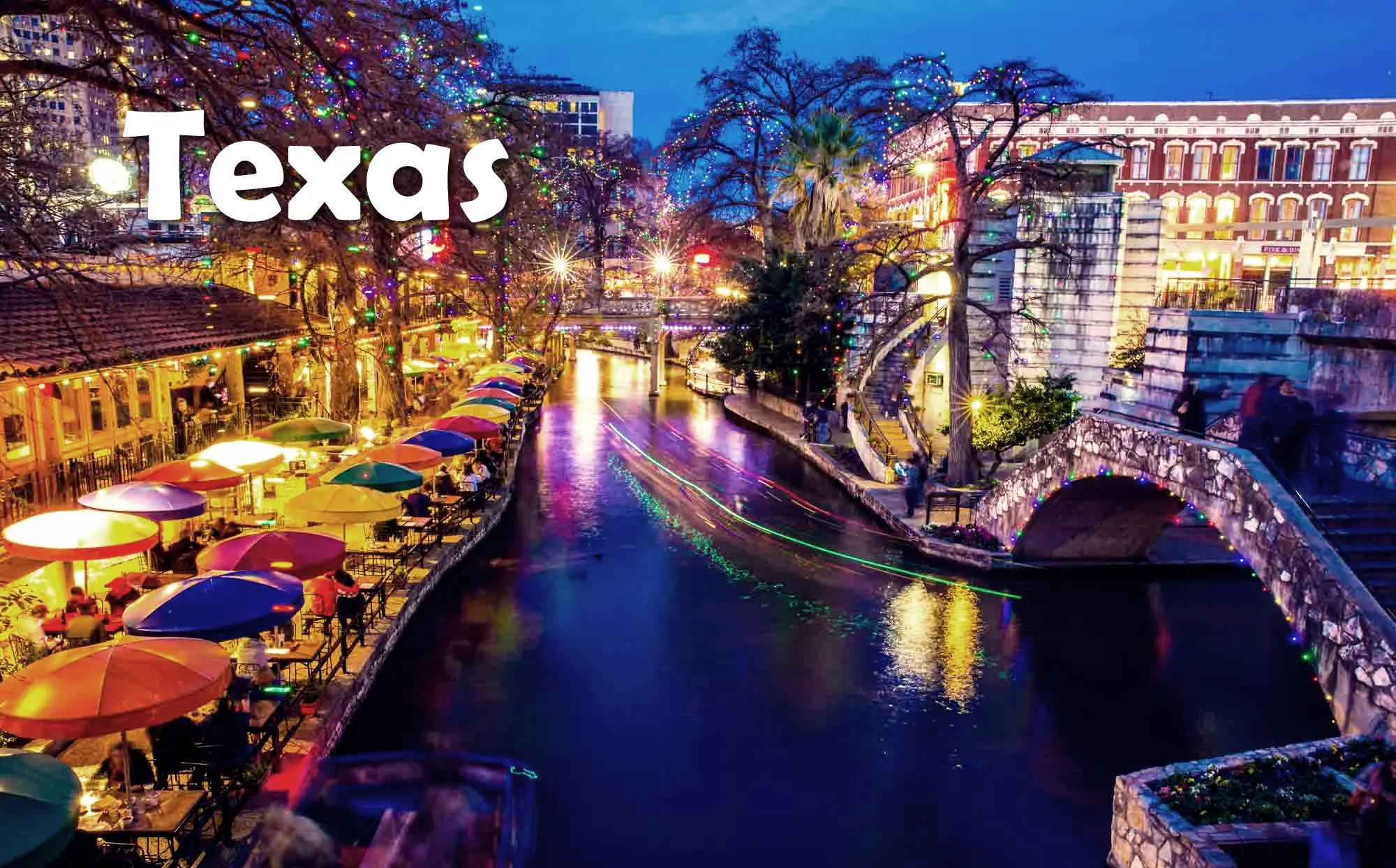
Just steps from the Alamo, the San Antonio River Walk is a 15-mile network of pathways lining the San Antonio River, lined with restaurants, hotels, shops, art galleries, and open-air bars. It operates on two levels — the street above and the sunken river corridor below — giving the whole experience a surprisingly intimate, almost European feel.
River Walk is one of the most visited tourist attractions in Texas for good reason: it works equally well as a romantic evening stroll, a family afternoon, or a lively weekend outing. Flat-bottomed river barges offer narrated tours that give you historical context while you float past stone bridges and cypress trees draped in lights.
Beyond dining and people-watching, the River Walk connects to the San Antonio Museum of Art and the Pearl District, a beautifully restored brewery complex now home to independent restaurants and weekend farmers markets. You could spend three days here and still find new spots.
3. Space Center Houston
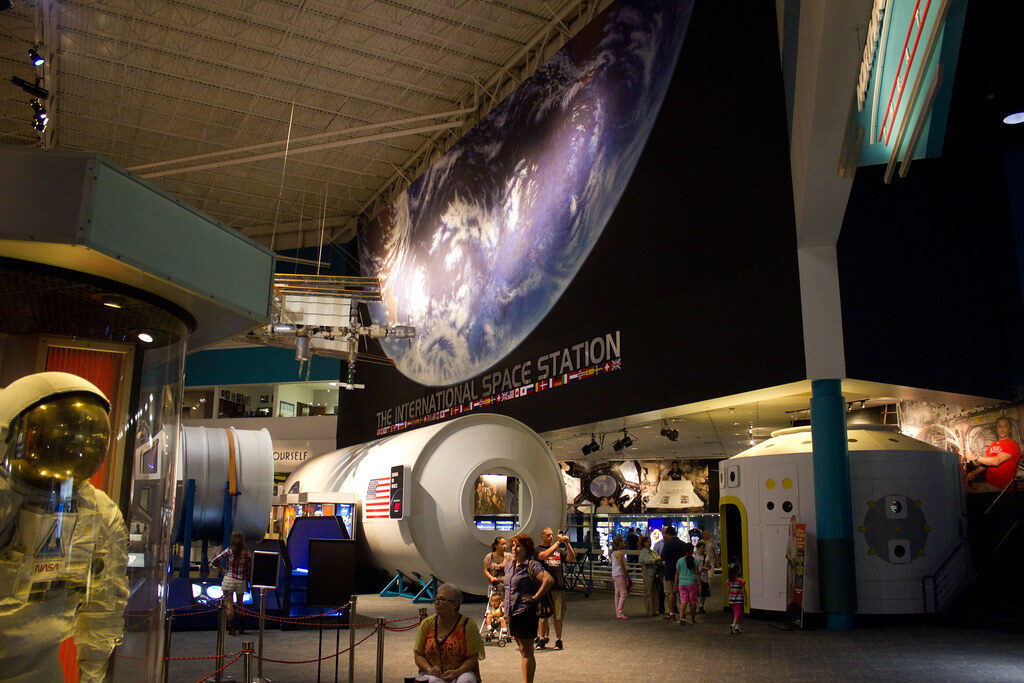
Houston gave the world “Houston, we have a problem,” and Space Center Houston is where you go to understand exactly what that meant. As the official visitor center for NASA’s Johnson Space Center, it offers a look inside actual mission control rooms, hands-on simulators, and displays of historic spacecraft that defined American ambition.
The centerpiece for many visitors is the Independence Plaza exhibit, where you can board a full-size replica of the Space Shuttle Independence mounted atop a real NASA 905 shuttle carrier aircraft. Seeing it up close — massive, weathered, impossibly real — tends to stop people in their tracks.
Key Insight: The tram tour to the active Johnson Space Center campus is included with admission and gives you access to Mission Control and astronaut training facilities not open to the general public. Book tickets in advance during peak season.
Whether you’re a space enthusiast or just curious about what happens behind the scenes at NASA, Space Center Houston delivers a genuinely awe-inspiring few hours.
4. Galveston Island
About 50 miles south of Houston, Galveston Island offers a different kind of Texas entirely — one built around Victorian architecture, Gulf breezes, and a resilient coastal culture that refused to quit after the catastrophic 1900 hurricane. Today, the island balances beach town energy with a historic downtown that rewards slow exploration.
The Strand, Galveston’s main commercial district, is packed with antique shops, local restaurants, and galleries housed in 19th-century iron-front buildings. Pleasure Pier juts out over the Gulf with rides and carnival games. The beach itself stretches for miles and stays warm enough to swim from spring through early fall.
For history lovers, the Galveston Historical Foundation maintains several excellent museums and offers tours of the island’s most significant landmarks. Moody Gardens (covered separately in this guide) adds another layer of entertainment to an already full destination.
5. Big Bend National Park
If any single place in Texas qualifies as a revelation, it’s Big Bend National Park . Sprawling across more than 800,000 acres in the Chihuahuan Desert along the Rio Grande, Big Bend contains three distinct ecosystems — desert, river, and mountain — packed into one remote corner of West Texas.
The Chisos Mountains rise dramatically from the desert floor, offering trails through pine forests that feel completely at odds with the scorched lowlands below. The Santa Elena Canyon carves through limestone walls 1,500 feet high, visible by foot or canoe. At night, the park ranks among the darkest skies in the lower 48 states , making it a world-class stargazing destination.
Important Note: Big Bend is genuinely remote. The nearest large city is three to four hours away. Plan fuel, water, and food carefully, and book campsites well in advance — particularly during spring and fall when the park fills quickly.
First-timers often underestimate Big Bend’s scale. Repeat visitors know it takes multiple trips to do it justice.
6. Guadalupe Mountains National Park
Lesser-known than Big Bend but equally impressive, Guadalupe Mountains National Park sits at the far western edge of Texas near the New Mexico border. The park contains the four highest peaks in Texas, including Guadalupe Peak — the state’s highest point at 8,751 feet.
The Guadalupe Mountains were once an ancient marine reef, and fossil evidence of that prehistoric ocean appears throughout the limestone formations. The famous El Capitan cliff face, visible from US-62/180, has guided travelers across the desert for centuries and remains one of the most photographed natural features in West Texas.
Hiking here is genuine and rewarding, but the trails are exposed and strenuous. The Guadalupe Peak Trail gains 3,000 feet in elevation over roughly 4.2 miles each way — challenging but absolutely worth it for the views from the summit.
7. Padre Island National Seashore
The longest undeveloped stretch of barrier island in the world, Padre Island National Seashore protects 70 miles of pristine Gulf Coast between Corpus Christi and South Padre Island. No resorts, no boardwalks — just wind-carved dunes, surf, and an astonishing concentration of wildlife.
Padre Island is one of the most important nesting sites for Kemp’s ridley sea turtles, which are critically endangered. From late April through midsummer, the national seashore runs public sea turtle releases — an experience that tends to leave visitors genuinely moved.
Birdwatchers will find the island especially rewarding during spring and fall migration when hundreds of species funnel through the coast. The four-wheel-drive beach beyond the paved road opens up 60 miles of near-total solitude — bring everything you need because there are no services out there.
8. San Antonio Missions National Historical Park
San Antonio’s story doesn’t begin or end at the Alamo. The San Antonio Missions National Historical Park encompasses four other Spanish colonial missions — Concepción, San José, San Juan, and Espada — that form the largest concentration of Spanish colonial architecture in North America.
Together with the Alamo, these missions were designated a UNESCO World Heritage Site in 2015. What makes them distinctive is that three of the four still function as active Catholic parishes — meaning you’re stepping into living religious communities, not museum pieces.
Mission San José is often called the “Queen of the Missions” for its ornate Rose Window and impressive granary ruins. All five missions connect via a 15-mile trail along the San Antonio River that’s walkable or bikeable, making it easy to experience the entire collection in a single day.
9. Natural Bridge Caverns
About 20 miles north of San Antonio, Natural Bridge Caverns takes you underground into a system of chambers that stayed hidden until 1960, when a group of college students discovered the entrance. Named for a 60-foot natural limestone bridge spanning the cave entrance, it’s among the largest commercial caverns in Texas.
The formations inside — stalactites, stalagmites, flowstones, and cave bacon — grow at a rate of roughly one cubic inch per 100 years, making the towering columns you walk beneath millions of years in the making. The caverns maintain a constant 70°F year-round, offering welcome relief from Texas summer heat.
Beyond the cave tours, the property has expanded to include outdoor adventures like zip lines, a discovery village, and gem mining activities that make it a solid family stop. Tours run throughout the day, and the deeper “Hidden Wonders” tour gives experienced explorers a longer, more immersive underground experience.
10. SeaWorld San Antonio
SeaWorld San Antonio combines thrill rides with marine animal experiences and has evolved significantly over the past decade in response to changing public expectations around animal care. Today the park emphasizes education, conservation, and rescue operations alongside its entertainment offerings.
The aquarium exhibits, penguin encounter, and shark tank provide close-up access to marine life that genuinely engages younger visitors. Thrill seekers will find no shortage of water rides and roller coasters, including the Tidal Surge and Wave Breaker coasters.
Pro Tip: Visit in the late afternoon and evening during summer — crowds thin out, the heat drops, and many of the water features are most enjoyable when the sun is lower. Season passes offer excellent value if you’re spending multiple days in San Antonio.
11. Six Flags Over Texas (Arlington)
The original Six Flags Over Texas in Arlington opened in 1961 and launched what became one of the largest amusement park chains in the world. Today the park runs 19 roller coasters — more than any other Six Flags property — alongside classic family rides, water attractions, and seasonal events.
Highlights include the New Texas Giant, a steel-tracked wooden coaster hybrid that regularly ranks among the best coasters in the country, and Mr. Freeze, a launched coaster that hits 70 mph in under four seconds. The park is part of the broader Arlington Entertainment District, which also includes AT&T Stadium and Globe Life Field.
12. AT&T Stadium (Arlington)
Home of the Dallas Cowboys, AT&T Stadium is legitimately one of the most impressive buildings in the United States. With a retractable roof, a capacity of over 100,000 for major events, and the world’s largest column-free interior space, it regularly hosts NFL games, college football, concerts, boxing matches, and international soccer.
Art enthusiasts will appreciate that the stadium doubles as a serious contemporary art museum — the Cowboys organization has assembled a rotating collection of large-scale works from globally recognized artists displayed throughout public areas.
Tours run on non-event days and take you onto the field, into the locker rooms, and through the press box — a behind-the-scenes experience that fans of architecture, sports, or both will appreciate.
13. Dallas Arts District
The Dallas Arts District is the largest contiguous urban arts district in the United States, covering 68 acres in the heart of downtown Dallas. Within its boundaries you’ll find the AT&T Performing Arts Center, the Nasher Sculpture Center, the Crow Museum of Asian Art, and the Dallas Museum of Art — all within comfortable walking distance of each other.
The Dallas Museum of Art alone holds more than 24,000 objects spanning 5,000 years of human creativity, and general admission is free. The Nasher Sculpture Center features a curated outdoor garden that showcases works by Rodin, Picasso, Calder, and Miró against a backdrop of downtown towers.
Plan at least a full day here, more if you want to catch a performance at the Winspear Opera House or Wyly Theatre — two of the most architecturally striking performance venues built in America this century.
14. Sixth Floor Museum (Dallas)
The Sixth Floor Museum at Dealey Plaza occupies the floors of the former Texas School Book Depository from which Lee Harvey Oswald fired the shots that killed President John F. Kennedy on November 22, 1963. It’s a sobering, carefully curated examination of Kennedy’s presidency, the assassination, its investigation, and its lasting impact on American history.
The audio guide is excellent and walks you through the preserved sniper’s nest behind a glass barrier, the surrounding context of Cold War America, and the immediate aftermath of one of the most consequential events of the 20th century. Many visitors describe the experience as unexpectedly emotional regardless of their prior knowledge.
| Museum Feature | Details |
|---|---|
| Location | 411 Elm St, Dallas (7th floor entrance) |
| Audio Tour | Included with admission |
| Sniper’s Nest | Preserved and viewable through glass |
| Estimated Visit Time | 1.5–2.5 hours |
| Nearby | Dealey Plaza, Grassy Knoll, JFK Memorial |
15. Dealey Plaza (Dallas)
Standing in Dealey Plaza — the grassy, open space where the Kennedy motorcade passed on that November afternoon — gives you a different kind of understanding than the museum above. The plaza is smaller than most people imagine, the sight lines more compressed, the geography more intimate.
White X marks on Elm Street indicate where the fatal shots struck. The grassy knoll, the pergola, the triple underpass — all of it remains largely unchanged since 1963. Walking the space connects history to physical reality in a way that no screen can replicate, making it a meaningful stop for anyone who visits the Sixth Floor Museum.
16. Fort Worth Stockyards
The Fort Worth Stockyards National Historic District is where the American West lives on not as nostalgia but as genuine daily culture. Twice a day, longhorn cattle are driven down Exchange Avenue by cowboys on horseback — the world’s only daily cattle drive — and it draws crowds that understand exactly what they’re watching: a living link to the era when Fort Worth was the last major stop on the Chisholm Trail.
Beyond the cattle drive, the Stockyards offer two-stepping at Billy Bob’s Texas (the world’s largest honky-tonk), rodeos at Cowtown Coliseum, and independent Western wear shops selling boots and hats that have nothing to do with tourism and everything to do with tradition. The district has a walkable, genuine energy that’s surprisingly hard to find anywhere else.
Key Insight: Friday and Saturday nights at the Stockyards are lively but crowded. Weekday afternoons give you the same cattle drive experience with a much more relaxed pace and better access to the shops.
17. Kimbell Art Museum (Fort Worth)
The Kimbell Art Museum is widely considered one of the finest small art museums in the world, and its building — designed by Louis Kahn and completed in 1972 — is itself a masterwork of 20th-century architecture. Natural light filters through vaulted concrete ceilings in a way that makes the galleries feel alive at different hours of the day.
The permanent collection is modest in size but exceptional in quality, including works by Caravaggio, El Greco, Velázquez, Rembrandt, Cézanne, Matisse, and Picasso. Unlike larger encyclopedic museums, every piece in the Kimbell feels deliberately chosen.
Admission to the permanent collection is free. The museum sits in the Fort Worth Cultural District alongside the Modern Art Museum of Fort Worth and the Amon Carter Museum of American Art, making this area one of the most rewarding museum corridors in the South.
18. Houston Museum of Natural Science
The Houston Museum of Natural Science is one of the most visited museums in the United States, and it earns that traffic. The permanent collections cover paleontology (with an outstanding dinosaur hall), gems and minerals, ancient Egypt, astronomy, and the cultures of the Americas — all at a scale and depth that satisfies both casual visitors and serious enthusiasts.
The Morian Hall of Paleontology contains more than 50 mounted skeletons in dynamic poses, including a massive Diplodocus that anchors a gallery you genuinely need time to absorb. The gem and mineral collection is one of the largest in the world, with specimens that look more like abstract art than geology.
IMAX films, a planetarium, and traveling exhibitions round out an institution that consistently brings world-class programming to Houston.
19. Houston Zoo
The Houston Zoo is home to more than 6,000 animals representing 900 species across 55 acres, and it consistently ranks among the top zoos in the country for conservation work and visitor experience. The African Forest, Asian elephant habitat, and rainforest exhibit are perennial highlights.
What sets the Houston Zoo apart is its genuine commitment to wildlife conservation — the organization supports field programs protecting species on multiple continents. A visit here directly contributes to that work.
Pro Tip: The zoo opens at 9 AM and animals are most active in the cooler morning hours. Plan your visit to hit the large mammal exhibits early, then work toward indoor exhibits as the afternoon heat builds.
20. Museum of Fine Arts Houston
The Museum of Fine Arts, Houston is the largest art museum in the American South, with a collection of more than 70,000 works spanning antiquity to the present. The campus spans two main buildings connected by an underground tunnel, plus the Bayou Bend Collection and Rienzi house museums set in landscaped gardens across town.
The MFAH’s strength lies in its breadth — Impressionist and Post-Impressionist paintings, African art, pre-Columbian objects, photography, decorative arts, and contemporary works all receive serious, substantial treatment. First Thursdays bring free evening admission, live music, and programming that makes the museum feel like a genuine community hub rather than a formal institution.
21. San Jacinto Monument
Taller than the Washington Monument, the San Jacinto Monument marks the site of the 18-minute battle on April 21, 1836, where Sam Houston’s Texan army defeated Santa Anna and secured Texas independence. The 570-foot Art Deco column topped with a 34-foot star is visible from miles away across the flat coastal plain east of Houston.
The monument’s museum at the base walks you through the Texas Revolution from its origins to independence, and an elevator carries visitors to an observation deck with sweeping views of the Houston Ship Channel and surrounding landscape. Admission to the museum is free; the elevator ride requires a small fee.
22. Battleship Texas
Moored near the San Jacinto Monument and currently undergoing restoration, the Battleship Texas is the last surviving warship to have served in both World War I and World War II. It saw action at Normandy on D-Day and in the Pacific, and its guns played roles in some of the most consequential naval engagements of the 20th century.
Check current access status before visiting, as restoration work has affected visitor hours since the ship transferred to a new port facility. When accessible, the ship offers a visceral, hands-on sense of naval history that no museum display fully replicates.
23. South Padre Island
At the southern tip of Texas, South Padre Island offers some of the warmest Gulf water in the state, a lively beach town atmosphere, and access to the ecological richness of the Laguna Madre — one of the most hyper-saline bays in the world. The beach is wide, the waves are gentle, and the town delivers everything from family-friendly resorts to sport fishing charters.
Sea Turtle, Inc., a nonprofit rescue and rehabilitation center on the island, offers daily tours where you can learn about and observe sea turtle conservation work up close. Dolphin watch cruises give you access to bottlenose dolphins feeding in the bay — a reliable and genuinely exciting wildlife experience.
24. Corpus Christi Beach
The urban beach of Corpus Christi fronts directly onto Corpus Christi Bay and pairs swimming and sunbathing with some of the best wind in the Gulf Coast — making it a hub for windsurfing and kiteboarding. The Texas State Aquarium and the USS Lexington aircraft carrier museum sit right on the bayfront, letting you combine beach time with indoor attractions effortlessly.
The Corpus Christi seawall along Ocean Drive is a beautiful stretch for cycling or walking at sunset, with views across the bay toward the barrier islands. The city has a casual, unpretentious coastal energy that contrasts pleasantly with more developed beach destinations.
25. Texas State Aquarium
The Texas State Aquarium on the Corpus Christi bayfront focuses specifically on the Gulf of Mexico ecosystem, making it one of the most regionally relevant aquariums in the country. Exhibits showcase the diversity of life from the Rio Grande delta to the deep-water reefs of the outer continental shelf.
The dolphin and bird of prey shows have been replaced in recent years with more educational presentations that focus on rehabilitation and conservation — a shift that makes the aquarium more honest and, ultimately, more interesting. The Caribbean Journey exhibit puts you in a 350,000-gallon tank environment with sharks, rays, and thousands of reef fish moving around you in all directions.
26. Enchanted Rock State Natural Area
The massive pink granite dome at Enchanted Rock State Natural Area near Fredericksburg rises nearly 500 feet above the surrounding Hill Country landscape and covers about 640 acres — one of the largest exposed batholiths in the United States. Native peoples considered it sacred for centuries, and standing on the summit on a clear day, you begin to understand why.
The main Summit Trail is about a mile to the top — short but steep, with exposed rock that requires careful footing in wet conditions. From the summit, the Hill Country rolls out in every direction in shades of cedar green and limestone gray.
Important Note: Enchanted Rock fills its day-use capacity early on weekends and holidays, particularly in spring and fall. Arrive before 9 AM or book ahead online through the Texas Parks and Wildlife reservation system to guarantee entry.
The park’s vernal pools in low-lying areas of the dome support rare fairy shrimp and other organisms that have adapted to the unique environment of temporary granite depressions.
27. Hamilton Pool Preserve
West of Austin in the Hill Country, Hamilton Pool Preserve is a collapsed grotto where an underground river emerges to spill over a 50-foot waterfall into a jade-green swimming hole beneath a limestone overhang draped in maidenhair ferns. It’s one of the most photographed natural places in Texas — and one of the most beloved.
Swimming is subject to water quality testing and is not always permitted, so check conditions before you visit. Reservation-based entry has been required in recent years to manage the volume of visitors the site attracts.
Even on days when swimming is restricted, the hike to the pool and the visual experience of the grotto itself make the trip worthwhile.
28. Barton Springs Pool (Austin)
In the heart of Zilker Park, Barton Springs Pool is a three-acre spring-fed swimming pool that stays at a consistent 68°F year-round. Austinites have been swimming here for over a century, and the pool maintains an easy, communal energy that feels authentically local rather than manufactured.
The springs feed from the Edwards Aquifer, and the pool supports a population of Barton Springs salamanders — a species found nowhere else on Earth — making it simultaneously a beloved recreation spot and a meaningful conservation site.
Admission is low, parking fills up on warm weekends, and the surrounding greenbelt trails extend the experience well beyond the pool itself.
29. 6th Street (Austin)
Sixth Street in Austin is the epicenter of the city’s legendary live music culture — a stretch of clubs, bars, and venues where you can walk from blues to country to indie rock to jazz within a single block. On weekend nights the street closes to traffic and fills with music spilling from dozens of open doors simultaneously.
Austin’s claim as the “Live Music Capital of the World” rests heavily on what happens on 6th Street, but the surrounding Rainey Street district and the Red River Cultural District offer a slightly more eclectic and local alternative if the main strip feels too tourist-facing.
30. Congress Avenue Bridge (Austin)
Every evening from late spring through fall, the Congress Avenue Bridge over Lady Bird Lake hosts one of the most spectacular urban wildlife events in North America. Approximately 1.5 million Mexican free-tailed bats emerge from the bridge’s expansion joints at dusk in a continuous ribbon of wings that can take 30 to 45 minutes to fully exit.
The Congress Avenue Bridge hosts the largest known urban bat colony in the world. The bats — which are Mexican free-tailed bats (Tadarida brasiliensis) — consume an estimated 10,000 to 20,000 pounds of insects nightly, providing an ecological service of genuine importance to the surrounding agricultural region.
The best viewing spots are on the bridge itself, along the south bank of Lady Bird Lake, or from kayaks and paddleboards on the water below. Bats Austin operates nightly tours during peak season.
31. LBJ Presidential Library (Austin)
The Lyndon Baines Johnson Presidential Library on the University of Texas campus holds more than 45 million documents from the Johnson presidency — the largest collection of any presidential library in the country. The museum within the library covers the full sweep of LBJ’s political career, from his Texas roots through the Senate, the Kennedy assassination, the Great Society, and the Vietnam War.
The library neither sanitizes nor sensationalizes its subject. Exhibits present Johnson’s extraordinary legislative achievements — the Civil Rights Act, Voting Rights Act, Medicare — alongside the decisions and failures that defined his complicated legacy. The recreation of the Oval Office as it appeared during Johnson’s presidency is worth seeing for its details alone.
32. McKinney Falls State Park
Just 13 miles from downtown Austin, McKinney Falls State Park offers a genuinely natural escape without the long drive. The park centers on two waterfalls on Onion Creek — the Upper Falls and the more dramatic Lower Falls — with swimming, hiking, cycling, and camping available on 641 acres of Hill Country terrain.
The Lower Falls drop over a broad limestone shelf into a deep pool that’s excellent for swimming when water levels allow. The Homestead Trail loops past the ruins of Thomas F. McKinney’s historic grist mill and horse stables, adding a layer of 19th-century Texas history to what would already be a rewarding natural outing.
33. Cadillac Ranch (Amarillo)
On the outskirts of Amarillo along old Route 66, Cadillac Ranch is exactly what it sounds like: ten vintage Cadillacs buried nose-first in a flat Texas wheat field, tilted at the same angle as the Chenoble’s Great Pyramid. Created in 1974 by the art collective Ant Farm, the installation has been repainted countless times by visiting artists and passersby — spray cans welcome, participation encouraged.
There’s something genuinely affecting about this peculiar monument standing alone on the High Plains under an enormous sky. It’s free, it’s open at all hours, and it captures something essential about American road culture, art, and eccentricity that’s hard to define but impossible to miss.
34. Palo Duro Canyon State Park
Palo Duro Canyon drops suddenly and dramatically into the flat Texas Panhandle — a 120-mile gash in the earth that reaches 820 feet deep and earns the title “Grand Canyon of Texas.” Palo Duro Canyon State Park gives you access to 30 miles of trails threading through red and orange rock formations, juniper and cottonwood, and canyon floors that feel completely removed from the surrounding plains.
The canyon was home to Comanche and Kiowa peoples and was the site of a decisive 1874 U.S. Army campaign that ended the Red River War. TEXAS, an outdoor musical drama performed in the canyon’s natural amphitheater each summer, tells the story of the Panhandle’s settlement and runs from June through August.
| Trail | Difficulty | Length | Highlights |
|---|---|---|---|
| Lighthouse Trail | Moderate | 5.8 miles RT | Iconic rock spire |
| CCC Trail | Easy | 0.75 miles | Historic camp area |
| Juniper Ravine | Moderate | 4.9 miles RT | Canyon overlooks |
| Givens, Spiked Plains | Strenuous | 11 miles RT | Remote canyon terrain |
35. Marfa Lights Viewing Area
Nine miles east of Marfa on US-67, the official Marfa Lights Viewing Area offers a platform from which visitors watch one of the American Southwest’s most persistent mysteries: unexplained lights that appear to dance, split, merge, and vanish on the Chihuahuan Desert horizon. The lights have been documented since at least the 1880s, and despite numerous scientific investigations, no consensus explanation has emerged.
Whether the lights are atmospheric refraction of car headlights, geological electrical phenomena, or something else entirely remains genuinely open. The viewing experience — standing in the dark under a canopy of stars while lights perform their inexplicable show on the desert floor — is memorable regardless of how you interpret it.
Marfa itself has become an unlikely art world destination, home to the Chinati Foundation and a community of artists, writers, and designers drawn to its remoteness and particular quality of light.
36. McDonald Observatory
High in the Davis Mountains at nearly 7,000 feet elevation, McDonald Observatory operates some of the most powerful telescopes in the world and offers a public program that’s genuinely exceptional. Star Parties several nights per week give visitors access to professional-grade telescopes and expert guides who navigate the sky with the kind of depth that makes the universe feel newly comprehensible.
The Frank N. Bash Visitors Center includes exhibits on astronomy, dark matter, and the nature of time that serve equally well as an introduction for newcomers and a refresher for enthusiasts. The solar viewing programs during the day let you observe sunspots and solar prominences safely through specially filtered instruments.
Pro Tip: Star Parties sell out weeks in advance during peak season. Book as soon as your travel dates are confirmed. The combination of high elevation, low humidity, and minimal light pollution makes McDonald one of the premier stargazing destinations in the continental United States.
37. Gruene Historic District
The small community of Gruene (pronounced “Green”) just north of New Braunfels has been quietly anchoring Texas music culture since the late 19th century. Gruene Hall , built in 1878, is the oldest continuously operating dance hall in Texas — a ramshackle, fan-cooled wooden structure where Lyle Lovett, Garth Brooks, and countless others played before they were famous.
The surrounding historic district offers antiquing, wine tasting, and access to the Guadalupe River for tubing — a slow, beer-in-hand float through cypress-lined water that’s become a summer rite for generations of Texas families. Gruene’s scale is intimate enough that you can take it all in without a map, and casual enough that nobody’s in a hurry.
38. Fredericksburg and Wine Country
The Texas Hill Country has developed one of the most productive wine regions in the country, centered on Fredericksburg and the Highway 290 corridor that wine producers have dubbed the “Texas Wine Trail.” More than 50 wineries operate within a short drive of this German-heritage town, producing wines from varieties that have adapted well to the limestone soils and hot, dry growing conditions.
Fredericksburg itself pairs wine country access with a charming Main Street lined with independent shops, German bakeries, Texas peach stands, and the outstanding National Museum of the Pacific War — one of the finest military history museums in the country, and perhaps the best museum dedicated to the Pacific Theater of World War II.
39. San Marcos River
The San Marcos River springs from the Edwards Aquifer at 72°F and runs cold and clear through the city of San Marcos, 30 miles south of Austin. Tubing, kayaking, and glass-bottom boat tours through Aquarena Springs give visitors unusual access to a river system that has been continuously inhabited by humans for more than 12,000 years.
The river supports several species of rare aquatic plants and animals, including Texas wild rice and the fountain darter, which are found nowhere else on Earth. The spring complex at the headwaters — now part of Texas State University’s Meadows Center for Water and the Environment — offers tours that make the ecological significance of the springs genuinely accessible.
40. Lost Maples State Natural Area
Every autumn, Lost Maples State Natural Area near Vanderpool puts on a fall color display that draws visitors from across the state — a phenomenon rare enough in Texas that people plan their October and November weekends around it. The Uvalde bigtooth maples, a tree that’s relic of a cooler, wetter climate from thousands of years ago, turn brilliant shades of red, orange, and gold in a landscape that otherwise stays green year-round.
The East Trail and West Trail loop through the Sabinal River Canyon, offering 10 miles of hiking through dramatic limestone terrain. Fall color timing varies by year and rainfall — the Texas Parks and Wildlife color report is updated regularly during peak season and is the best tool for timing your visit.
41. Texas State Capitol (Austin)
Completed in 1888, the Texas State Capitol in downtown Austin was built taller than the U.S. Capitol in Washington — intentionally, because Texans insisted their statehouse be second to none. The building is constructed from distinctive Sunset Red granite quarried in nearby Marble Falls, and its dome rises 308 feet above ground level.
Free guided tours run throughout the week and take you through the legislative chambers, the ornate rotunda, and the underground Capitol Extension that connects to the nearby Capitol Complex. The grounds include monuments, heritage trees, and a veterans’ memorial that reward a slow walk even without a formal tour.
Key Insight: The Capitol sits at the north end of Congress Avenue with a direct sightline down to the river — one of the finest urban vistas in Texas. The best photography is from Congress Avenue looking north at dusk, when the building is lit and the light is warm.
42. Moody Gardens (Galveston)
Moody Gardens on Galveston Island packages a remarkable variety of experiences into one destination: a 10-story glass pyramid aquarium, a rainforest pyramid showcasing living ecosystems from around the world, a discovery pyramid with interactive science exhibits, an IMAX theater, a white sand beach, and a water park — all operating on a nonprofit educational mission.
The aquarium pyramid is the centerpiece, housing diverse marine habitats from penguin colonies to tropical reefs to deep sea simulations. For families especially, Moody Gardens offers enough breadth to fill multiple days without requiring a car once you arrive.
43. Kemah Boardwalk
About 25 miles south of Houston on Galveston Bay, the Kemah Boardwalk is a waterfront entertainment complex with rides, restaurants, a midway, and an aquarium overlooking the bay. It’s unapologetically family-friendly — a Gulf Coast answer to the classic American boardwalk experience.
The Boardwalk Beast speedboat ride sprays passengers through the bay at high speed while the calmer dinner cruise options let you watch the sunset over the water from a different angle entirely. Fresh seafood is the main event at most of the waterfront restaurants, sourced from Gulf waters that are still productive despite ongoing environmental pressures.
44. Schlitterbahn Waterpark
Schlitterbahn in New Braunfels built its reputation as one of the best water parks in the world by using the natural flow of the Comal River to power a system of chutes, tubes, and river rides that feel genuinely different from a conventional theme park. The original property along the Comal is where the company pioneered the “uphill water coaster” — a concept it invented and that has since been widely copied.
The park operates seasonally and gets extremely crowded on summer weekends. The tube chutes, the Soda Straws, and the master blaster rides consistently rank among guests’ favorites. The natural river section, where you can tube at your own pace through cypress-shaded water, provides a contrast to the engineered attractions that makes the overall experience feel more authentic than most competing parks.
45. Terlingua Ghost Town
At the edge of Big Bend country, Terlingua was once a booming cinnabar mining settlement — one of the largest quicksilver producers in the world at its peak in the early 20th century. When the mines played out in the 1940s, the town was abandoned. Today a small community of artists, guides, and desert eccentrics has settled among the ruins, creating one of the most atmospheric and genuinely strange communities in Texas.
The cemetery, the old church ruins, and the adobe remains of the mining company’s buildings give Terlingua an eerie, end-of-the-world quality that’s surprisingly peaceful. The Starlight Theatre, a restored building now operating as a restaurant and music venue, is the social center of the community and serves food and live music in a setting that feels unlike anywhere else.
Terlingua works perfectly as a base camp for Big Bend National Park — it’s 20 miles from the park entrance and offers guides, outfitters, and enough services to launch a serious desert adventure.
Final Thoughts
These 44 tourist attractions in Texas represent a state that resists easy summary. You can spend a week on the Gulf Coast and barely scratch the surface of what’s possible, or drive 10 hours inland to find yourself in a desert landscape that feels like another planet. You can follow a trail of missions, breweries, art museums, natural wonders, and ghost towns without ever doubling back or running short of reasons to stop.
First-timers should anchor their trips around one or two regions — San Antonio and the Hill Country, or Houston and Galveston, or the Panhandle and Big Bend — and accept that Texas will require return visits. Repeat visitors know the state rewards that commitment with layers that take years to fully appreciate. Either way, the Lone Star State makes it easy to keep coming back.