Dog Allergies in Spring in Arkansas: Timing, Triggers, and Vet-Recommended Relief

April 2, 2026
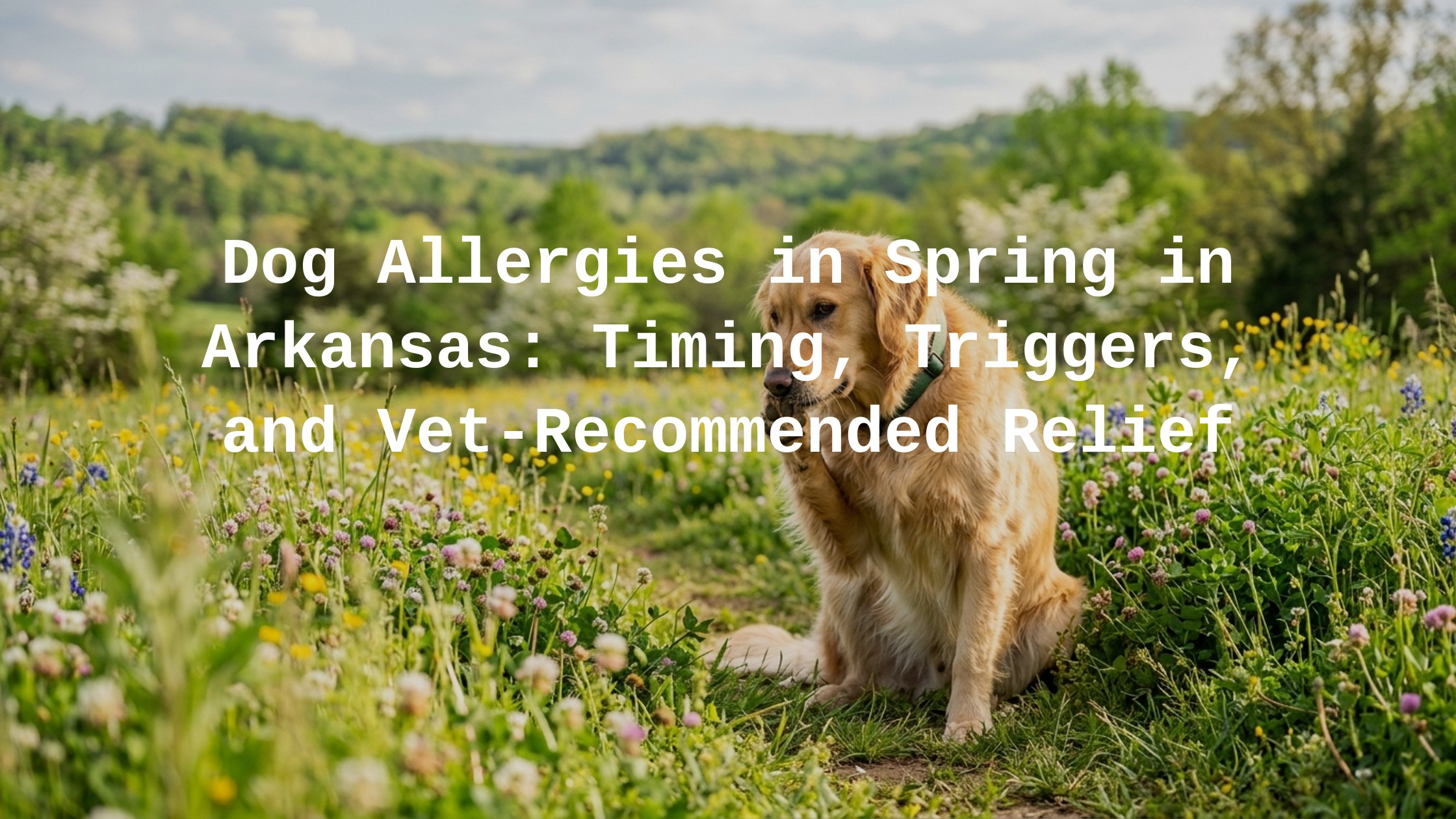
Spring in Arkansas is beautiful — but for many dogs, it also marks the start of weeks of scratching, paw licking, and skin irritation that can be hard to watch. If your dog seems fine all winter and then suddenly starts rubbing their face on the carpet or chewing at their feet the moment the weather warms up, seasonal allergies are likely the culprit.
Arkansas has one of the more aggressive spring pollen seasons in the South, and dogs absorb allergens differently than people do — primarily through their skin — which means their symptoms often look different from what you might expect. Understanding what triggers your dog’s discomfort, when to expect it, and what actually works to manage it can make a real difference in your pet’s quality of life each season.
When Does Spring Allergy Season Start for Dogs in Arkansas
In Arkansas, spring allergy season for dogs typically begins in late February and can extend well into May or even early June. That’s a long stretch of potential discomfort, and the timing can catch dog owners off guard — especially if they’re not watching for early signs.
The timing varies slightly depending on where you live in the state. Dogs in the southern lowlands around El Dorado and Texarkana often experience symptoms a few weeks earlier than those in the higher elevations of the Ozark and Ouachita mountain regions.
The season unfolds in distinct waves tied to specific plant groups. Tree pollens — particularly cedar, oak, and elm — dominate from late February through April. Grass pollens follow in April and May, and mold spores, which thrive in Arkansas’s humid climate, can extend allergic reactions even further into the warmer months.
Key Insight: Arkansas’s humid subtropical climate means pollen counts stay elevated longer than in drier states. A warm, wet winter often accelerates the start of tree pollen season by several weeks. Warm spells in January can occasionally trigger early cedar and juniper pollen release, catching dog owners off guard. Keeping an eye on local pollen forecasts from late January onward gives you a head start on managing your dog’s exposure before symptoms escalate.
What Causes Dog Allergies in Spring in Arkansas
Spring allergies in dogs are almost always caused by airborne environmental allergens — a condition veterinarians refer to as canine atopic dermatitis or environmental allergic dermatitis. When a dog with a sensitive immune system encounters these substances, the body treats them as threats and launches an inflammatory response — which is what you see as itching, redness, and irritation.
Arkansas’s extensive forests release enormous quantities of tree pollen, while its warm, moist air keeps mold spore counts high. The worst months for Arkansas allergies are April, May, and September.
The most common spring allergy triggers for dogs in Arkansas include:
- Oak pollen — One of the most abundant and allergenic tree pollens in the state, peaking from March through April
- Eastern red cedar and juniper pollen — A major late-winter and early-spring trigger, often beginning in February
- Elm pollen — Releases early in the season, sometimes as soon as late February in southern Arkansas
- Bermuda and Timothy grass pollens — Become dominant from April onward and are common in lawns throughout the state
- Mold spores — Thrive in Arkansas’s humid conditions, particularly after rain events
- Dust mites — While present year-round, they can worsen during spring cleaning and increased indoor activity
The primary culprits behind springtime allergies in dogs include pollen from trees, grasses, and weeds, which can cause atopic dermatitis or airborne allergies. Other environmental factors such as mold, dust mites, and even the dander of people or other animals can exacerbate your dog’s allergic reactions.
Humans commonly react to allergies with upper respiratory signs such as sneezing and eye redness, but these symptoms are uncommon in dogs. Instead, pets affected by seasonal allergies are frequently observed exhibiting skin-related symptoms — which is why many Arkansas dog owners don’t immediately connect the dots between pollen season and their dog’s skin problems.
Signs Your Dog Has Spring Allergies in Arkansas
Recognizing the signs of spring allergies early allows you to intervene before your dog’s discomfort becomes severe or leads to secondary infections. The symptoms can range from mild itching to significant skin damage caused by repeated scratching and chewing.
Common signs Arkansas dog owners report each spring include:
- Excessive scratching, particularly around the face, ears, armpits, and groin
- Paw licking and chewing — a hallmark sign of environmental allergies in dogs
- Red, inflamed, or watery eyes
- Frequent ear infections or head shaking
- Sneezing or a runny nose (less common, but possible)
- Skin redness, rashes, or hot spots
- Hair loss in areas your dog scratches repeatedly
One pattern that strongly suggests seasonal allergies rather than a food allergy or other condition is the cyclical nature of the symptoms. If your dog is mostly comfortable in fall and winter but begins showing these signs every February or March, the correlation with Arkansas’s pollen season is difficult to ignore.
Important Note: When a dog scratches and chews repeatedly, they break down the skin barrier, creating an entry point for bacteria. If you notice a musty odor, discharge, or darkening of the skin, mention it to your vet — these signs suggest an infection that will need separate treatment alongside allergy management.
Dogs with allergies might compulsively chew on their skin, which can lead to several issues. Obsessive licking can result in raw, exposed areas known as hot spots, which can quickly become infected if left untreated. Catching these signs early gives you a better chance of managing them before they escalate.
Which Dog Breeds Are Most Prone to Spring Allergies
There isn’t a single breed that is most prone to allergies, but research shows that certain breeds are diagnosed with allergic skin disease (canine atopic dermatitis) more often than others. These breeds include Labrador Retrievers, Golden Retrievers, West Highland White Terriers, French Bulldogs, Boxers, Chinese Shar-Peis, and others. This increased risk is thought to be partly due to inherited genetic factors that affect the immune system, though environmental influences also play a role.
Here’s a closer look at some of the most commonly affected breeds and why they’re more vulnerable:
| Breed | Why They’re at Higher Risk | Common Allergy Signs |
|---|---|---|
| Golden Retriever | Commonly affected by atopy; may struggle with itchy skin especially around ears, belly, paws, and skin folds. Symptoms can start in adolescence (1–3 years) and usually intensify with age. | Paw licking, ear infections, skin redness |
| Labrador Retriever | Labradors often suffer from both canine atopic dermatitis and food allergies. Scientists have found that roughly half of Labradors and Golden Retrievers whose parents have atopic dermatitis will develop the condition themselves. | Recurrent ear infections, paw chewing |
| West Highland White Terrier | Historically one of the highest-risk breeds for atopic dermatitis | Face rubbing, skin inflammation, itching |
| Bulldog / French Bulldog | Skin folds trap moisture and allergens, amplifying reactions | Fold dermatitis, excessive scratching |
| Boxer | The Boxer’s coat, susceptible to oiliness, can cause itchy, flaky skin and inflammation. | Skin irritation, secondary infections |
| German Shepherd | German Shepherds are prone to skin allergies, especially flea allergy dermatitis. Their thick double coat can hide inflammation until it gets severe. | Hidden hot spots, scratching, skin odor |
Any dog, purebred or mixed, can develop allergies. If your dog belongs to one of these higher-risk breeds and lives in Arkansas, being proactive about allergy management from an early age is especially worthwhile. Atopic dermatitis in dogs typically first appears between 1 and 3 years of age. If your dog is in this age range and begins showing seasonal symptoms for the first time, it’s worth scheduling a veterinary evaluation rather than waiting to see if the symptoms resolve on their own.
How Vets Diagnose Seasonal Allergies in Dogs in Arkansas
Accurately diagnosing spring allergies in dogs is an essential step toward helping your pet find relief. The process typically starts with a thorough examination and a detailed discussion about the symptoms you’ve noticed.
With every dog having unique personality traits and routines, understanding their daily routine and environment can provide important clues about potential allergens. You may be asked about changes in their behavior, grooming habits, or whether symptoms worsen after spending time outside.
Because diagnosing allergies in companion animals can be quite difficult, veterinarians will often start by ruling out all other possible causes of an itch, such as parasites or food allergies. This step-by-step elimination process is important because many conditions — including mange, flea allergy dermatitis, and yeast infections — can look similar to seasonal allergies on the surface.
Once other causes are ruled out, your vet may recommend one or both of the following tests:
- Blood (serum) testing — A blood test, such as Heska’s Allercept or Nextmune’s Pet Allergy Xplorer, is performed by your vet to determine what environmental allergens your dog is most allergic to based on where they live.
- Intradermal skin testing — Intradermal skin testing is performed by a veterinary dermatologist. It involves injecting small amounts of allergens into the skin and monitoring for reactions, which help identify the specific triggers to include in an immunotherapy formulation.
Pro Tip: Keep a simple symptom diary with dates. Tracking when symptoms start and stop each year helps your vet distinguish seasonal allergies from year-round environmental or food allergies — and makes diagnosis significantly faster.
Your dog’s medical history, including any previous allergic reactions, also provides valuable insight into their condition. In some cases, removing certain environmental factors may be suggested to see if symptoms improve, offering further clues about what’s triggering their allergies.
Your vet may also refer you to a veterinary dermatologist if your dog’s case is complex or if standard treatments aren’t providing enough relief. These specialists have access to more advanced testing and can design customized immunotherapy protocols.
How to Treat Spring Allergies in Dogs in Arkansas
Though seasonal allergies in dogs cannot be cured, they can be managed to help make your dog more comfortable. Treatment usually involves a combination of approaches, and what works best will depend on your dog’s specific allergens, the severity of their symptoms, and how they respond to different medications.
Common treatment options your Arkansas vet may recommend include:
- Apoquel (oclacitinib) — An immuno-modulatory drug that manages itching associated with allergic dermatitis or atopic dermatitis triggered by environmental allergens during spring. It works quickly and is available in oral form.
- Cytopoint — A caninized monoclonal antibody that is an effective treatment against allergic dermatitis triggered by environmental allergens like pollen, mold, and dust. It can be given to a dog of any age and is a long-lasting seasonal allergy treatment, administered every 4–8 weeks via injection.
- Antihistamines — Antihistamines are often used, but they’re not as effective for dog and cat seasonal allergies compared to other treatments. They may still provide mild relief for some dogs, especially when combined with other therapies.
- Short-term steroids — Steroids like prednisone or prednisolone might be prescribed short-term for severe allergy cases. Because of the dangerous long-term effects of steroids, systemic steroids should only be used for short-term control of symptoms.
- Allergy immunotherapy (allergy shots) — If your dog’s allergies are persistent, allergy shots might be the answer. This treatment helps desensitize your dog to specific allergens over time, providing lasting relief and helping them build a tolerance for seasonal triggers.
- Medicated baths — Frequent bathing with a hypoallergenic shampoo can be soothing to itchy, inflamed skin. Some shampoos are available over the counter, while others may require a prescription. Bathing also removes allergens from the skin and coat.
- Omega-3 fatty acid supplements — An omega-3 fatty acid (fish oil) supplement, such as Welactin, Triglyceride OMEGA, or Dermaquin, may help protect the skin barrier.
Once the allergy seasons are determined for a dog based on prior history, the anti-itch medication typically is started prior to the start of the allergy season and continued one month past when the allergy season ends. If the itch can be controlled, your dog will remain comfortable and be at less risk for secondary skin infections.
Important Note: If your dog has previously been prescribed allergy medication and you’re considering restarting it for a new season, always check with your vet first. Dosing needs, health status, and the best treatment approach can change from year to year.
You can learn more about seasonal allergy treatment options for dogs from veterinary resources to better understand what each medication does and how they compare.
How to Reduce Your Dog’s Exposure to Spring Allergens in Arkansas
Managing your dog’s environment during pollen season won’t eliminate their allergies, but it can significantly reduce the allergen load their immune system has to deal with — which makes any medical treatment more effective. Many dog owners wait until symptoms are severe before making environmental changes. Starting these habits at the beginning of allergy season — even before symptoms appear — keeps the allergen load lower and makes medical treatments more effective throughout the season.
Here are practical steps you can take at home:
- Wipe down paws and coat after outdoor time. Since pollen and dust cling to your dog’s fur and paws, wiping them down with a damp cloth or pet wipes after walks can help reduce allergy flare-ups.
- Bathe your dog regularly. Bathing affected pets one to two times per week with a shampoo specified by the pet’s veterinarian can decrease allergen accumulation on the coat.
- Keep your home clean. Clean your home regularly — and thoroughly — to eliminate dust and pollen that irritate your dog’s allergies. Regular, thorough cleaning includes frequent dusting, vacuuming all carpeted areas, cleaning and replacing air filters, and laundering linens, including your dog’s bedding.
- Use an air purifier. Air purifiers help improve air quality in your home by capturing and eliminating some common contaminants that may contribute to your pet’s allergies. Place your air purifier in the room your dog spends most of their time.
- Limit outdoor time during peak pollen hours. Pollen counts in Arkansas tend to be highest during mid-morning to early afternoon on dry, windy days. Scheduling walks for early morning or evening can reduce exposure.
- Monitor local pollen counts. Checking daily pollen forecasts for your Arkansas city helps you plan higher-exposure days and adjust your dog’s outdoor time accordingly. On high-pollen days, keep windows closed and rely on air conditioning.
- Wash your dog’s bedding weekly. Allergens that cling to your dog’s coat transfer easily to their sleeping area. Regular washing keeps that buildup from becoming a secondary exposure source.
Wind can carry allergens far and wide, affecting dogs even if they don’t spend much time outdoors. On top of that, allergens can cling to their fur and paws, making their way inside and continuing to cause discomfort long after your dog has come indoors.
If you’re planning outdoor activities with your dog — whether hiking in the Ozarks or spending time in the backyard — Arkansas vets recommend staying mindful of spring health hazards beyond just pollen, including fleas, ticks, and hazardous plants like poison ivy and sumac.
Pro Tip: For dogs with known seasonal allergies, many Arkansas vets recommend a pre-season appointment in late January or early February — before pollen counts climb — to discuss whether to start or adjust preventive medications. Getting ahead of the season is consistently more effective than reacting to a full-blown flare-up.
When to See a Vet About Your Dog’s Spring Allergies in Arkansas
Some mild seasonal scratching may not require an immediate vet visit, but there are clear signs that it’s time to make an appointment. If your dog’s allergies are severe, persistent, or causing secondary infections, professional veterinary care is essential. A vet can help pinpoint triggers and recommend tailored treatment options.
You should contact your vet promptly if you notice any of the following:
- Symptoms that don’t improve after a week or two, or that are getting worse
- Hair loss, open sores, or raw skin from scratching
- Hair loss, odor, or redness to the skin, as this may indicate a skin infection that is secondary to the allergic skin inflammation
- Recurring ear infections — a common sign of uncontrolled environmental allergies
- Your dog is clearly uncomfortable, restless, or not sleeping well
- Symptoms that appear for the first time in a young dog (1–3 years old), which may be the onset of atopic dermatitis
In-person veterinary care is required not only for diagnosing and treating allergies but also for preventing secondary infections that can arise from constant scratching and skin breakdown. Your vet can also help you develop an allergy management plan tailored to your dog’s specific needs.
You can also learn more about managing spring allergies in dogs and how veterinarians approach canine allergy care to better prepare for your vet visit and understand your options.
Arkansas dog owners who stay proactive — combining environmental management, timely vet visits, and appropriate medical treatment — give their dogs the best chance of getting through spring comfortably. While seasonal allergies are rarely curable, they are very manageable with the right approach, and most dogs on a well-designed allergy plan live full, comfortable lives despite their sensitivities.
If you’re looking for more pet health and home wellness information, you can also explore articles by our contributors including Janet, Deborah, and Hope for additional practical guidance.