Dog Allergies in Spring in Arizona: Timing, Triggers, and What Your Vet Wants You to Know

April 2, 2026
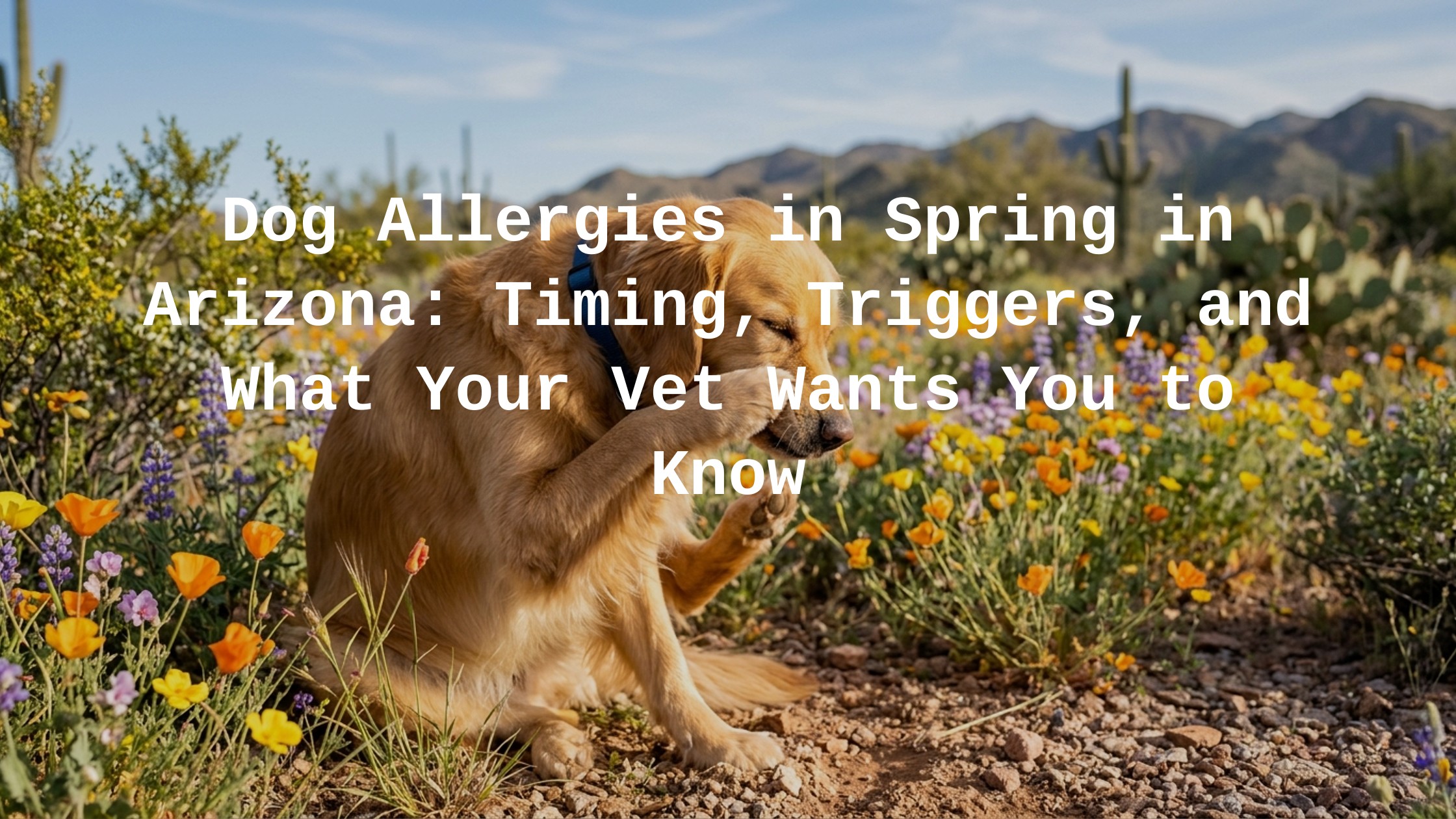
If your dog has been scratching, licking their paws, or rubbing their face on the carpet as the weather warms up, you are not imagining things. Arizona’s spring season arrives earlier and more intensely than most dog owners expect — and for millions of pets across the state, it brings weeks of itching, sneezing, and discomfort that can be easy to dismiss as something minor.
Dog allergies are very common, with estimates suggesting they could occur in up to 30–40% of dogs — and allergies are particularly common in Arizona, where there doesn’t seem to be a distinct allergy season. That means your dog may be reacting to environmental triggers earlier in the year and for longer stretches than dogs in other states.
Understanding what sets off spring allergies in Arizona dogs, what the symptoms look like, and how your vet can help makes a real difference in how comfortable your dog stays through the season. This guide walks you through everything you need to know, from the first pollen counts of the year to the treatments that actually work.
When Does Spring Allergy Season Start for Dogs in Arizona
Arizona’s spring allergy season typically begins in late January or early February — significantly earlier than in most other states. While dog owners in northern states may not notice seasonal allergy symptoms until April or May, your Arizona dog could be reacting to airborne allergens while the rest of the country still has frost on the ground.
Elevation also plays a role. Dogs living in higher-elevation areas like Flagstaff experience a delayed but still significant allergy season, typically starting in March and running through June. For dogs in the Phoenix and Tucson metro areas, though, the window is longer and the onset is much earlier.
Key Insight: Animals who live in warmer areas — where things are always blooming — are prone to having a harder time than pets who live in areas where there is a true winter season. If you live in an area that doesn’t have a hard freeze in the winter, environmental allergens can build up and cause year-round issues for your pet.
Additionally, seasonal allergies can progress to year-round allergies. Because the more your pet is exposed to the allergens they’re sensitive to, the more intense and long-lasting their allergic response becomes. This is one reason early recognition and management matter so much for Arizona dog owners.
If you’ve recently moved to Arizona from another state, expect your dog’s seasonal allergies to behave differently here than they did before. The desert ecosystem introduces a unique set of allergens that may be entirely new to your dog’s immune system.
What Causes Dog Allergies in Spring in Arizona
Spring allergies in Arizona dogs are almost always triggered by airborne environmental allergens — substances that your dog inhales or that land on their skin and coat during outdoor time. Arizona’s unique desert ecosystem produces a specific mix of allergens that differs from what dogs encounter in other regions.
Dogs don’t primarily absorb allergens through their nose the way humans do. They absorb them through their skin, which is why itching and skin irritation — not sneezing — are the hallmark signs of canine environmental allergies. Knowing this helps explain why your dog’s symptoms may look so different from your own springtime sneezing.
The most significant Arizona-specific spring allergen sources include:
- Tree pollen — Arizona’s most problematic spring pollen sources include olive trees, mulberry trees, ash trees, and cottonwood. Olive and mulberry trees are especially heavy pollinators and are widely planted across Phoenix and Tucson as ornamental landscaping.
- Mold spores — Seasonal rainfall and irrigation in spring create conditions favorable for outdoor mold growth, which can trigger allergic responses in sensitive dogs.
- Dust mites — While not strictly a spring allergen, dust mite populations often increase as households open windows and doors during mild spring weather, introducing additional indoor triggers.
- Grass pollen — Bermuda grass, which is common across Arizona lawns and parks, begins releasing pollen in spring and is a well-known trigger for canine atopic dermatitis.
- Desert plant pollen — The very features that make Phoenix springs spectacular — flowering cacti, desert marigolds, and brittle bush — can transform your otherwise happy pup into an itchy, uncomfortable companion.
Dogs develop environmental allergies through repeated exposure over time. A dog that showed no reaction to Arizona’s spring pollen last year may begin showing symptoms this season as their immune system becomes sensitized. Most dogs develop noticeable seasonal allergies between one and three years of age.
Important Note: The primary culprits behind springtime allergies in dogs include pollen from trees, grasses, and weeds, which can cause atopic dermatitis or airborne allergies. Other environmental factors such as mold, dust mites, and even the dander of people or other animals can exacerbate your dog’s allergic reactions.
Signs Your Dog Has Spring Allergies in Arizona
Seasonal allergies in dogs look quite different from allergies in humans. While people typically experience sneezing and watery eyes as primary symptoms, dogs express allergic reactions primarily through their skin. Knowing what to watch for helps you catch the problem early before it escalates into a secondary infection.
The most common signs of spring allergies in Arizona dogs include:
- Persistent itching — especially around the paws, face, ears, belly, and groin. Dogs may scratch constantly or bite at their skin.
- Paw licking and chewing — one of the most reliable indicators of environmental allergies. Dogs absorb pollen through the skin on their paws during walks and react by licking obsessively.
- Red, inflamed skin — also called erythema, often visible on the belly, inner thighs, and between the toes.
- Recurring ear infections — dogs with allergies are significantly more prone to yeast and bacterial ear infections, which may flare up every spring.
- Runny nose and watery eyes — other common signs and symptoms of seasonal allergies include a runny nose and puffy, watery eyes. Some allergens may even cause dogs to vomit or have diarrhea.
- Skin chewing and hot spots — dogs with allergies might compulsively chew on their skin. Obsessive licking can result in raw, exposed areas known as hot spots, which can quickly become infected if left untreated.
- Fur staining — excessive licking and contact with saliva can lead to brownish discoloration of the fur, especially noticeable in white-coated breeds.
Pro Tip: Skin problems in pets are “absolutely the No. 1 issue” seen with allergies. Allergies can also show up in the ear canal, which “is actually just an extension of the skin.” If your dog has recurring ear infections every spring, allergies may be the root cause — not just bad luck.
Allergies can make dogs very uncomfortable, as itching is an early response to pain. Persistent itching can cause further damage to their skin, resulting in wounds and secondary infections. The sooner you recognize the pattern, the sooner you can get your dog relief.
Which Dog Breeds Are Most Prone to Spring Allergies
While any dog can develop seasonal allergies, certain breeds carry a significantly higher genetic predisposition to atopic dermatitis — the medical term for environmentally triggered skin allergies. If you own one of these breeds and live in Arizona, proactive allergy management before symptoms peak is especially worthwhile.
Maltese, French Bulldogs, Golden Retrievers, and West Highland White Terriers show a higher predisposition to allergies, according to a study published in 2025. The study also found that male dogs, indoor pets, and young dogs on a dry food diet were at a higher risk of developing allergic skin conditions.
| Breed | Primary Allergy Risk | Common Symptoms in Arizona Spring |
|---|---|---|
| Labrador Retriever | Environmental & food allergies | Dry skin, hot spots, excessive paw licking |
| Golden Retriever | Atopy & environmental allergens | Itchy ears, belly, and paws from age 1–3 |
| Bulldog / French Bulldog | Contact allergies, skin fold dermatitis | Yeast infections in wrinkles, respiratory sensitivity |
| West Highland White Terrier | Atopic dermatitis | Severe skin reactions, recurring infections |
| Boxer | Environmental & food sensitivities | Itching, licking, frequent ear infections |
| German Shepherd | Flea allergy dermatitis, skin allergies | Hidden inflammation under thick double coat |
| Shih Tzu | Sensitive skin, grooming product reactions | Itchy rashes, recurring skin infections |
Poodles and Doodle mixes — despite their reputation as hypoallergenic for humans — can themselves be allergy-prone. A dog with any of these breeds in their background may inherit the same allergic tendencies.
Key Insight: Breed predisposition doesn’t mean your dog will definitely develop allergies — it means the risk is higher. Early exposure management and regular vet check-ins during spring can help catch sensitization before it becomes a chronic problem.
How Vets Diagnose Seasonal Allergies in Dogs in Arizona
Diagnosing seasonal allergies in dogs is a process of elimination as much as it is direct testing. Your vet will typically begin by ruling out other causes of itching and skin irritation — including parasites, fungal infections, food allergies, and contact dermatitis — before confirming an environmental allergy diagnosis.
The process typically starts with a thorough examination and a detailed discussion about the symptoms you’ve noticed. With every dog having unique personality traits and routines, understanding their daily routine and environment can provide important clues about potential allergens. You may be asked about changes in their behavior, grooming habits, or whether symptoms worsen after spending time outside.
Once other causes have been ruled out, your vet may recommend allergy-specific testing:
- Intradermal skin testing — Hyposensitization therapy involves allergy testing, typically done by a dermatologist using intradermal skin testing. Based on the results, a customized recipe of allergens is created for the owner to administer via injections over time.
- Serum (blood) testing — Serum testing analyzes a blood sample for allergen-specific antibodies. Both methods help identify exactly which Arizona-specific pollens or molds are driving your dog’s response.
- Elimination trials — In some cases, removing certain environmental factors may be suggested to see if symptoms improve, offering further clues about what’s triggering the allergies.
According to the American Veterinary Medical Association, environmental allergies are among the most common chronic conditions managed in dogs, and accurate diagnosis significantly improves long-term treatment outcomes.
Pro Tip: Bring a symptom timeline to your vet appointment — note when itching started, whether it correlates with outdoor time or specific weather conditions, and which body areas are most affected. This information helps your vet narrow down the diagnosis faster and reduces the number of tests needed.
Referral to a board-certified veterinary dermatologist is often recommended for dogs with moderate to severe symptoms. If your dog’s allergies are complex or have not responded to initial treatments, a specialist can offer more advanced testing and targeted immunotherapy options.
How to Treat Spring Allergies in Dogs in Arizona
Treatment for spring allergies in Arizona dogs has advanced significantly over the past decade. Your vet will typically recommend a combination of approaches tailored to your dog’s specific triggers and symptom severity.
Prescription Medications
Oclacitinib (Apoquel) is an immuno-modulatory drug that manages itching associated with allergic dermatitis or atopic dermatitis triggered by environmental allergens during spring. Apoquel is only used for dogs over one year of age and is administered orally twice a day or once a day, depending on the veterinarian’s instructions.
Cytopoint, which contains a caninized monoclonal anti-IL-31 antibody, is an effective treatment against allergic dermatitis triggered by environmental allergens like pollen, mold, and dust. One of the unique advantages of Cytopoint is that it can be given to a dog of any age and it is a long-lasting seasonal allergy treatment, administered as needed every 4–8 weeks via injection.
Anti-inflammatory medications, such as steroids, corticosteroids, prednisone, and cortisone, can be used topically, orally, or via injection to alleviate symptoms of allergies. These are typically used for short-term relief during acute flare-ups rather than as a long-term solution.
Important Note: Antihistamines like Benadryl are not very successful in treating dog allergies. This is because histamine is already bound to the receptor, and there seem to be other components of allergies that do not respond consistently to antihistamines. Talk to your vet before giving your dog any over-the-counter medication.
Allergy Immunotherapy
If your dog’s allergies are persistent, allergy shots might be the answer. This treatment helps desensitize your dog to specific allergens over time, providing lasting relief and helping them build a tolerance for seasonal triggers. This method has a 60–75% success rate and is the only way to potentially cure allergies in dogs.
Topical and Supportive Treatments
Shampoo therapy can help by washing allergens off the dog’s skin, relieving itchiness, and addressing scaling or dandruff-like symptoms. Antiseptic shampoos can also help prevent secondary infections.
Adding omega-3 fatty acids to your dog’s diet through fish oil or supplements can improve skin health and reduce inflammation caused by allergies. Make sure that you are feeding your pup a well-balanced diet free of unnecessary fillers and animal byproducts. Reducing the amount of grain your pup eats can also help with reducing triggers and inflammation.
How to Reduce Your Dog’s Exposure to Spring Allergens in Arizona
Medication works best when it’s paired with practical steps to lower your dog’s overall allergen load. In Arizona, where pollen seasons are long and outdoor exposure is high, reducing exposure doesn’t mean keeping your dog indoors — it means making smart adjustments to daily routines.
Time Outdoor Activities Strategically
Time outdoor activities strategically. Pollen counts in Arizona are typically highest between 5 a.m. and 10 a.m. Shifting walks and outdoor play to late afternoon or evening, when counts have dropped, meaningfully reduces your dog’s daily allergen exposure without eliminating outdoor time.
Clean Paws and Coat After Every Walk
Since pollen and dust cling to your dog’s fur and paws, wiping them down with a damp cloth or pet wipes after walks can help reduce allergy flare-ups. Try foot soaks — wiping or soaking your pet’s paws after outdoor activity can prevent allergens from being tracked indoors and remove them from the skin.
Maintain a Regular Grooming Routine
Regular grooming provides one of the most powerful defenses against allergen exposure. When your pup explores Phoenix’s spring landscape, their fur becomes a collection point for pollen and other irritants.
Hypoallergenic shampoos, especially ones that contain oatmeal, can help clean without irritating the skin. You may also want to consider a leave-in conditioner or veterinary-prescribed topical treatment, which can help soothe skin irritations and infections.
Improve Your Indoor Environment
- Keep indoor air allergen-free by closing windows, using HEPA filters, and turning on the air conditioning when appropriate to reduce airborne allergens.
- Clean your home regularly — and thoroughly — to eliminate dust and pollen that irritate your dog’s allergies. Regular, thorough cleaning includes frequent dusting, vacuuming all carpeted areas, cleaning and replacing air filters, and laundering linens, including your dog’s bedding.
- Air purifiers help improve air quality in your home by capturing and eliminating some common contaminants that may contribute to your pet’s allergies. Place your air purifier in the room your dog spends most of their time.
Pro Tip: Use prescription flea preventives. Fleas are a major cause of spring pet itching, and using effective flea control can help rule out this common issue — and prevent it from compounding your dog’s existing environmental allergy symptoms.
When to See a Vet About Your Dog’s Spring Allergies in Arizona
Mild seasonal sneezing or occasional paw licking doesn’t always require an immediate vet visit. But there are clear thresholds where professional evaluation becomes necessary — and waiting too long often means your dog develops secondary infections that complicate treatment and extend recovery time.
You should schedule a vet appointment if your dog shows any of the following:
- Allergies that are severe, persistent, or causing secondary infections — these require professional veterinary care.
- Severe itching that causes bleeding or open wounds — see a vet immediately to avoid further injury.
- If you notice your dog focusing intensely on one area of their body, it’s important to consult your veterinarian to determine the cause and appropriate treatment.
- Recurring ear infections every spring — this pattern strongly suggests an underlying allergy driving the inflammation.
- Considerably itchy or severely inflamed skin — your pet may need a springtime veterinary visit.
Seek emergency care immediately if you notice:
- Anything that affects your dog’s ability to breathe, see, or function normally should be treated as an emergency. This includes swelling of the face, tongue, eyes, or nostrils, which are all signs of a severe allergic reaction.
If you suspect your pet has allergies, take them to the vet immediately. Early intervention prevents mild seasonal discomfort from becoming a chronic, year-round condition. Spring allergies in dogs are manageable with the right approach and professional guidance. Being proactive about your dog’s allergy symptoms and consulting with your veterinarian can make a world of difference in their comfort and quality of life.
Pet insurance company Trupanion reports a 64% increase in allergy claims for insured pets in Arizona in 2023 compared to 2019 — a clear signal that spring allergies in Arizona dogs are a growing concern. The good news is that with the right combination of vet-guided treatment and daily allergen management, most dogs can move through Arizona’s spring season with significantly less discomfort. Your dog doesn’t have to dread the blooming desert — they just need the right support to enjoy it.