Can You Swim in a Chlorine Pool While Pregnant? Yes — With These Tips

March 16, 2026
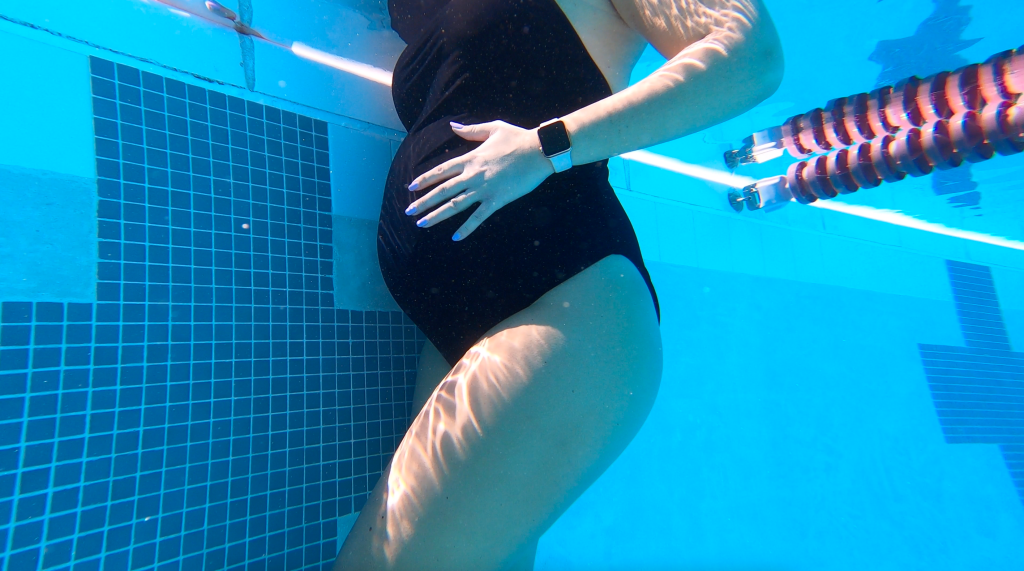
You’re pregnant, it’s warm, and the pool looks incredibly inviting. Before you second-guess yourself, here’s what you need to know: swimming in a chlorine pool while pregnant is not just permitted — it’s one of the most recommended forms of exercise you can do during pregnancy.
Major health organizations endorse it. OBs recommend it. And the research backs it up. That said, there are a few smart precautions worth knowing so you can get in the water with total confidence.
The Short Answer
Yes. You can swim in a chlorine pool while pregnant. The American College of Obstetricians and Gynecologists (ACOG) lists swimming as one of the safest exercise options during pregnancy. It’s recommended across all three trimesters, including right up until your due date, provided you have no medical complications that would make exercise off-limits.
The chlorine in a properly maintained pool — typically kept between 1 and 3 parts per million (ppm) — has not been shown to harm pregnant women or their babies. The concern you may have seen circulating online about pool chemicals causing birth defects is not supported by the current body of medical evidence.
Key Insight: Chlorine’s job is actually to protect you in the pool — it eliminates harmful bacteria and pathogens that could be far more dangerous during pregnancy than the disinfectant itself.
Why It’s Safe
Swimming works in your favor during pregnancy for a straightforward reason: water supports your body weight in a way nothing else can. As your belly grows, your joints, ligaments, and lower back take on significantly more load with every step you take on land. In the pool, that pressure disappears.
Here’s what makes it stand out as a prenatal exercise:
- Low-impact protection. Water reduces stress on joints and ligaments — which become looser during pregnancy due to the hormone relaxin — meaning your injury risk is genuinely lower than with most land-based workouts.
- Temperature regulation. Overheating is a real concern with some exercises, especially in the first trimester. Swimming in a properly cooled pool (around 78–82°F / 26–28°C) keeps your core temperature stable.
- Swelling relief. The hydrostatic pressure of water helps push fluid out of your tissues and back into circulation, which is why a 30-minute swim often leaves your ankles and feet noticeably less puffy.
- Back and pelvic pain relief. Buoyancy takes pressure off your spine and sacroiliac joints — the exact areas that tend to ache most as pregnancy progresses.
- Nausea relief. Many women find gentle movement in cool water eases first-trimester nausea more effectively than staying sedentary.
As for the chlorine itself: at standard pool concentrations, the chemical is there to clean the water, not contaminate it. Swallowing a small amount of pool water during a swim poses no known risk, according to the National Library of Medicine . The fetus is also naturally protected by the amniotic sac and mucus plug, which prevent any external water from reaching your baby.
What the Research Actually Says
The existing research on swimming during pregnancy is largely reassuring, with one area worth understanding clearly.
A widely cited 2010 study published in the British Journal of Sports Medicine followed over 74,000 pregnancies and found that women who swam during pregnancy were not at increased risk for preterm birth or congenital malformations. In fact, swimmers had a slightly decreased risk of preterm delivery compared to physically inactive women — a meaningful finding given how common premature birth concerns are.
Where the research gets more nuanced involves disinfection by-products (DBPs) — chemical compounds that form when chlorine reacts with organic matter like sweat, urine, or sunscreen in pool water. A 2019 study from the New Hampshire Birth Cohort found a potential association between regular pool swimming and minor changes in cord blood cell composition, as well as a possible link to slightly smaller fetal head circumference. The researchers were clear, however, that the findings were preliminary and that more data was needed before any conclusions about harm could be drawn.
Important Note: The 2019 study looked at a specific population of women whose only significant DBP exposure was through swimming (those using private well water systems), not the general public. For most pregnant women using municipal water, their daily DBP exposure from showers and tap water is far greater than what a few pool sessions per week would add.
The bottom line from the research: standard recreational pool swimming during pregnancy carries no demonstrated risk to the baby and offers real physical benefits to the mother. Alarm about pool chemicals is not supported by current evidence at normal pool exposure levels.
How to Do It Safely
Swimming is safe across all three trimesters, but your approach can shift a bit as your body changes.
First Trimester (Weeks 1–12)
This is a fine time to swim at your normal pace and stroke. If you’re new to swimming, start with 15–20 minutes and build gradually. The biggest watch-out in the first trimester is water temperature — avoid anything above 89°F (32°C), including hot tubs and heated therapeutic pools. Elevated core temperature during early fetal development is a genuine concern, and the American Pregnancy Association advises keeping water below 102°F, but well-maintained lap pools stay well within safe range.
Many women find that gentle swimming helps with first-trimester nausea. If that’s you, take it as a green light to get in the water.
Second Trimester (Weeks 13–26)
The second trimester is often called the sweet spot of pregnancy exercise. Energy levels are up, the belly is manageable, and most of the first-trimester fatigue has lifted. This is an ideal time to establish a consistent swimming routine if you haven’t already.
Aim for 30–45 minutes, 3–5 times per week. Breaststroke and freestyle are both comfortable for most women at this stage. Backstroke is generally fine too, though some women begin to notice mild dizziness when lying flat on their back due to pressure on the vena cava — listen to your body.
Pro Tip: The second trimester is a great time to try a prenatal water aerobics class if lap swimming feels repetitive. These classes are designed for changing bodies and typically offer modifications that account for balance shifts and growing bellies.
Third Trimester (Weeks 27–40)
Swimming often becomes even more appealing in the third trimester because the relief water provides becomes more dramatic as your belly grows. The buoyancy effect is at its most noticeable now.
A few adjustments worth making:
- Ease up on intensity. Your lung capacity decreases slightly as the baby takes up more space, so you may need to slow your pace. That’s completely normal.
- Switch strokes if needed. Breaststroke tends to be the most comfortable late in pregnancy due to its natural body alignment. Avoid vigorous butterfly strokes, and be cautious with backstroke if it causes discomfort.
- Enter and exit carefully. Balance challenges are most pronounced in the third trimester. Always use pool stairs or a ramp, never jump or dive in, and wear non-slip shoes on the pool deck.
- Keep sessions to 30–45 minutes. Longer sessions at this stage can lead to fatigue without adding additional benefit.
Swimming can continue safely right up until labor begins for most women — there’s no gestational cutoff.
Safe Pool Practices for Every Trimester
These habits apply regardless of which trimester you’re in:
- Check chlorine levels. Ask the facility about their water quality. A healthy pool chlorine level is 1–3 ppm. A strong chemical odor can indicate imbalanced water chemistry, which may irritate your airways.
- Shower before and after. Rinsing off before you get in reduces the organic matter that reacts with chlorine, which slightly lowers DBP formation in the water overall. Showering after removes residual chlorine from your skin and hair.
- Hydrate well. It’s easy to forget you’re sweating in the pool. Drink water before and after every session.
- Don’t swim alone. Always swim somewhere with a lifeguard or bring a friend.
- Avoid swallowing pool water. This is good practice regardless of pregnancy.
- Skip the hot tub. Hot tubs remain off-limits throughout pregnancy due to the risk of overheating.
When to Avoid It Completely
Swimming is not appropriate for every pregnancy. The following conditions are reasons to get your doctor’s clearance before getting in the water — or to skip the pool entirely:
- Ruptured membranes (water has broken). Once your amniotic sac has broken, your baby loses the protective barrier against bacteria. Pool water exposure becomes a serious infection risk.
- Placenta previa after 26–28 weeks. Physical activity including swimming can increase the risk of bleeding in this condition.
- Active vaginal bleeding. Any unexplained vaginal bleeding should prompt an immediate call to your provider before any exercise.
- Preterm labor symptoms or history. If you have a history of preterm birth or are experiencing contractions, cramping, or pelvic pressure, get medical guidance before swimming.
- Cervical insufficiency or cerclage placement. The mechanical demands of swimming may not be appropriate if your cervix needs additional support.
- Uncontrolled high blood pressure or preeclampsia. Vigorous exercise, including swimming, should be cleared by your provider before continuing.
- Active infection or open skin wounds. Pool water can introduce bacteria into broken skin or worsen existing infections.
Important Note: Stop swimming and contact your OB-GYN immediately if you experience chest pain, dizziness, shortness of breath, vaginal bleeding, contractions, calf pain, or notice reduced fetal movement during or after a swim.
Quick Reference Chart
| Scenario | Safe to Swim? |
|---|---|
| Healthy pregnancy, no complications | ✅ Safe — all trimesters |
| First trimester (no complications) | ✅ Safe |
| Second trimester (no complications) | ✅ Safe |
| Third trimester (no complications) | ✅ Safe |
| Standard chlorinated pool (1–3 ppm) | ✅ Safe |
| Pool temperature 78–85°F (26–29°C) | ✅ Safe |
| Accidentally swallowing small amount of pool water | ✅ Safe |
| Hot tub or spa (any trimester) | ❌ Avoid |
| Ruptured membranes | ❌ Avoid |
| Active vaginal bleeding | ❌ Avoid — call your doctor |
| Placenta previa (after 26 weeks) | ❌ Get clearance first |
| Preterm labor history or symptoms | ⚠️ Get clearance first |
| Cervical insufficiency or cerclage | ⚠️ Get clearance first |
| Uncontrolled hypertension / preeclampsia | ⚠️ Get clearance first |
| Heavy chlorine smell / visibly dirty pool | ⚠️ Choose a different pool |
| Pool temperature above 89°F (32°C) | ⚠️ Skip this session |
| Diving or jumping into pool | ❌ Avoid — injury risk |
Frequently Asked Questions
Can the chlorine get into my uterus and harm my baby? No. The amniotic sac and mucus plug create a sealed barrier that prevents external water — including pool water — from reaching your baby. Chlorine at pool concentrations also has no demonstrated pathway to fetal harm in the research conducted to date.
What if I accidentally swallow pool water? Swallowing a small amount of chlorinated pool water is not harmful to you or your baby. The chlorine concentration is far too low to cause any internal damage. If you swallow a significant amount and feel unwell, contact your provider.
Is a saltwater pool safer than a chlorine pool during pregnancy? Both are safe. Saltwater pools are gentler on skin and eyes, which some pregnant women appreciate due to increased skin sensitivity. That said, saltwater pools still use chlorine (generated through the salt), just at lower concentrations. If your skin or respiratory tract is reactive to chlorine, a saltwater pool may feel more comfortable.
Can I do water aerobics instead of lap swimming? Absolutely — and many OBs specifically recommend prenatal water aerobics classes. They offer structured movement in a group setting, are typically held in the shallow end, and are led by instructors familiar with pregnancy modifications. The same safety rules apply: avoid hot water, stay hydrated, and don’t push to exhaustion.
Is it okay to swim every day during pregnancy? Research suggests that swimming 3–4 times per week is associated with the best birth outcomes; daily swimming doesn’t appear to add additional benefit and can increase fatigue. Rest days matter during pregnancy, so a consistent but moderate schedule is the better approach.
Do I need to tell the pool lifeguard or instructor that I’m pregnant? It’s a good idea, especially in a class setting. Instructors can offer modifications, and lifeguards can keep an eye out if you’re swimming alone. You’re not required to disclose your pregnancy, but it allows the people around you to support you better.
What should I wear for swimming while pregnant? A well-fitting maternity swimsuit designed for a growing belly makes a real difference in comfort, especially in the second and third trimesters. Standard swimsuits can become restrictive quickly. Non-slip water shoes for the pool deck are also worth the investment given balance changes in later pregnancy.
When should I stop swimming and call my doctor? Stop immediately and call your provider if you experience any of the following during or after swimming: chest pain, shortness of breath, dizziness or fainting, calf pain or swelling, vaginal bleeding, contractions, fluid leakage, or a noticeable decrease in fetal movement.