How Much Does It Cost to Build a House in Africa: A Country-by-Country Budget Guide

August 24, 2026
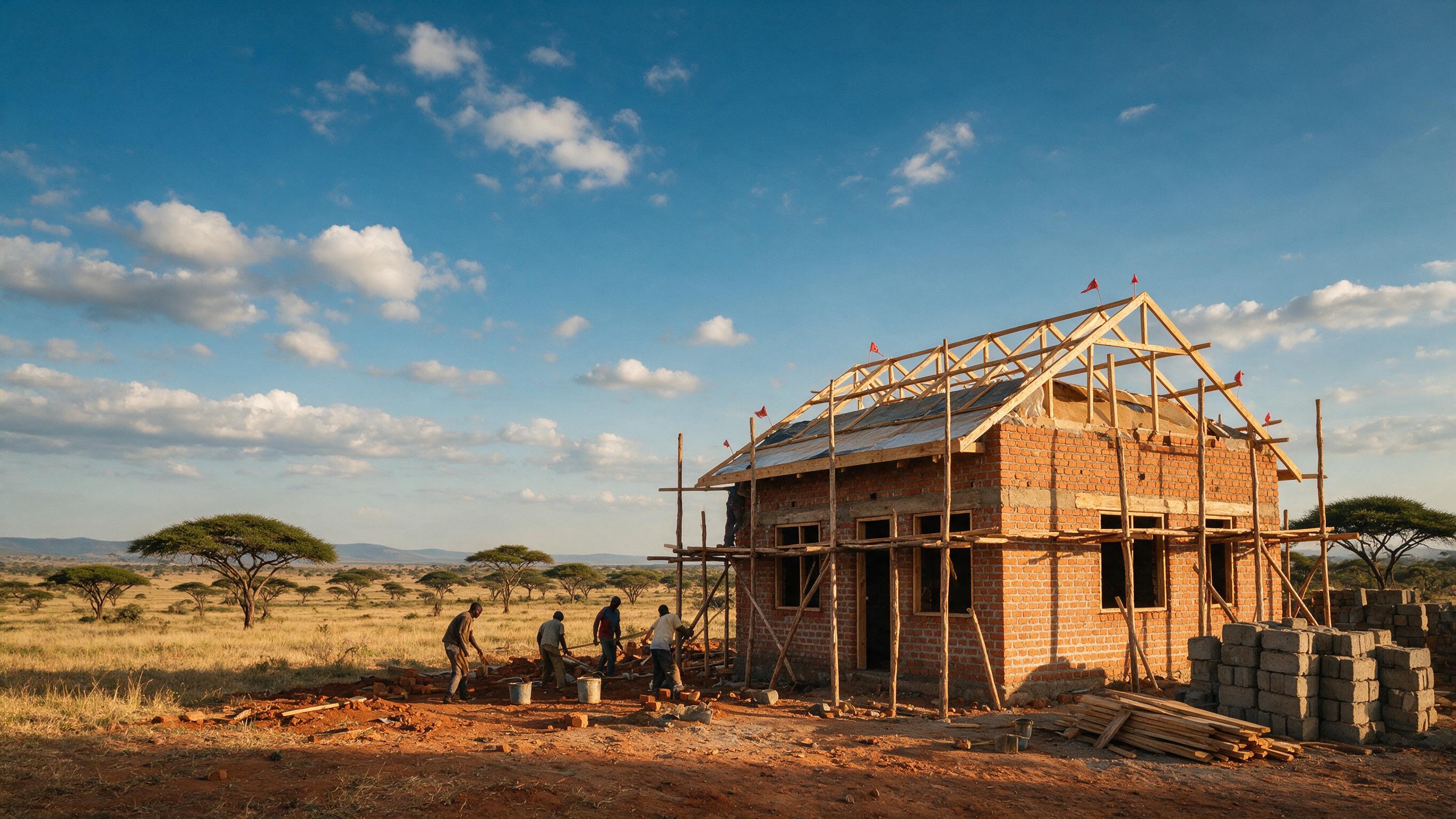
Africa is one of the most diverse continents on earth — and that diversity extends directly to the cost of building a home. Whether you are planning a modest family house in West Africa, a mid-range residence in East Africa, or a well-appointed home in South Africa, the numbers can vary so dramatically that a single average figure is almost meaningless.
This guide breaks down what you can realistically expect to pay across different African regions and countries, what drives those costs up or down, and how to make smart decisions with your construction budget. If you are planning a build anywhere on the continent, the figures and frameworks here will help you plan with confidence.
Average Cost to Build a House in Africa
Africa is not one market — it is 54 countries, each with its own labor costs, material supply chains, regulatory environments, and currency dynamics. That said, research gives us a useful continental baseline to anchor your expectations.
According to research published by Springer Nature, the average price per square meter of a single-story detached house is lowest in North Africa at approximately US$323, followed by East Africa at US$360, West Africa at US$428, Central Africa at US$455, and Southern Africa at US$512. These figures reflect the broad structural differences in construction economies across the continent.
The price per square meter for a single-story house varies from a low of US$173 in Morocco to a high of US$865 in the Republic of Congo, and the variations are large not only across countries but also within regions. It is worth noting these are older benchmarks from academic research; current costs in many markets have risen due to persistent construction inflation.
According to Turner and Townsend’s International Construction Market Survey 2024, Africa is projected to have the highest construction cost inflation globally, with an average of 5.7% in 2024 and 5.9% in 2025. That means budgets set even a year ago may already be understated.
Key Insight: Africa has the highest construction cost inflation of any region globally. Build in a contingency of at least 10–15% above your estimated project cost to absorb price escalation during construction.
Here is a snapshot of typical total build costs for a standard 3-bedroom home across selected African countries, based on available sourced data:
| Country / City | Approx. Cost to Build a 3-Bedroom Home (USD) | Notes |
|---|---|---|
| South Africa | $50,000 – $160,000+ | Wide range by province and finish level |
| Ghana (Accra) | $36,000 – $100,000+ | Costs rising with urbanization pressure |
| Nigeria (Lagos) | $30,000 – $80,000+ | Naira volatility significantly affects USD cost |
| Kenya (Nairobi) | $25,000 – $70,000 | Materials represent ~40% of total cost |
| Morocco | $15,000 – $50,000 | Among the most affordable builds on the continent |
| Republic of Congo | $80,000 – $150,000+ | Among the most expensive in Central Africa |
Cost to Build a House Per Square Foot in Africa
Most African countries measure construction in square meters rather than square feet, so you will encounter per-square-meter pricing from contractors and quantity surveyors. To convert: 1 square meter equals approximately 10.76 square feet.
South Africa is the most data-rich market on the continent. For 2025, the baseline cost for an entry-level, economic home in South Africa begins at approximately R6,500 per square metre, with high-end luxury homes costing upwards of R20,000 to R30,000 per m². At the apex of the market, “super luxury” properties can command rates as high as R61,000 to R75,000 per m².
According to data from Ooba, the average cost per square meter to build in South Africa in 2025 ranges from R9,100 in North West to R17,000 in Western Cape. At current exchange rates, this translates to roughly $5 to $9 per square foot on the lower end, and $10 to $17 per square foot for mid-range builds.
For other major African markets, per-square-meter costs for residential construction (as of July 2024, per AECOM data cited by Statista) show that Lagos was among the African cities with the highest construction costs in 2024, while the average multi-unit high-rise in Accra, Ghana cost over 2,100 US dollars per square meter to construct.
Pro Tip: Always request quotes in both local currency and USD. Currency fluctuations — especially in Nigeria and Ghana — can significantly change your effective cost during a multi-month build. Lock in material costs early where possible.
In Ghana, building a 3-bedroom house cost around $60,000 in 2024 according to the African Investor, and as of 2025, a basic 3-bedroom house on your own land could cost between GHS 400,000 and GHS 700,000, equivalent to approximately $36,000 to $63,000.
Cost Breakdown: What You’re Actually Paying For in Africa
Understanding where your construction budget goes is essential to managing it effectively. Across Africa, the cost of building a house breaks down into several consistent categories, though the proportions vary by country.
Materials represent the single largest expense, constituting 40% to 60% of the total budget. In Kenya, the cost of materials represents approximately 40% of total housing costs, and this share can be even higher in countries that import the majority of their construction materials.
Labour costs make up 25–30% of total construction expenses across South Africa, and this percentage can vary based on project complexity and region. In countries with less developed skilled-trades infrastructure, labour costs may be lower in absolute terms but slower timelines can offset those savings.
Here is a typical cost breakdown for a mid-range residential build in Africa:
| Cost Category | Typical Share of Total Budget | Notes |
|---|---|---|
| Materials (cement, steel, roofing, etc.) | 40–60% | Higher in import-dependent countries |
| Labour | 25–30% | Varies by skill availability and region |
| Professional fees (architect, engineer, QS) | 10–15% | Essential for quality control |
| Permits and regulatory compliance | 2–5% | Varies significantly by country |
| Site preparation and infrastructure | 3–8% | Higher in rural or undeveloped plots |
| Contingency | 10–15% | Non-negotiable given inflation environment |
Professional fees in South Africa include architect fees of up to 8% of the construction cost, land surveyor fees of up to 5%, structural engineer fees of 2%, and quantity surveyor fees of up to 4% of the construction cost. These benchmarks are broadly similar across other African markets, though local regulations vary.
The widely advised allocation of 10% to 15% of the total construction cost for a contingency fund should be viewed not as a provision for minor issues, but as an essential buffer against systemic cost escalation.
Common Mistake: Many first-time builders in Africa budget only for construction costs and forget professional fees, permits, site preparation, and utility connections. These “soft costs” can add 20–30% on top of the raw build price.
Cost of Land in Africa
Land is arguably the most variable and least predictable cost element in any African construction project. Prices swing wildly between urban centers, peri-urban zones, and rural areas — and within cities, between neighborhoods.
Land proved to be the most challenging cost element to obtain consistent pricing for across Africa, and this is unsurprising given the significant attention given to land issues across Africa’s cities.
In South Africa, construction costs differ by region, with urban areas like Cape Town generally commanding higher prices than rural locations, with material availability, labour costs, and local rules all contributing to these differences. Prime urban land in cities like Johannesburg, Cape Town, or Sandton carries a substantial premium before a single brick is laid.
In Nigeria, the five-year trend shows dramatic appreciation, with estimates suggesting 80–110% price increases between 2019 and 2025, and land in emerging areas achieving gains of up to 300% over this period — particularly in areas that transitioned from undeveloped to infrastructure-ready status.
In Ghana, the location of your land plays a significant role in determining the overall cost of building in Accra, with prime locations near the city center or amenities like schools and shopping centers tending to be more expensive, and difficult terrain requiring extensive site preparation adding further to costs.
As a general guide for urban land in major African cities, expect to pay anywhere from $5,000 to $15,000 for a modest plot in a secondary city, and $30,000 to well over $200,000 for a serviced plot in a primary urban center like Lagos, Nairobi, Accra, or Cape Town. Rural and peri-urban plots can be dramatically cheaper but may require investment in road access, water, and power connections.
Important Note: In many African countries, land title and registration systems are complex. Always work with a licensed local attorney to verify title, confirm zoning, and complete the legal transfer before committing to construction. Disputes over informal land rights are a leading cause of stalled builds.
Factors That Affect Building Costs in Africa
No two builds in Africa cost the same, even within the same city. Several structural and project-specific factors combine to determine your final bill.
Location and Urban Density
Prices for labour and materials can be higher or lower depending on your location, with urban areas often being higher and rural areas lower. If your site is far from building material suppliers, you will pay more for transport and delivery. Coastal builds may also require additional structural specifications — houses built near the coast, for example, need thicker roofs, which add to the cost.
Material Quality and Import Dependency
The timely supply of building materials of required specification and quality is a major concern for stakeholders in the construction and housing sector, and affordable housing programs cannot succeed without timely availability of building and construction materials at an appropriate specification, quality, and price. Countries that rely heavily on imported cement, steel, or finishing materials face higher and more volatile costs. You can visit resources like Rider Levett Bucknall’s Africa cost analysis
for a deeper look at how import dependency drives regional pricing gaps.
Design Complexity
Studies show an 18% increase in cost for more intricate house designs, with a simple layout costing R6,525 per square metre on average and a more complex design averaging R7,608 per square metre. Double-storey homes, curved walls, large glass surfaces, and bespoke architectural features all escalate costs significantly.
Currency and Inflation Risk
Africa is projected to experience high construction cost inflation, with forecasts for South Africa indicating an average cost inflation of 5.7% in 2024, expected to accelerate to 5.9% in 2025 — a rate that significantly outpaces general consumer inflation. In countries like Nigeria and Ghana, naira and cedi depreciation can cause imported material costs to spike mid-project.
Contractor Standards and Registration
Availability of appropriate site infrastructure, contractors, suppliers, maintenance teams, building materials, and professional services — or the lack thereof — is a key cost-influencing factor. Apparent cost differences between local and international builds are mostly driven not by individual design decisions, but by site characteristics, high-level performance criteria, and client standards. Hiring registered, experienced contractors costs more upfront but reduces costly rework and delays. You can also explore related construction cost guides to see how building type affects overall spend.
Building vs. Buying a House in Africa
The build-vs-buy decision in Africa is more nuanced than in many Western markets, and the right answer depends heavily on your country, city, and financial position.
In South Africa, building a new home typically costs between 20% and 30% more upfront than buying an equivalent pre-owned house, but this premium is often offset by long-term benefits such as the absence of transfer duties, reduced initial maintenance, and the ability to customize the property to exact specifications.
While building is typically more expensive upfront than buying, it offers compelling long-term financial benefits, most notably the savings on transfer duty. In South Africa, transfer duty on a resale property can run into hundreds of thousands of rand depending on the purchase price.
In Ghana, the comparison tilts differently. Data from late 2024 showed prices of 2-bedroom apartment units in Accra increasing by 8.2% year-on-year, indicating steady and robust capital gains — meaning buying in a rising market has its own financial logic. However, buying finished stock in many African cities means accepting whatever design, location, and quality the developer chose, with limited recourse if standards fall short.
| Factor | Building | Buying |
|---|---|---|
| Upfront cost | 20–30% higher on average | Lower immediate outlay |
| Transfer duty / taxes | None (new build) | Payable on purchase price |
| Customization | Full control | Limited to existing design |
| Timeline | 12–24+ months | Immediate (if buying existing stock) |
| Quality control | You set the standard | Dependent on developer/seller |
| Financing | Construction/building loans | Standard mortgage |
| Hidden costs | Site prep, permits, overruns | Transfer fees, agent commissions |
If you are considering renting while you save to build or buy, it helps to understand what rental markets look like in other cities for context. Apartment costs in cities like Miami, San Francisco, and Manhattan illustrate how location-driven housing costs are globally — a dynamic that plays out just as strongly across African cities.
How to Save Money When Building a House in Africa
Building in Africa does not have to break your budget. With the right approach, you can reduce costs substantially without sacrificing quality or safety.
1. Use Locally Sourced Materials
The quality of materials used for construction affects the cost of building a house significantly, and using locally sourced alternatives rather than imported tiles or hardwood floors can substantially reduce costs. Local brick, stone, timber, and aggregate are almost always cheaper than imported equivalents and better suited to the local climate.
2. Hire a Quantity Surveyor Early
The single most effective investment is the early engagement of qualified professionals — an architect is essential for design, but a Quantity Surveyor is indispensable for financial control and preventing cost overruns. A QS produces a detailed Bill of Quantities that makes contractor pricing transparent and comparable. Explore the Centre for Affordable Housing Finance in Africa
for research on construction cost benchmarking across the continent.
3. Choose a Simple, Efficient Design
A rectangular or square footprint is the most economical shape to build. Avoid unnecessary curves, cantilevers, and multi-level rooflines that add both material and labour costs. Green homes cost around 5% more to build, with the price difference sometimes as low as 1.1%, but after construction you will enjoy a reduced carbon footprint and lower energy bills — making it a great long-term investment.
4. Phase Your Construction
Many African homeowners build in stages — completing the structural shell and core rooms first, then finishing additional rooms and features over time as funds allow. This approach avoids high-interest borrowing and lets you adjust your design to your actual budget. Building loans in South Africa are typically disbursed in stages, with funds released at key milestones of the building process — a structure that helps manage risk for both lender and borrower.
5. Get Multiple Contractor Quotes
Labour costs make up a considerable portion of the total budget for building a house, and the availability of skilled labourers affects these costs — if there is high demand for workers due to ongoing projects in the area, it may result in higher labour costs. Soliciting at least three written quotes from registered contractors gives you a realistic market price and negotiating leverage.
6. Budget a Proper Contingency
As a rule, you should set aside a budget of 10% to 15% of the total construction cost for unexpected developments such as required changes. This is not optional in Africa’s high-inflation construction environment — it is the difference between a completed home and a stalled project. You can also compare construction costs for other structure types, such as building a greenhouse, to understand how structure type and material choices affect overall spend.
Pro Tip: If you are building in a country with a volatile local currency, price your materials contract in a stable currency like USD or EUR where legally permissible, or purchase key materials (roofing, steel, electrical) in bulk at the start of the project before currency depreciation erodes your budget.
Building a house in Africa is a significant financial and logistical undertaking, but it remains one of the most powerful wealth-building tools available to individuals and families across the continent. Whether you are building in Cape Town, Accra, Nairobi, or Lagos, the fundamentals are the same: know your per-square-meter costs, budget for every cost category, hire qualified professionals, and protect your project with a solid contingency fund. The more preparation you put in before the first shovel hits the ground, the more likely your build will finish on time, on budget, and exactly as you envisioned. For additional housing cost context in other markets, see apartment cost guides for cities like Washington D.C., Seattle, and Honolulu to see how global housing costs compare.