Yes, You Can Freeze Fresh Watermelon Chunks — Here’s How to Do It Right

May 5, 2026
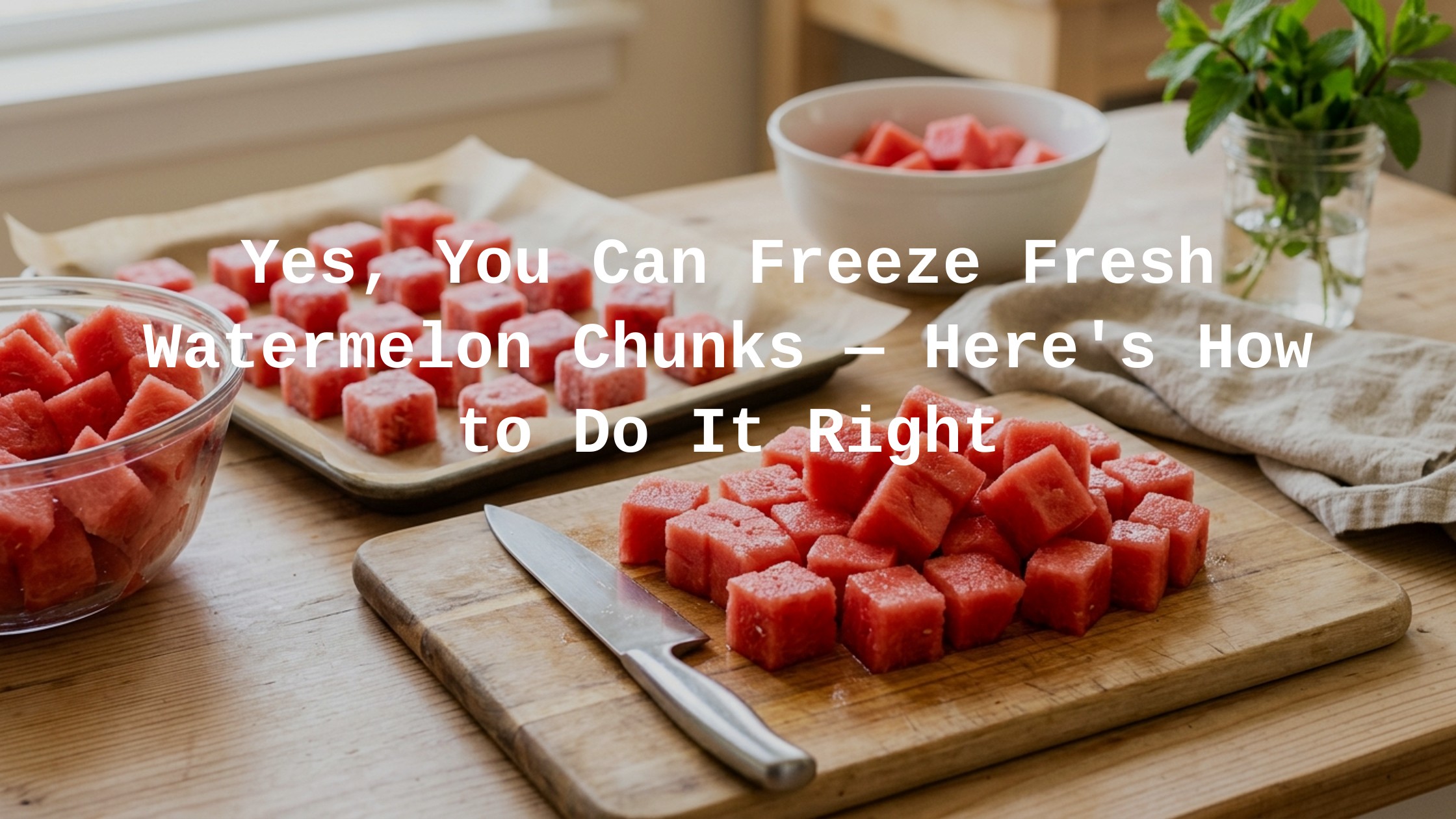
You bought a beautiful watermelon, cut into it, and now you’re staring at more than you could possibly eat in a few days. Sound familiar? Before you let it go soft in the fridge, know this: freezing fresh watermelon chunks is not only possible — it’s one of the easiest food preservation moves you can make.
The process takes just a few minutes of hands-on prep, and the payoff is months of smoothies, frozen treats, and refreshing drinks on demand. This guide walks you through everything you need to know, from what to expect with texture to the best ways to use your frozen stash.
Can You Freeze Watermelon? The Short Answer
Watermelon is 92% water, so it absolutely will freeze, according to Stephanie Barlow, Senior Director of Communications at The National Watermelon Promotion Board. That high water content is exactly why freezing works so well — and also why a few technique tips matter.
Whether you’re freezing blended juice or puree in an ice cube tray or pieces of watermelon, it will turn from flesh to frozen. For the best taste and texture, it’s best to eat or use frozen watermelon while it’s still frozen — meaning using watermelon puree or juice ice cubes in drinks, or tossing frozen chunks into smoothies.
Once cut, you only want to keep fresh watermelon in the refrigerator for 3–5 days. Freezing extends that window dramatically, making it a smart solution when you’ve got more melon than you can eat fresh. You can also explore other food preservation methods for keeping your favorite foods fresher, longer.
Pro Tip: Always start with the ripest, freshest watermelon you can find. As one food resource puts it, “If it doesn’t taste good going into the freezer, it won’t taste good coming out!”
Does Freezing Change the Texture or Taste of Watermelon?
Yes — and it’s worth knowing upfront so you’re not caught off guard. Melons like watermelon are composed primarily of water. When water freezes, it expands, forming ice crystals. These ice crystals damage the cell walls of the melon, resulting in a softer, mushier texture upon thawing. This is why frozen and thawed watermelon loses its characteristic crispness.
The texture does change: the flesh won’t have the same toothsome bite it offers prior to freezing, and the sweetness drops just a little. Unless you seriously crave the sugary sweetness watermelon brings to a picnic, you should find the frozen version tasty.
Freezing has a minimal impact on the nutritional value of melon. While some vitamins might be slightly reduced, the overall nutritional content remains largely intact. So you’re not losing much on the nutrition front — just the crisp, snappy bite of fresh fruit.
Key Insight: You can thaw frozen watermelon pieces, but the texture and taste won’t be the same, so you’ll have more limited options in how you can use it. Plan to use your frozen watermelon in blended recipes or straight from the freezer for the best results.
The good news? This textural change doesn’t compromise the flavor or nutritional value, making frozen melon a useful ingredient for various culinary creations. Watermelon’s natural sweetness shines in smoothies, sorbets, and frozen drinks — where the texture shift is completely unnoticeable. For more on how fruits and vegetables support your health, see these powerful nutrients and foods that fight cancer.
How to Freeze Watermelon the Right Way
The method matters here. Skipping a step — especially the flash-freeze — leads to a clumped, icy block that’s hard to work with. Follow these steps for individually frozen chunks you can grab by the handful.
What You’ll Need
- Fresh, ripe watermelon (seedless works best)
- Sharp knife and cutting board
- Baking sheet or cookie sheet
- Parchment paper or wax paper
- Freezer-safe zip-top bags or airtight containers
- Marker for labeling
Step-by-Step Instructions
- Wash the melon first. Wash whole melons under cool running water and scrub the rind with a clean brush before cutting. Even if you discard the rind, this prevents dragging surface bacteria into the edible flesh.
- Cut away the rind and remove seeds. Cut the watermelon into smaller pieces, making sure to cut off the watermelon rind and remove the seeds. You can freeze watermelon slices, cubes, chunks, or watermelon balls created with a melon baller. Always remove any seeds (especially the large brown ones) before freezing since they would be very difficult to remove once the watermelon is frozen. If using a seedless watermelon, it’s okay to leave the tiny white seeds.
- Arrange in a single layer. Arrange the watermelon chunks into a single layer on the lined baking sheet, making sure that the pieces aren’t touching, so they won’t stick together later.
- Flash freeze for 2–4 hours. Flash freeze the watermelon for 1 to 2 hours, or until fully hardened. Larger chunks may need up to 4 hours. Flash-freezing the watermelon before putting it in a freezer bag helps the pieces stay separated instead of forming one large clump, so you will be able to take out just as many pieces as you need.
- Transfer to airtight bags or containers. Once the watermelon is frozen, transfer the pieces to an airtight container, so they won’t pick up any other flavors from your freezer. Freezer burn is the enemy, so remove as much air as possible before you seal the bag.
- Label and date your containers. Be sure to mark the date on the container so you’ll know how long they’ve been in the deep freeze.
Pro Tip: Freezing watermelon can neutralize some of the sweetness. If you prefer a sweeter watermelon, you can toss your watermelon slices in sugar before flash freezing them. You can also add a small squeeze of lemon juice to help preserve color.
Can You Also Freeze Watermelon Puree?
You can also freeze watermelon puree in ice cube trays. Flash freeze the ice cube tray, then place the cubes in a freezer bag or airtight container. You can use the frozen puree to make popsicles or refreshing beverages, like watermelon lemonade, watermelon margaritas, smoothies, or sorbet.
Once blended, pour the puree into an ice cube tray, leaving a bit of headspace since watermelon expands as it freezes. This is a great space-saving option and makes it easy to portion out exactly what you need for a recipe. Learn more about how to handle frozen food safely for transport and storage.
How Long Can You Freeze Watermelon?
Storage timelines vary across sources, but the general consensus points to a quality window of several months when stored properly in an airtight container.
| Storage Form | Recommended Quality Window | Source Guidance |
|---|---|---|
| Frozen chunks (airtight bag) | 3–6 months (best quality) | Detox Inista |
| Frozen chunks (well-sealed) | Up to 8–12 months | Now Cook This / CanIFreeze.com |
| Frozen puree (ice cube tray) | Use within a few weeks for best flavor | National Watermelon Promotion Board |
| Fresh cut (refrigerator) | 3–5 days | Cook the Story |
Frozen watermelon cubes can last for up to 8 to 12 months in the freezer when stored properly — but the sooner you use them, the better. Frozen melon is best used within 8–12 months for optimal quality. After this time, the flavor and texture may start to deteriorate.
Although some sources say you can store frozen watermelon chunks for up to 8 months, watermelon expert Stephanie Barlow recommends trying to use frozen watermelon within a couple of weeks, if you can. She suggests using watermelon puree or juice that’s frozen in ice cube trays even more quickly.
Important Note: Safety at 0°F/−18°C is effectively indefinite, but quality is not. To maximize quality, flash-freeze pieces on a tray before bagging, use airtight packaging (vacuum-seal if possible), and keep the freezer at 0°F/−18°C.
How to Thaw Frozen Watermelon
Here’s the honest truth most guides will tell you: the best way to use frozen watermelon is to skip thawing entirely. Thawing frozen watermelon is not recommended because the texture will change significantly. Fruits and vegetables that are high in water content will tend to be mushy after you freeze them. You won’t want to serve thawed watermelon in a salad or fruit bowl.
That said, if you do need to thaw it, here are your options:
- In the refrigerator (recommended): This is the safest and most recommended method. Transfer the frozen watermelon to the refrigerator and allow it to thaw slowly overnight, or for several hours.
- At room temperature (use immediately): Defrosting at room temperature is only an option for smaller chunks that will thaw within about an hour. You should eat the melon immediately upon thawing if you opt for this route. Most people don’t recommend this way.
- Skip thawing altogether: As frozen watermelon thaws, it releases tons of juices and is a pain to work with. Either eat the watermelon straight from the freezer or blend it to use in specific recipes.
Pro Tip: In most cases, you don’t want to consume completely thawed watermelon as it goes through some textural changes as it defrosts, becoming a bit soggy. If it remains at least partially frozen, it will retain some crispness and be all the more refreshing.
Can You Refreeze Watermelon After Thawing?
This is one area where most food experts agree: refreezing is best avoided. Refreezing thawed watermelon is not recommended. The thawing and refreezing process further degrades the texture and can increase the risk of bacterial contamination. It’s best to only thaw the amount of watermelon you plan to use at one time.
Refreezing thawed melon is not recommended. Each freeze-thaw cycle degrades the texture further and increases the risk of bacterial growth.
There is one nuanced exception worth noting: U.S. guidance allows refreezing if the fruit stayed at 40°F/4°C or below and still contains ice crystals; safety is fine, though texture will suffer. If the watermelon warmed above 40°F/4°C, don’t refreeze — either discard or cook into a syrup or compote, chill quickly, and then freeze.
Common Mistake: Thawing a large bag of watermelon all at once and then trying to refreeze what you don’t use. Instead, portion before freezing — for example, 2 cups per bag — so you only thaw what you need.
How to Use Frozen Watermelon (Best Uses After Freezing)
Once you understand that texture changes after freezing, a whole world of delicious uses opens up. Frozen watermelon shines in blended and chilled applications where the softened texture is actually an advantage.
Best Uses for Frozen Watermelon Chunks
- Smoothies: Freezing watermelon for smoothies is a wonderful way to prolong the flavors of summer. Freezing the watermelon as chunks or balls is advised if you plan to add it to smoothies. Try blending with strawberries, spinach, and a squeeze of lime for a nutrient-packed drink. These superfoods for a healthy heart pair wonderfully with watermelon in a morning blend.
- Sorbet and frozen desserts: Frozen watermelon is an excellent base for watermelon sorbet. Simply blend the frozen watermelon with a bit of sugar and lemon juice, then churn in an ice cream maker.
- Cocktails and mocktails: Frozen watermelon can be blended later to make homemade watermelon juice, smoothies, sorbet, cocktails, and more! Think watermelon margaritas, lemonade, and spritzers.
- Flavored ice cubes: If you cut your melon into balls or small cubes, you can add them still frozen to a drink to act as delicious fruity ice cubes. Unlike regular ice, they add flavor instead of diluting it.
- Popsicles: For a watermelon “ice pop,” try sticking a popsicle stick into one of the fresh watermelon cubes. When you freeze it, it will turn into a cute, mini-size frozen treat.
- Frozen snack: Frozen watermelon isn’t just for using in recipes. For a super refreshing and delicious cold snack on a hot day — or any day of the year — just slightly thaw the watermelon so that it’s not super hard and enjoy!
- Watermelon slushies and granita: Blend frozen chunks with a splash of lemon juice and a drizzle of honey for a quick frozen slushie. The Have A Plant resource from Fruits & Veggies has a great recipe using frozen watermelon cubes, honey, and lemon juice.
Key Insight: Watermelon is approximately 90% water, so ice crystals rupture cell walls and turn thawed pieces soft and juicy. That’s not ideal for fruit salads or cheese boards, but it’s perfect for smoothies, popsicles, granita, sorbet, and blended cocktails.
Watermelon is also rich in vitamins and antioxidants that support overall wellness. For a deeper look at how certain foods benefit specific body systems, check out these foods that boost brain health and foods that promote healthy eyesight.
Signs That Frozen Watermelon Has Gone Bad
Frozen watermelon stored properly is very safe, but it won’t last forever at peak quality. Here’s what to look for before you use it:
| Warning Sign | What It Means | What to Do |
|---|---|---|
| Foul or sour odor | Bacterial growth or spoilage | Discard immediately |
| Slimy texture after thawing | Breakdown of fruit cells, possible spoilage | Discard |
| Noticeable color change (browning, graying) | Oxidation or freezer burn | Discard or cut away affected areas |
| Excessive ice crystals inside the bag | Freezer burn from air exposure | Quality is reduced; may still be usable in blended recipes |
| Mushy texture after thawing | Normal texture change from freezing | Use in smoothies or blended drinks — not a sign of spoilage |
Signs that frozen watermelon has gone bad include a noticeable change in color, a sour or unpleasant odor, or the presence of excessive ice crystals indicating freezer burn. When in doubt, it’s best to discard it.
Freezer burn affects the quality and texture of the food, not its safety. It occurs when air reaches the food’s surface, causing dehydration and oxidation. While it might make the food less palatable, it’s still safe to consume. That said, heavily freezer-burned watermelon won’t taste great even in a smoothie, so prevention is key.
To prevent freezer burn, use freezer-safe containers or bags and remove as much air as possible before sealing. Vacuum sealing is the most effective method, but pressing out as much air as possible from a freezer bag is also helpful.
Remember: a mushy texture after thawing is completely normal and not a sign that your watermelon has gone bad. Rely on smell and appearance too — any sour odor, sliminess, or fizzing means it’s time to bin it.
Interested in learning more about growing your own watermelon supply? Explore what goes into running a watermelon farm, or discover fun facts about watermelon seeds — including whether they’re edible.
Frequently Asked Questions
Can you freeze a whole watermelon?
It is not advisable to freeze a whole watermelon. In addition to taking up valuable real estate in your freezer, it will be super hard to slice when you’re ready to use it. Always cut and remove the rind before freezing.
Does seedless watermelon freeze better?
This process will work no matter if you have a seedless watermelon or one with seeds. However, seedless varieties are more convenient since you skip the de-seeding step entirely. If you do have a seeded melon, remove the large black seeds before freezing.
Can you freeze watermelon that’s already been cut and refrigerated?
Yes, you can freeze melon that has been previously cut and stored in the refrigerator, but make sure it’s still fresh and hasn’t started to spoil. The fresher it is going into the freezer, the better it will taste coming out.
How do you keep frozen watermelon from clumping?
The flash-freeze step is the key. Arrange the watermelon cubes on a parchment paper-lined baking sheet. Be sure that the pieces are in a single layer and not touching each other, as this would cause them to stick and freeze together. Carefully transfer your baking tray to the freezer and place it flat. Freeze for a few hours, letting the watermelon completely freeze before disturbing it.
Can frozen watermelon be used in fruit salads?
Thawed watermelon can be used in fruit salads. Make sure the bulk of the salad is made of fresh fruits. Fresh fruit beats frozen and thawed any day, but most people won’t notice the difference if a small portion is from the latter category.
Is frozen watermelon healthy?
Yes. Some water-soluble vitamins, like vitamin C, may degrade slightly during the freezing and thawing process, but the overall nutritional loss is typically minimal. Watermelon remains a hydrating, nutrient-rich fruit whether fresh or frozen. For more on how whole foods support your health, explore these whole plant-based foods and foods for healthy skin.