Is It Normal for a 4-Year-Old to Be Scared of the Dark? What Parents Need to Know

May 4, 2026
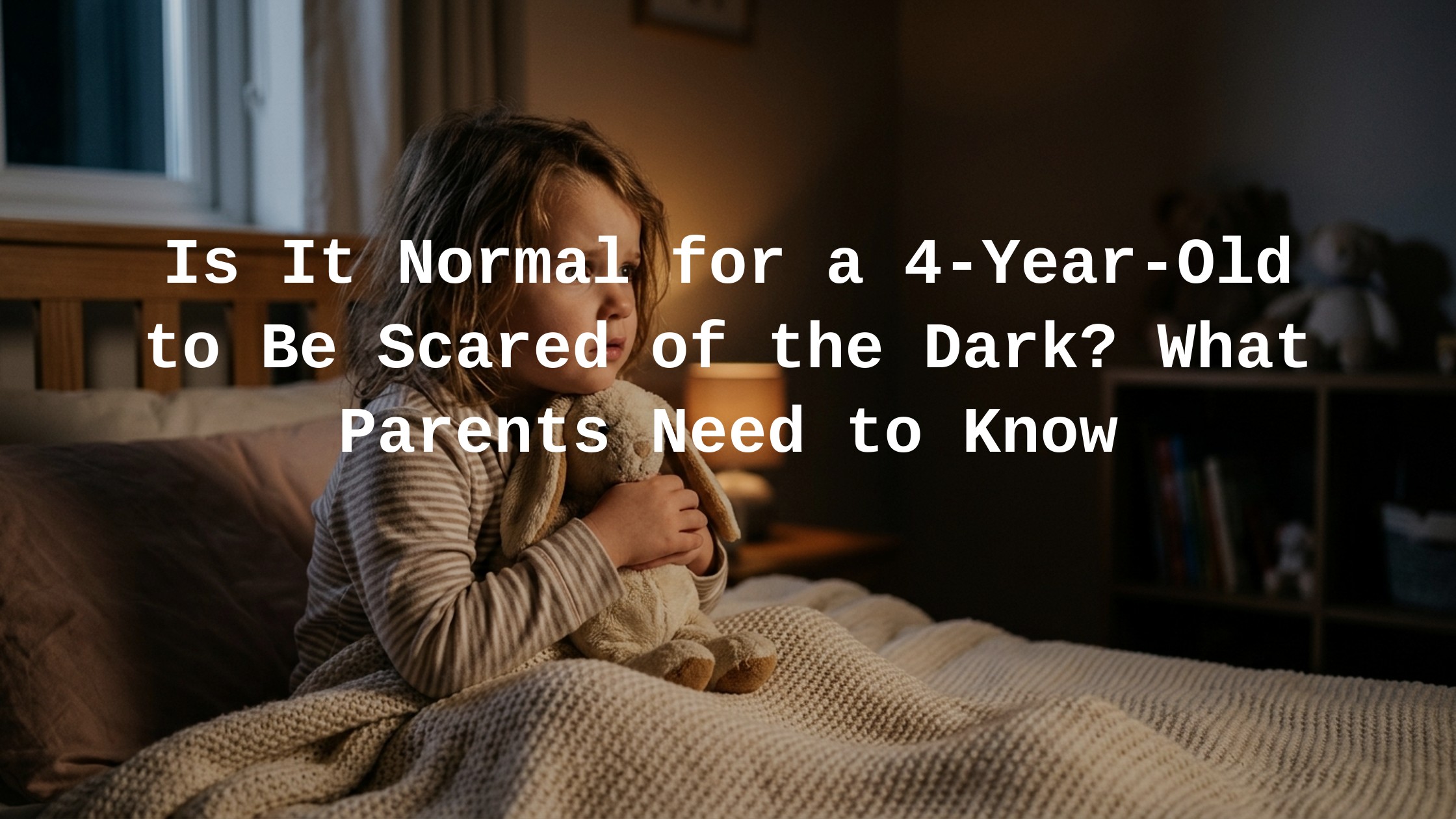
You’ve done the bath, the books, and the goodnight kiss — and then, just as you reach the hallway, you hear it: “I’m scared.” If bedtime has started to feel like a nightly negotiation, you are in very good company.
Fear of the dark is one of the most talked-about worries parents of preschoolers bring up, and for good reason. It can make bedtime exhausting for everyone involved. But before you worry that something is wrong with your child, take a breath — this is one of the most developmentally expected fears a 4-year-old can have.
In this article, you’ll find out exactly why this fear shows up at this age, how to tell the difference between a normal phase and something worth discussing with a doctor, and five gentle, research-backed strategies to help your child feel safe when the lights go out.
The Short Answer
Yes — it is completely normal for a 4-year-old to be scared of the dark. Fear of the dark is one of the most common fears among children, and in most cases is a normal growth-related process in kids 3 to 6 years old. In fact, most developmental psychologists and child and adolescent psychiatrists would say it is a normal phase of development.
Nearly 75% of children ages 4 to 12 report having nighttime fears — and fear of the dark is one of the most common. So if your child is calling out for you at bedtime, they are far from alone.
The good news is that nighttime fears are a natural and normal part of development for most children, with 90% of them outgrowing them. For most families, this is simply a phase — one that responds beautifully to calm, consistent support.
Pro Tip: Resist the urge to dismiss the fear with “There’s nothing to be scared of.” To your child, the fear is completely real. Acknowledging it first — then offering reassurance — goes a long way.
Why Preschoolers Get Scared of the Dark
There’s a genuinely fascinating reason this fear tends to peak right around age 4, and it comes down to what’s happening inside your child’s developing brain.
Between ages 2 and 4, children develop the capacity for imaginative and symbolic thinking. This is wonderful for play, creativity, and language development — but it is less wonderful at bedtime, because the same brain that can invent elaborate imaginary worlds during the day can populate those worlds with threats at night.
The key piece of the puzzle is the prefrontal cortex — the part of the brain responsible for logical thinking and evaluating whether a thought is realistic. The prefrontal cortex does not fully mature until the mid-20s. In a 4-year-old, it is barely online. So when a child imagines a monster in the closet, the emotional brain (the amygdala) fires a genuine fear response, and the rational brain cannot override it. The fear is real, even though the monster is not.
Between ages 3 and 6, all children come to realize there is an external world that might be dangerous. Prior to this, they felt connected to their parents and did not fully realize the external world could be a dangerous place. They are beginning to learn that there are things that can hurt them, and they do not have a clear sense of time — so going to bed may make them unsure when they will see their parents again. They have developed a keen imagination, but they have not fully distinguished the difference between reality and fantasy, so monsters, things that go bump in the night, and being alone all feel threatening.
Media exposure plays a role too. “When you ask kids what’s scary about the dark, they often point to things they’ve seen on TV, online or even the news,” says Benjamin Mullin, PhD, clinical child and adolescent psychologist at Children’s Hospital Colorado. “Scary things tend to happen in dark settings in TV shows, movies or even in their imaginations, and that can stick with them.” Other times, children may see someone else afraid of the dark and learn that behavior without realizing it.
Overtiredness can also make things worse. Overtiredness leads to increased levels of cortisol — a stress hormone — being released in the body. And just like with adults, a child’s anxiety will increase when they’re more stressed.
Key Insight: Your child isn’t being dramatic or manipulative. Their brain is doing exactly what a 4-year-old brain is supposed to do — it just hasn’t yet developed the tools to rationalize imaginary threats away.
When It Is Normal vs. When It’s a Concern
Understanding where your child falls on the spectrum can help you feel more confident about how to respond. Most cases of dark-related fear in preschoolers are entirely typical — but it helps to know the markers.
Signs the Fear Is Developmentally Normal
- Research points to a substantial rise in the prevalence of fear of the dark between the ages of 2 and 3, with a peak in intensity for most children between 3 and 4 years of age and a gradual decline thereafter. If your child is right in this window, their fear is right on schedule.
- The fear is limited to bedtime or dark rooms and doesn’t spill into daytime activities in a significant way.
- Your child can be comforted and eventually settles down to sleep.
- Fear of the dark, monsters, or being alone is a typical fear for preschoolers ages 3 to 5.
- The fear appeared gradually and may be linked to a new book, movie, or change in routine.
Signs That Warrant a Closer Look
- The fear is so intense that your child cannot be comforted at all, night after night.
- The fear becomes more intense during times of stress, such as after moving to a new house or starting at a new school — and doesn’t ease up once the stressor passes.
- Your child avoids dark spaces even during the day, such as refusing to enter a room with the lights off.
- Sleep disruption is chronic and affecting daytime mood, behavior, or functioning.
- In about 10% of cases, nighttime fears may be linked to an anxiety disorder — which is worth addressing early so your child can develop healthy coping skills.
The distinction between a normal childhood fear and a phobia matters. A phobia is a severe, dysfunctional fear that interferes with daily life. The fear interferes with the individual’s ability to participate in normal activities, and symptoms persist for at least 6 months. A child who is momentarily scared at bedtime but can be soothed is not showing signs of a phobia.
If you’re exploring different approaches to parenting during this stage, understanding your child’s emotional needs can help you respond to nighttime fears in a way that feels right for your family.
How to Handle It
The goal with nighttime fears isn’t to eliminate all discomfort — it’s to help your child build confidence that they are safe. Here are five strategies grounded in child development research.
1. Validate First, Then Reassure
The single most important thing you can do is take the fear seriously. “What may seem funny or trivial to you can feel very real to your child,” says pediatrician Dr. Laura O’Connor. “When a child is scared, they can benefit from sharing it with someone. Feeling heard can help them lift the weight of that fear.”
Try saying something like: “I know the dark feels scary. That makes sense. And I also know you are safe.” You’re acknowledging the emotion without confirming that the threat is real — a key balance. It’s really important to validate your child’s fear rather than dismissing it.
Equally important: while you should not force your child to talk about their fears, you can ask open-ended questions like “What are you afraid of when you go to bed?” or “What scares you in the dark?” — ideally at different times, such as during the day when they are not fearful.
Common Mistake: Avoid “checking for monsters” under the bed or in the closet. Avoid “monster checks” or “monster spray,” which imply the threat could be real. This can unintentionally confirm to your child that monsters are worth looking for.
2. Use a Dim, Warm Night Light
A well-chosen night light can make a meaningful difference. Choose one that emits warm amber or red light rather than blue or white, as blue wavelengths suppress melatonin. Place it low to the ground. The light should be dim enough that you cannot read by it but bright enough to make out room shapes — this eliminates the ambiguous shadows that fuel fearful imagination without disrupting sleep.
That said, don’t overdo it. Some parents think installing multiple nightlights or leaving the lights on all night will help, but kids need a dark environment to get adequate sleep and become developmentally strong. Try to stick with one dim night light, if anything.
3. Build a Consistent, Calming Bedtime Routine
Predictability is one of the most powerful tools you have. Create a good bedtime routine and stick to it. This might include reading a set number of books, saying prayers, or singing a favorite lullaby. Whatever it is, keep it consistent and avoid big changes in the routine from night to night.
A consistent routine signals safety to a young child’s nervous system. When the same sequence of events happens every night, the transition to darkness feels less like stepping into the unknown and more like a familiar, expected part of the day. You might also explore gentle parenting techniques that emphasize connection and emotional validation as part of your nightly wind-down.
Also keep an eye on sleep timing. Preschool-aged children (3–5 years old) typically need 11.5–12 hours of total sleep on average. An overtired child is a more anxious child — so an age-appropriate schedule matters more than you might think.
4. Give Your Child a Comfort Object
Give your toddler a lovey or favorite stuffed animal. Research has shown that sleeping with a comfort object can help decrease nighttime fears and sleep problems.
You can also try a clever reframe: a strategy called the “Protector Shift” involves trying to shift your child’s mindset from feeling scared to instead being in protector mode. For example, you would ask your child if they can “look after” their comforter or cuddly toy, so that they take on the role of protector in the situation, rather than the one being less empowered and more fearful. It can be really powerful in overcoming the darkness fear.
This approach is backed by research. In a study of 100 preschoolers, children were given a “huggy puppy” along with a simple story. After 4 weeks, having a “huggy puppy” was advantageous regardless of which story was used — kids in both groups experienced significant reductions in fear relative to peers in a control group.
5. Make the Dark Feel Friendly — During the Day
One of the most effective long-term strategies is helping your child build positive associations with darkness outside of bedtime. This can look like creating shadow puppets on the wall in a dark room, having a dance party with a few glow sticks, or having a candlelight picnic in the living room. These efforts can show your child that they can handle being in the dark and can master it.
Spend some time in the dark together to make it fun — read a book together with a flashlight or make shadow puppets on the wall. When darkness becomes the setting for fun memories, it loses some of its power to frighten.
Praise also matters. Toddlers and younger kids can respond especially well to rewards for good behavior. Good old-fashioned praise and incentives that reward sleeping soundly can help give children a reason to face their fear of the dark. Keep it genuine and specific — “You stayed in your bed all night, and I’m so proud of you” lands better than a generic “good job.”
If you’re also thinking about your broader parenting style and how it shapes your child’s emotional resilience, the strategies that work best for nighttime fears often align closely with your overall approach to discipline and connection. Parents practicing mindful parenting may find that their attunement to their child’s emotional states gives them a head start in recognizing and responding to fear before it escalates.
Pro Tip: Have the conversation about fears during the day — not right before bed. Dr. Mullin recommends avoiding the urge to talk about your child’s nighttime fears right before bed. Instead, have that conversation earlier in the day when things are calmer — that’s a better time to talk about a plan for bedtime and what might help your kid fall asleep.
When It Becomes a Red Flag
Most dark-related fear in preschoolers is completely manageable with the strategies above. But there are specific signs that suggest the fear has moved beyond the typical developmental range and may need professional attention.
Pay attention if you notice the following:
- The fear is persistent and intense beyond age 9–10. It may indicate clinical anxiety if it persists intensely beyond age 9–10, causes significant impairment in daily functioning, or is accompanied by other anxiety symptoms like school avoidance or physical complaints.
- Physical symptoms appear. Children with anxiety often describe their discomfort in terms of somatic symptoms — an upset stomach, nausea, headaches, palpitations, and sleep problems often do develop in children with anxiety.
- Daytime functioning is affected. While typically harmless, persistent nighttime fears can affect a child’s sleep, mood, concentration, and physical and mental well-being.
- The fear spreads beyond the dark. Childhood anxiety disorders differ from normal fear or anxiety because they involve more extreme avoidance, bigger emotional reactions, or last longer than expected.
- The fear follows a traumatic event. If your child’s fear of the dark began after something frightening happened — an accident, a loss, a significant change — it’s worth discussing with a professional sooner rather than later.
Anxiety in children is considered a disorder if worries or fears interfere with their life for more than six months. Duration and intensity together are the key indicators. A fear that spikes and then fades is very different from one that grows steadily and starts to shape your child’s daily choices.
Parents who are navigating this alongside other family dynamics — such as those in co-parenting or parallel parenting arrangements — may find it especially helpful to align on how both households respond to nighttime fears, since consistency across environments makes a real difference for anxious children.
When to Talk to Your Pediatrician
Your child’s pediatrician is always a reasonable first stop when you’re unsure — and you don’t need to wait until things are severe to bring it up. “If anxiety interferes with your child’s daily activities, talk to their pediatrician. Even if it hasn’t gotten to this point, it’s good to mention your child’s anxiety at a wellness visit so it’s something your pediatrician will have on their radar for future visits and if it gets worse.”
Specifically, consider reaching out to your pediatrician if:
- Your child’s fear of the dark is causing consistent, significant sleep loss for your child or your household
- Your child’s fears cause physical symptoms like stomachaches, headaches, or a racing heart, or your child feels breathless, dizzy, or sick
- The fear has lasted more than a few months without any improvement
- The fear starts disrupting the household and consistently keeps you and your child from sleeping regularly — kids with more intense nighttime fears may begin avoiding bedtime or become more defiant at night
- You suspect the fear may be connected to a broader pattern of anxiety or a past stressful event
Most often, anxiety disorders are treated with cognitive behavioral therapy (CBT) — a kind of psychotherapy that helps families, kids, and teens learn to handle worry, fear, and anxiety. CBT teaches kids that what they think and how they behave affects how they feel. Early support makes a meaningful difference, and for younger children who may not verbalize as well, play therapy is a wonderful option.
If you’re thinking about how your parenting differences as a couple affect how you handle these situations, or how your overall attachment parenting approach shapes your child’s sense of security at night, those conversations are worth having — ideally with your pediatrician or a family therapist who can offer personalized guidance.
Important Note: This article is for educational purposes only and is not intended as medical advice. Always consult with your child’s pediatrician or a qualified healthcare professional if you have concerns about your child’s anxiety or sleep.
Frequently Asked Questions
At what age do children typically stop being scared of the dark?
Fear of the dark is a normal developmental stage that affects most children between ages 2 and 7. It emerges when imagination develops faster than the ability to distinguish imaginary threats from real ones. Most children outgrow it naturally by ages 7–9. Some children may retain a mild preference for a night light a bit longer, which is also completely normal.
Should I let my 4-year-old sleep with a night light?
Yes, a dim night light is a reasonable and helpful tool. Choose one that emits warm amber or red light rather than blue or white light, which can interfere with melatonin production. Place it low to the ground so it softens shadows without flooding the room with brightness. The goal is to reduce ambiguity — not to eliminate all darkness.
Is my child using fear of the dark to stall bedtime?
Sometimes — and that’s okay to acknowledge. Some kids use fear to stall at bedtime, so it’s important to balance between reassuring your child and not reinforcing their fears. You can validate the feeling while still holding the boundary: “I know it feels scary. I love you. It’s time to sleep.” A consistent routine helps here, because it removes the opportunity for extended negotiation.
Can scary TV shows or books cause a fear of the dark?
Absolutely. As children get a bit older, they’re more likely to come across media content that is frightening, and their developing language skills make it easier for them to pick up on disturbing information. Review what your child is watching and reading, especially in the hours before bed. Even content that seems mild to adults — like certain fairy tales or animated films — can leave a lasting impression on a preschooler’s imagination.
What if my child shares a room with a sibling — does that help?
It often does. Having a sibling nearby can provide a sense of companionship and reduce the feeling of being alone in the dark. If your children share a room, you may find that the child who is scared of the dark settles more easily than they would in a room alone. Just make sure the sibling isn’t inadvertently amplifying the fear by expressing their own nighttime worries.
Are girls more scared of the dark than boys?
Research suggests that girls’ fear of darkness may be reduced to a greater extent with intervention, which implies the fear can present somewhat differently across genders. However, nighttime fears are common in both boys and girls during the preschool years, and the strategies for helping them are largely the same regardless of gender.