Is It Normal for a 4-Year-Old to Lie? What Every Parent Should Know

May 1, 2026
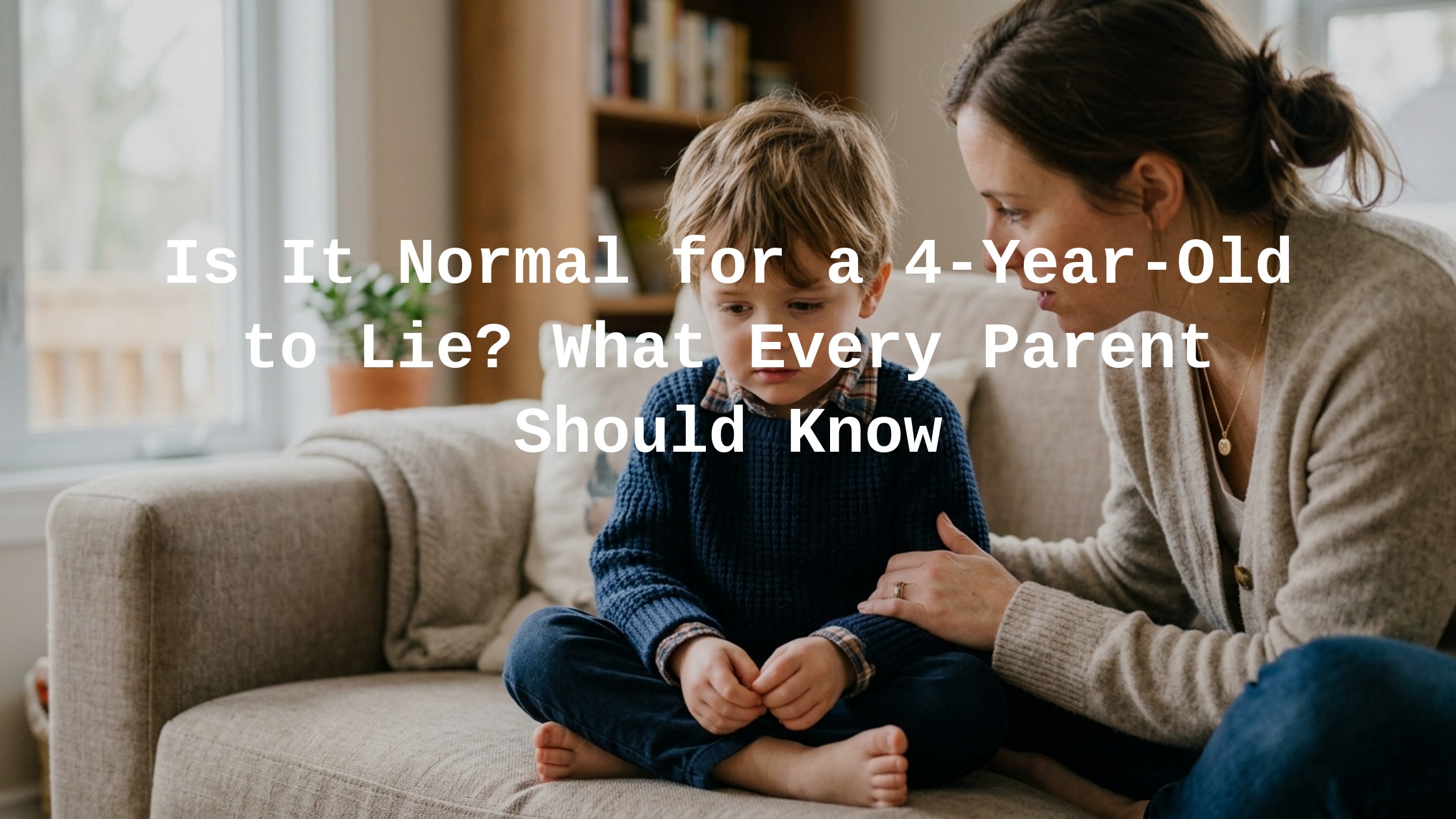
You asked your 4-year-old if she drew on the wall. She looked you straight in the eye and said, “No.” The crayon is still in her hand.
If that scene sounds familiar, take a breath — you are not raising a pathological liar. Lying is developmentally normal for children between the ages of 3 and 5. In fact, the moment your preschooler told you their first convincing (or hilariously unconvincing) fib, something remarkable was happening inside their brain. This guide walks you through exactly what that is, when lying crosses into concerning territory, and what you can do about it right now — calmly and practically.
The Short Answer
Yes, it is completely normal for a 4-year-old to lie. By the age of four, most kids lie at least sometimes — and it is not a moral failing. Children begin to experiment with lying as they develop new cognitive skills.
As children approach their fourth birthdays, the numbers are striking: across multiple studies, more than 70% of 4-year-olds lie (Evans and Lee 2013; Lee 2013). In other words, your child is squarely in the majority.
While it can be funny and at the same time disconcerting to hear lying at this age, it is actually a normal developmental milestone. Lying itself is an advanced skill — it requires higher cognition, social skills, and language skills. So rather than seeing it as a character flaw, try seeing it as a sign that your child’s mind is growing.
Key Insight: Lying peaks between ages 3 and 8. After that, it gradually becomes more sophisticated and less frequent as children develop stronger moral reasoning.
Why Preschoolers Lie: Brain, Imagination, and Emotional Regulation
Understanding why your 4-year-old lies makes it far easier to respond without panic. There are three big developmental forces at work here.
Their Brain Is Learning to Read Other Minds
When a child lies, it means they can hold two truths in their mind simultaneously: what is actually true and what they are going to tell you instead. This shows that your child is developing what psychologists call “theory of mind” — the ability to understand that others have thoughts, beliefs, and perspectives different from their own.
Before about age 4, children have simpler beliefs about how minds work. They often think that everyone shares the same beliefs and that beliefs are direct reflections of what is objectively going on in the world. Younger children expect their parents to know if they are dressed or not, have been to the bathroom or not, and where they put their shoes — regardless of who was around. Because they expect people’s minds to contain direct copies of reality, younger children do not even try to deceive.
Around age 4, that changes. Secondary lies emerge around the age of 4 years and require children to understand that the listener, unlike themselves, does not know the true state of affairs and thus is susceptible to false beliefs. This is a genuine cognitive leap — and it is the same mental skill that helps your child become empathetic, cooperative, and socially aware.
Their Imagination and Reality Are Still Blurry
At 4 years old, children are still learning about reality versus imagination. They may not yet fully grasp the moral concept of lying or the difference between true and false. At this stage, their imagination is actively developing, which may lead them to believe that what they imagine or visualize in their heads is true.
Young children ages 4 to 5 often make up stories and tell tall tales. This is normal activity because they enjoy hearing stories and making up stories for fun. These young children may blur the distinction between reality and fantasy. So when your child insists a monster ate their vegetables, they may not be lying in the adult sense of the word — they may genuinely be living in that story for a moment.
This imaginative blurring is worth encouraging in the right context. Pretending and imagining are important to your child’s development, and it is good to encourage this kind of play. Imaginary stories do not need to be treated as lies, especially for children under 4 years. If your child is making up a story about something, you can respond by saying something like, “That’s a great story — we could make it into a book.” This encourages your child’s imagination without encouraging lying.
They Are Managing Big Emotions Without the Right Tools
Lying is a typical preschooler’s automatic response to avoid emotional pain or being in trouble. Your child does not yet have a full emotional vocabulary or the self-regulation skills to say, “I’m scared of getting in trouble, so I want to tell you the truth but I’m worried about what happens next.” Instead, they do what feels like the fastest escape: they say it did not happen.
From about age 4 on, children lie for many of the same reasons adults do: to avoid punishment, to gain an advantage, to protect against an unwanted consequence, and even to boost self-esteem. Common reasons also include wanting something they cannot have, protecting a friend’s feelings, or simply testing what happens when they say something untrue. Understanding the why behind a specific lie can help you address the real need underneath it. You can explore more about how mindful parenting approaches emotional regulation in young children.
Pro Tip: When your child lies to avoid punishment, the lie itself is often a signal that they fear your reaction more than the original behavior. Keeping your response calm and predictable can reduce the motivation to lie in the first place.
When It Is Normal vs. a Concern
Most 4-year-old lying falls squarely in the “totally expected” column. Here is a quick way to think about it:
| Likely Normal | Worth Watching |
|---|---|
| Denying a misdeed to avoid trouble | Lying that continues even without fear of punishment |
| Telling imaginative tall tales | Elaborate stories told for attention, with no sense of guilt |
| Claiming credit for something they did not do | Lying paired with aggression, defiance, or cruelty |
| Blaming a sibling or pet for their own mistake | Lying that is getting worse, not better, over many months |
| Occasional “white lie” to protect feelings | Showing no remorse or empathy after being caught |
If you can step back and view lying as a part of your child’s emotional and intellectual development, you will find that telling lies does not condemn your child to a life of betrayal or serious behavior problems. In fact, research has shown that lying plays a positive role in normal development. Essential human skills — independence, perspective taking, and emotional control — are the same skills that enable children to lie.
Lying tends to peak between the ages of 3 and 8. Thereafter, children’s lies become more sophisticated and center on boosting self-esteem and avoiding punishment. If your child is in that window and lying occasionally, you are watching a normal developmental arc — not a warning sign. For a broader look at how different parenting styles approach behavior management, it helps to understand your own approach first.
How to Handle It: 5 Practical Strategies
You do not need to overhaul your parenting to address lying at this age. These five approaches are grounded in child development research and work well with preschoolers.
1. Stay Calm and Avoid Interrogation
When your young child tells a lie, remind yourself that this is not a crisis of morality. It does not help to get outraged. Telling a lie is your child’s way of getting what they want, which is normal and healthy. Reacting with anger or launching a detective-style investigation can actually backfire — it does not help to investigate their story like a detective, as this makes the child feel that they cannot be trusted, or that they are devious.
Instead, state what you know calmly and move forward. “I can see the crayon marks on the wall. Let’s talk about what happened.” This keeps the conversation about the behavior, not a battle of wills over the truth.
2. Do Not Set Your Child Up to Lie
One of the most practical things you can do is stop asking questions you already know the answer to. Try not to set kids up to lie in the first place. Avoid asking, “Did you eat that chocolate cookie?” when there are crumbs all over their face. If you know that they broke a rule, call them out on it and give them their consequence.
Try not to ask questions to which you already know the answer, just to test their honesty. This can feel like a trap to a child and damage trust. Skipping the “gotcha” question removes the temptation to lie entirely.
3. Use Natural, Age-Appropriate Consequences
If you feel the need for a consequence, it should be age-appropriate and not severe. If your 4-year-old lied about scribbling on the floor, an appropriate consequence might be your child helping you scrub the floors. The consequence connects directly to the behavior, which makes it meaningful and educational rather than punitive.
Use appropriate consequences, and try to deal separately with the lying and the behavior that led to it. For example, if your child drew on the walls and then lied about it, you might have a consequence for each of these things. This teaches that both the original action and the dishonesty matter — without making the child feel like they are a bad person.
4. Praise Honesty Loudly and Often
When your child tells the truth, especially in difficult situations, praise them for their courage and honesty. This is one of the most powerful tools you have. Children respond strongly to positive reinforcement, and when telling the truth feels rewarding, they are more likely to choose it.
You can say something like: “I know it was hard to tell me what happened. I’m really proud of you for being honest. That took courage.” This reinforces the identity of being an honest person — which is far more lasting than any punishment for lying. This aligns well with gentle parenting principles that focus on connection and positive reinforcement.
5. Model Honesty in Your Own Life
Parents need to be good role models. If children observe their parents telling lies, even “white lies,” they may become confused about what is or is not a lie. If they see a successful result of lying, they may learn that lying is a good thing despite the consequences.
Another good way to encourage truth-telling in children is to show honesty in your own actions and words. Children learn by example. Avoid “white lies” in front of them, as they pick up on inconsistency. Modeling honesty in everyday life will be helpful. If you need to decline an invitation, let your child hear you give an honest, kind reason — rather than a convenient fiction.
Common Mistake: Overreacting to lying can inadvertently reinforce it. How you react to lying as a parent is incredibly important, especially when the behavior first starts. You can unintentionally reinforce the behavior by laughing or making a bigger deal out of it by overreacting.
When It Becomes a Red Flag
Most preschool lying is ordinary and self-correcting with consistent, calm guidance. However, there are patterns that deserve closer attention.
Lying can be an issue if it occurs within the context of other conditions, such as oppositional defiance, aggressive behaviors, or a conduct disorder. If the lying is not getting better and is paired with other negative behaviors, talk to your pediatrician about it. They may recommend a referral to a child psychologist.
Watch for these specific red flags:
- Lying without any guilt or remorse. A child who lies without showing guilt or concern for others may have underlying emotional problems that need attention.
- Lying paired with aggression or cruelty. If lying is accompanied by other behavioral concerns such as aggression, defiance, or low self-esteem, lying may be a bigger issue.
- Lying that disrupts daily life and relationships. If child lying becomes habitual and disrupts relationships or daily life, it may signal deeper behavioral issues.
- Elaborate, consistent lies for attention. Some children who can tell the difference between a truth and a lie tell elaborate stories which appear believable. Children usually relate these stories with enthusiasm because they receive a lot of attention as they tell the lie.
- A persistent pattern that does not improve. Other children fall into a pattern of repetitive lying. They often feel that lying is the easiest way to deal with the demands of parents, teachers, and friends. These children are usually not trying to be bad or malicious, but the repetitive pattern of lying becomes a bad habit.
It is also worth knowing that sometimes children lie or keep secrets about serious issues. For example, children who have been bullied by other children or abused by adults often lie because they fear that they will be punished if they tell. If you sense your child is hiding something significant — not just a cookie theft — create a safe, low-pressure space for them to share. You might also find it helpful to explore attachment parenting strategies that focus on building a secure, trusting bond. For families navigating shared custody, co-parenting resources can also help you maintain consistency in how lying is addressed across households.
Important Note: A single red flag in isolation is rarely cause for alarm. It is the combination of lying with other persistent behavioral concerns — aggression, cruelty, lack of empathy, or significant disruption to daily life — that warrants professional evaluation.
When to Talk to Your Pediatrician
Usually lying is a typical milestone that parents can manage at home by following some of the above steps. That said, lying can be an issue if it occurs within the context of other conditions, such as oppositional defiance, aggressive behaviors, or a conduct disorder.
Reach out to your child’s pediatrician if you notice:
- Lying that has persisted for more than several months without improvement, despite consistent guidance
- Lying combined with frequent angry outbursts, defiance, or hostility toward authority figures — possible signs of behavioral conditions that benefit from early support
- Lying paired with aggression toward people or animals, destruction of property, or stealing — behaviors that may indicate a conduct disorder
- Signs that your child is anxious, withdrawn, or excessively fearful of telling the truth
- Any sudden, dramatic change in your child’s behavior overall
If a child or adolescent develops a repetitive pattern of serious lying, then professional help may be indicated. Evaluation by a child and adolescent psychiatrist may help the child and parents understand and then replace the lying behavior with more honest communication and trust.
When you do visit your pediatrician, come prepared. Be prepared to discuss your family’s health history, daily routines, and anything in your child’s world that could influence their behavior. The pediatrician might inquire about sleep, diet, stress at home, or significant events such as a relocation or the arrival of a new sibling.
Occasionally, your pediatrician might recommend you visit a child psychologist or behaviorist for more targeted assistance with behavioral health concerns. These professionals could use play therapy, counseling, or structured sessions to navigate your child’s development and address any behavior issues. Early support makes a meaningful difference — talking to a provider early can help you identify small changes or support services that can produce a big difference in your child’s trajectory going forward.
If you are navigating a more complex family situation, resources on parallel parenting or conscious parenting may also help you align on behavioral expectations across different caregiving environments. You might also find it useful to read about overcoming parenting style differences with a co-parent or partner when it comes to handling dishonesty.
Frequently Asked Questions
Is my 4-year-old lying on purpose, or do they not know what a lie is?
It depends on the situation. By age 4, children know the difference between telling the truth and lying — and they know it is wrong to lie. However, young children, especially, might have trouble distinguishing between reality and fantasy or simply misremember what happened. So some “lies” are intentional, while others are genuine confusion or wishful thinking dressed up as fact.
Does my child lying mean they are smarter or more creative?
Some kids are more skilled at lying than others. This does not mean that they will grow up to be pathological liars — they are simply learning what they can and cannot get away with. Typically, the kids who are creative and have better language skills are the best at it. A convincing 4-year-old fibber is often a child with a rich imagination and strong verbal skills.
Should I punish my child every time they lie?
Harsh punishment is not the most effective approach at this age. The best way for parents to discourage lying is to firmly, calmly, and patiently talk to their child about it. Explaining to your child why lying is not acceptable and how lying can be hurtful is the best way to redirect the behavior. Natural consequences tied to the specific behavior tend to be more educational than punishments that feel disconnected from the act. You can explore how modern parenting approaches handle discipline for more context.
Will my child grow out of lying?
For most children, yes. It might seem that your child keeps lying no matter what you do. But if you keep praising your child for telling the truth and you also use consequences for lying, your child is less likely to lie as they get older. Consistency is the key ingredient — not perfection.
What if my child lies about something serious, like abuse or bullying?
If you suspect your child is lying to protect someone else, reassure your child that they will be safe if they tell the truth, and let them know you will do everything you can to make things better. Keep the conversation gentle, low-pressure, and free of judgment. If you have any concern that something harmful is happening, contact your pediatrician or a child mental health professional right away.
My child lies even when there is no consequence to avoid. Is that normal?
Occasional lying for reasons other than fear of punishment — like gaining attention, impressing a friend, or exploring a fantasy — is still within the range of normal at age 4. Youngsters, like adults, sometimes lie to demonstrate power, to maintain privacy, or to protect a friend. When a child lies, they are essentially trying to change a situation, to reconstruct things the way they want them to be. If this type of lying becomes frequent, persistent, or is paired with other concerning behaviors, that is when it is worth discussing with your pediatrician. For more on raising emotionally healthy children, visit our guide to parenting a child through the preschool years.