Dog Allergies in Spring in Alabama: Timing, Triggers, Symptoms, and Treatment

April 2, 2026
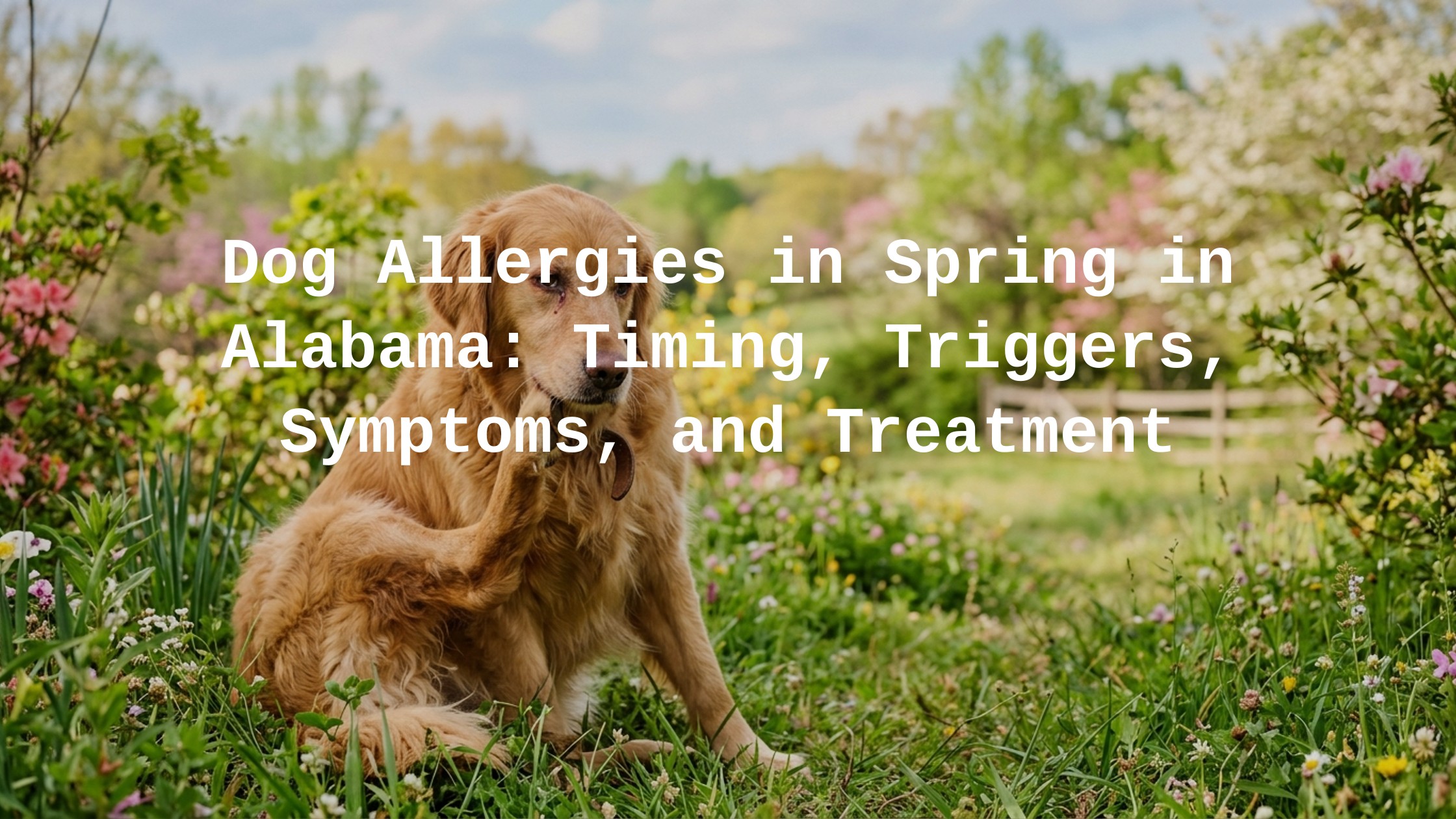
If your dog starts scratching, rubbing their face on the carpet, or licking their paws the moment the weather warms up, you are not imagining things. Spring in Alabama arrives earlier and more intensely than in most of the country, and for dogs with seasonal allergies, that means weeks of real discomfort before many owners even realize what is happening.
Alabama consistently ranks among the top states for seasonal allergy severity, and those same environmental triggers that affect people also affect your dog — often more intensely, since dogs absorb allergens through their skin as well as by breathing them in. Understanding the full picture — from timing to treatment — puts you in a much stronger position to help your dog get through the season comfortably.
Key Insight: Dogs do not experience allergies the same way people do. While humans primarily react through the respiratory system — sneezing, runny nose, watery eyes — dogs react predominantly through their skin. The medical term for this immune-driven skin response is canine atopic dermatitis, and it is one of the most common conditions seen by veterinarians in the Southeast.
When Does Spring Allergy Season Start for Dogs in Alabama
Compare Alabama to states further north, where spring allergy season might not begin until April or May. In Alabama, your dog could be showing allergy symptoms while there is still frost on the ground in other parts of the country. That early onset catches many dog owners off guard.
Depending on what is currently producing pollen, Alabama’s allergy season runs from early spring to late fall. The worst months depend on your specific allergen — trees are worse in spring, grass in summer, and weeds in fall. For spring specifically, tree pollen is the dominant concern.
The Birmingham and Huntsville area faces several grass, tree, and weed allergies. Juniper, sycamore, and oak trees are especially problematic in spring. In the Montgomery and Tuscaloosa region, particular nuisances include oak, cedar, ash, willow, and walnut trees in spring. The Dothan and Mobile area has a wealth of trees releasing pollen in spring, including oak, mulberry, hickory, willow, ash, and pecan.
While seasonal allergies tend to peak when plants are in bloom, allergic reactions may persist even after blooming is over because allergens remain on the surfaces of grass and in the home environment. Allergy season can also be extended because of how far allergens are able to travel with the wind.
Pro Tip: Check the daily pollen count for your Alabama city during late January through June. On high-count days, limit your dog’s time outdoors during peak pollen hours, which are typically mid-morning to early afternoon.
What Causes Dog Allergies in Spring in Alabama
Spring allergies in dogs are triggered by environmental allergens — substances that the immune system mistakenly identifies as threats. When a dog with allergic tendencies is exposed to these substances, their immune system overreacts, causing the inflammation and irritation that owners recognize as allergy symptoms.
The primary culprits behind springtime allergies in dogs include pollen from trees, grasses, and weeds, which can cause atopic dermatitis or airborne allergies. Other environmental factors such as mold, dust mites, and even the dander of people or other animals, can exacerbate your dog’s allergic reactions.
Alabama’s climate adds a layer of intensity to this problem. Environmental allergies are especially common in the region due to the lush vegetation, high humidity, and long pollen seasons. Pollen from grasses, trees, and weeds, along with mold spores and dust mites, are frequent triggers for allergy symptoms in pets. Flea allergies are another significant concern in Alabama’s warm climate.
Alabama’s humidity creates ideal conditions for outdoor mold growth, which peaks alongside pollen season. Dust mite populations can spike when homes are opened up after winter, and flea allergy dermatitis often intensifies in spring as flea populations surge with the warmer temperatures.
Allergens are absorbed directly through the skin barrier, which is why your dog’s paws, belly, and face are so frequently affected. This skin-first reaction is what makes canine spring allergies look so different from the sneezing and watery eyes you might experience yourself.
Important Note: While many people associate environmental allergens with the outdoors, they can also exist within your home, in the form of house dust mites and storage mites, which are prevalent year-round. The effect of multiple allergen sources can sometimes make seasonal allergies even more extreme for pets.
Signs Your Dog Has Spring Allergies in Alabama
Many pet owners first notice allergies because their pet simply seems uncomfortable. The signs can be subtle at first, but recognizing them early can make a big difference in your pet’s quality of life and help prevent more serious issues down the road.
Here are the most common signs to watch for in your Alabama dog during spring:
- Excessive scratching — Particularly around the face, ears, armpits, groin, and base of the tail.
- Paw licking and chewing — One of the most reliable indicators of environmental allergies, since paws absorb allergens from grass and soil on every walk.
- Ear problems — Frequent head shaking, repeated ear infections, and an unpleasant odor from the skin or ears are common allergy-related signs.
- Skin changes — Persistent scratching, licking, or chewing at the skin, which often leads to hair loss or red, irritated patches.
- Eye and nasal discharge — Watery eyes or increased sneezing, especially during peak pollen seasons.
- Hot spots — Dogs with allergies might compulsively chew on their skin, which can lead to raw, exposed areas known as hot spots. These areas can quickly become infected if left untreated.
- Scooting — Scooting and licking around the rectum is a very common issue in allergic dogs. The anal glands are scent-marking glands inside the rectum which can become inflamed due to allergies.
Seasonal allergies manifest themselves differently in dogs than they do in humans, which may make them more challenging to identify. If you notice several of these signs appearing together each spring, seasonal allergies are a strong possibility — but a vet visit is always the right next step to confirm.
Common Mistake: Assuming your dog’s paw licking is a behavioral habit rather than a physical symptom. Persistent paw licking that worsens in spring is one of the most consistent signs of environmental allergies in dogs and should always be evaluated by a vet.
Which Dog Breeds Are Most Prone to Spring Allergies
There isn’t a single breed that is most prone to allergies, but research shows that certain breeds are diagnosed with allergic skin disease (canine atopic dermatitis) more often than others. These breeds include Labrador Retrievers, Golden Retrievers, West Highland White Terriers, French Bulldogs, Boxers, Chinese Shar-Peis, and others. This increased risk is thought to be partly due to inherited genetic factors that affect the immune system, though environmental influences also play a role.
Here is a closer look at the breeds most commonly affected, which is particularly relevant in Alabama given the state’s long, intense pollen season:
| Breed | Primary Allergy Concerns | Common Symptoms |
|---|---|---|
| Golden Retriever | Environmental allergens, pollen, grass | Itchy skin around the ears, belly, and paws; symptoms can start in adolescence (1–3 years) and usually intensify with age. |
| Labrador Retriever | Environmental and food allergens | Dry skin, hot spots, and excessive paw licking. |
| West Highland White Terrier | Mold, grasses, environmental triggers | High incidence of atopic dermatitis; especially sensitive to environmental triggers like mold and grasses. |
| Boxer | Weeds, trees, environmental allergens | Both food and environmental allergies; symptoms include itching, excessive licking, and frequent ear infections. |
| French Bulldog / English Bulldog | Contact allergens, environmental triggers | Skin fold dermatitis; prone to contact allergies and yeast infections in their wrinkles. |
| German Shepherd | Flea allergy dermatitis, skin allergies | Prone to skin allergies, especially flea allergy dermatitis. Their thick double coat can hide inflammation until it gets severe. |
| Shih Tzu | Grooming products, food, environmental | High-maintenance coat and sensitive skin; often react to grooming products or food ingredients with itchy rashes and recurring skin infections. |
Mixed-breed dogs are not immune. Allergic tendencies can appear in any dog, and some mixed breeds carry the same genetic predispositions as their purebred counterparts. Age is also a factor — most dogs develop atopic dermatitis between one and three years of age, so if your young adult dog is showing symptoms for the first time this spring, it fits the typical onset window.
Pro Tip: If you own a breed with known allergy predispositions, consider scheduling a wellness visit with your vet in January — before Alabama’s pollen season peaks — so you have a management plan ready when symptoms begin.
How Vets Diagnose Seasonal Allergies in Dogs in Alabama
Diagnosing seasonal allergies in dogs is a process of elimination as much as it is a process of confirmation. There is no single test that definitively diagnoses environmental allergies on its own. Instead, your vet will build a clinical picture using your dog’s history, symptom pattern, physical examination, and in some cases, specialized testing.
The diagnostic process typically unfolds in stages:
- Thorough physical exam and history — The process typically starts with a thorough examination and a detailed discussion about the symptoms you’ve noticed. Understanding your dog’s daily routine and environment can provide important clues about potential allergens. You may be asked about changes in their behavior, grooming habits, or whether symptoms worsen after spending time outside.
- Ruling out other causes — Because diagnosing allergies in companion animals can be quite difficult, veterinarians will often start by ruling out all other possible causes of an itch, such as parasites or food allergies.
- Skin or blood testing — Your veterinarian may conduct allergy testing, which may include skin tests or blood tests, to identify specific environmental allergens like pollen, molds, or dust mites.
- Environmental elimination trials — In some cases, removing certain environmental factors may be suggested to see if symptoms improve, offering further clues about what’s triggering your dog’s allergies.
- Specialist referral if needed — For more complex or severe cases, your vet may refer you to a veterinary dermatologist for allergen-specific testing — either via intradermal skin testing or serum IgE testing — to pinpoint exact triggers.
Allergy testing, which is done either by skin test or by blood testing, is not a test for atopic dermatitis itself; instead, this type of testing is done after the diagnosis has been confidently made based on findings in the patient. Allergy testing is conducted to determine how best to make an allergy shot serum for a specific patient.
Your dog’s medical history also plays an important role. Previous allergic reactions provide valuable insight into your dog’s condition, so bring any records or notes you have about past symptoms to your appointment.
How to Treat Spring Allergies in Dogs in Alabama
Managing spring allergies in dogs often requires a combination of approaches to help minimize exposure to allergens and relieve symptoms. Every dog is different, and finding the right balance can make a world of difference in their comfort.
Your vet may recommend one or more of the following treatment options, depending on the severity of your dog’s allergies:
Prescription Medications
Oclacitinib (Apoquel®) is an oral medication that’s among a new generation of highly effective anti-itch medications for dogs, blocking the itch right at its source, quickly and safely. Apoquel manages itching associated with allergic dermatitis or atopic dermatitis triggered by environmental allergens during spring. It is only used for dogs over one year of age and is administered orally twice a day or once a day, depending on the veterinarian’s instructions.
Cytopoint, which contains a caninized monoclonal anti-IL-31 antibody, is an effective treatment against allergic dermatitis triggered by environmental allergens like pollen, mold, and dust. One of the unique advantages of Cytopoint is that it can be given to a dog of any age and is a long-lasting seasonal allergy treatment. It is administered, as needed, every 4–8 weeks via injection.
Antihistamines
Antihistamines are often used, but they’re not as effective for dog and cat seasonal allergies compared to other treatments. That said, they may still provide some relief for mild cases. Antihistamines that are combined with pseudoephedrine, a decongestant, are NOT safe for pets. “I tell pet parents to buy antihistamines WITHOUT decongestants,” says Dr. Sylvia Berns. “Decongestants are toxic to our pets.”
Steroids
Steroids like prednisone or prednisolone might be prescribed short-term for severe allergy cases. Steroid use increases hunger, thirst, and urination. Long-term steroid use may weaken the immune system, cause Cushing’s disease, and contribute to diabetes. Because of the dangerous long-term effects, systemic steroids should only be used for short-term control of symptoms.
Immunotherapy (Allergy Shots)
In some cases, it may be possible to desensitize your pet to the offending allergens through a series of “allergy shots” or allergen-specific immunotherapy (ASIT). To receive allergy shots, your pet would need to undergo testing with a dermatologist to determine what they are allergic to. Improvement can take six months to one year, so pets taking allergy shots often receive other treatments in the meantime.
Topical Treatments and Supplements
Frequent bathing with a hypoallergenic shampoo can be soothing to itchy, inflamed skin. Some shampoos are available over the counter, while others may require a prescription. Bathing also removes allergens from the skin and coat. Adding omega-3 fatty acids to your dog’s diet through fish oil or supplements can improve skin health and reduce inflammation caused by allergies.
Important Note: Self-diagnosing your dog’s allergies and relying solely on home remedies can delay effective treatment and relief. Your veterinarian can perform allergy testing, prescribe medications that offer more targeted relief than OTC options, and recommend dietary changes or supplements that support skin health.
How to Reduce Your Dog’s Exposure to Spring Allergens in Alabama
Reducing allergen exposure at home and during outdoor time is one of the most practical things you can do alongside veterinary treatment. Successful allergy management usually requires multiple strategies for both prevention and treatment.
During Outdoor Time
- In between baths, use pet-safe wipes to clean your dog’s paws, ears, and fur after walks. Adjust your daily walk to avoid areas with too many pollen-producing plants. You should also avoid taking your dog for a walk when pollen levels are high.
- Pollen levels are typically at their highest in the morning and on dry, warm days. Check your local weather forecast for daily pollen readings.
- Since pollen and dust cling to your dog’s fur and paws, wiping them down with a damp cloth or pet wipes after walks can help reduce allergy flare-ups.
Inside the Home
- Clean your home regularly and thoroughly to eliminate dust and pollen that irritate your dog’s allergies. Regular, thorough cleaning includes frequent dusting, vacuuming all carpeted areas, cleaning and replacing air filters, and laundering linens, including your dog’s bedding.
- Air purifiers help improve air quality in your home by capturing and eliminating some common contaminants that may contribute to your pet’s allergies. Place your air purifier in the room your dog spends most of their time.
- Make sure that your dog is on regular parasite prevention that controls fleas and ticks to ensure these parasites don’t contribute to the itch.
Bathing Routine
Bathing affected pets one to two times per week with a shampoo specified by the pet’s veterinarian can decrease allergen accumulation on the coat. Use a soothing, oat-based dog shampoo to help calm your dog’s skin if they are itching.
Pro Tip: Wind can carry allergens far and wide, affecting dogs even if they don’t spend much time outdoors. Allergens can cling to their fur and paws, making their way inside and continuing to cause discomfort long after your dog has come indoors. Wiping your dog down at the door before they settle on furniture or bedding can make a meaningful difference.
When to See a Vet About Your Dog’s Spring Allergies in Alabama
Knowing when to move from home management to professional care is one of the most important decisions you’ll make during allergy season. Some situations call for a vet visit sooner rather than later.
You should contact your vet if you notice any of the following:
- Hair loss, odor, or redness to the skin, as this may indicate a skin infection that is secondary to the allergic skin inflammation.
- Secondary skin infections or ear infections resulting from excessive scratching — these require additional treatments such as antibiotics or antifungals.
- Symptoms that appear for the first time in a dog between one and three years of age, which is the typical onset window for canine atopic dermatitis.
- Allergy symptoms that persist or worsen despite your best efforts at home.
- Chronic allergies that lead to more severe health issues like persistent ear infections, skin diseases, or respiratory problems.
In-person veterinary care is required not only for diagnosing and treating allergies but also for preventing secondary infections that can arise from constant scratching and skin breakdown. Your vet can also help you develop an allergy management plan tailored to your dog’s specific needs, helping them enjoy the spring season with minimal discomfort.
Remember, early intervention is key to preventing complications and keeping your dog healthy and happy during the allergy season. The sooner you get a clear diagnosis and treatment plan, the sooner your dog can get back to enjoying Alabama’s outdoors — even during peak pollen season.
Key Insight: “Based on a pet’s history, an owner may already know that the dog has allergies every spring and summer, and they should create a proactive strategy with their veterinarian to limit the severity of the clinical signs.” If your dog has struggled with spring allergies before, don’t wait for symptoms to return — schedule a pre-season visit in January or February.