Can You Eat Salmon While Pregnant? What Doctors and Research Actually Say

April 23, 2026
metaDescription:
selectedTitle:
wordCount: 2610
linkCount: 16
Salmon might just be one of the best things you can put on your plate during pregnancy — but only if you know the rules. Most pregnancy food anxiety centers on what to avoid, so it can feel surprising to learn that not only is salmon allowed, it’s actively encouraged by major health organizations. The question isn’t really whether you can eat it. It’s how, how much, and in what form.
This guide walks you through the current medical consensus, the research behind it, and the practical details you need to feel confident about salmon every trimester. You’ll also find a quick-reference chart at the end so you can scan the key points at a glance.
Important Note: This information is for educational purposes only and is not intended as medical advice. Always consult with a qualified healthcare professional before making decisions about your pregnancy diet.
The Short Answer
Fully cooked salmon is not just safe during pregnancy — it’s one of the best fish choices thanks to its low mercury content and beneficial omega-3s. You don’t need to avoid it, limit it to rare occasions, or feel guilty about craving it. What you do need is a little clarity on portions, preparation, and the specific forms that aren’t safe.
The FDA and EPA specifically list salmon as a “best choice” option that can be eaten 2–3 times per week during pregnancy due to its low mercury content. That’s not a cautious maybe — that’s a firm green light from the two agencies that set food safety standards for pregnant women in the United States.
The short version: cook it fully, stick to 8–12 ounces per week, and skip the raw or cold-smoked versions. Everything else is fair game.
Why Salmon Is Safe During Pregnancy
“Salmon is a low-mercury fish and rich in nutrients that support both maternal health and fetal development,” says Basma Faris, MD, an ob-gyn at Mount Sinai West in New York and assistant professor at the Icahn School of Medicine at Mount Sinai. That combination — low risk, high reward — is exactly what makes it stand out among protein sources during pregnancy.
The mercury concern with fish is real, but it’s specific to certain species. Larger predatory fish that live longer tend to accumulate more mercury over time. Salmon is lower on the food chain and has a shorter lifespan, so it naturally contains less mercury. That’s not marketing — it’s basic biology.
Farmed and wild salmon are considered safe, healthy choices for pregnant women. Recent research confirms that both varieties have low levels of mercury and other potentially harmful chemicals, allowing you to choose based on preference, availability, and budget without compromising safety.
Beyond the safety profile, salmon delivers a nutrient package that’s hard to match. Salmon supplies protein for growth and tissue development, vitamin D for bone health and immune function, and iodine and selenium for thyroid function and metabolism. In addition to protein, salmon provides important nutrients like vitamin D, B vitamins, selenium, and iodine — nutrients that support your baby’s bone development, help form red blood cells, and keep your thyroid working properly, an organ that plays a key role in pregnancy.
Pro Tip: If you’re comparing wild-caught vs. farmed salmon at the store, wild-caught typically has slightly higher omega-3 content. But both are safe — don’t let the choice stress you out or stop you from eating it.
You can read more about the pros and cons of eating seafood generally to understand how salmon fits into the bigger picture of fish consumption during pregnancy.
What the Research Actually Says
The science here is consistent and well-established. Fish intake during pregnancy is recommended because moderate scientific evidence shows it can help your baby’s cognitive development. That’s a direct statement from the FDA — not a suggestion, not a maybe.
Salmon is rich in docosahexaenoic acid (DHA), a type of omega-3 fatty acid that plays a crucial role in your baby’s brain and eye development. This isn’t just nice-to-have nutrition; it’s essential. DHA is particularly important for fetal development of the brain and retina during the third trimester and up to 18 months of life.
During pregnancy and breastfeeding, the research-backed benefits of the omega-3s EPA and DHA include supporting the healthy development of the fetal brain, eye, and nervous system, healthy birth weight and gestational length, healthy immune system development, positive mood and well-being in mothers, and attention and focus in infants and children.
The DHA supply gap is a real concern. As nutritional experts note, “During pregnancy, there is a natural decline in DHA unless it is being added to the diet. As a result, only one-fourth of pregnant women are consuming adequate DHA for their child’s health.” Eating salmon regularly is one of the most direct ways to close that gap.
Research shows that mothers who consume adequate amounts of seafood during pregnancy may have babies who reach developmental milestones more quickly — including earlier development in holding up their heads, recognizing family members, copying sounds, and later skills like climbing stairs and drawing.
The postpartum benefits matter too. Omega-3 fatty acids, which are abundant in salmon, do more than support your baby — they’re also good for your mental and physical health. Research suggests that higher omega-3 intake during pregnancy may reduce the risk of postpartum depression. That’s a compelling reason to keep salmon on the menu even in the third trimester when everything feels harder.
For a broader look at how foods support brain health, the omega-3 research for fetal development fits into a much larger picture of nutrition and cognitive function.
Key Insight: The third trimester is when DHA demand peaks most sharply. DHA accumulates rapidly in fetal brain tissue during the third trimester, supporting cognitive development and visual function. This is precisely when consistent salmon intake matters most.
How to Eat Salmon Safely During Pregnancy
Safe salmon eating during pregnancy comes down to four things: how much, how it’s cooked, what form it’s in, and where it comes from. Get those right and you’re in great shape.
How Much to Eat
The Food and Drug Administration (FDA), the Environmental Protection Agency (EPA), and the Dietary Guidelines for Americans recommend that pregnant people eat at least 8 ounces and up to 12 ounces of a variety of seafood lower in mercury per week. Salmon counts toward that total.
- Weekly target: 8–12 oz of low-mercury seafood, including salmon
- Servings: A serving is 3 to 4 ounces, which is roughly the size of your palm.
- Frequency: 2–3 times per week is the recommended sweet spot
- Upper limit: Don’t exceed 12 oz of salmon per week, even though it’s low-mercury
Cooking Temperature and Method
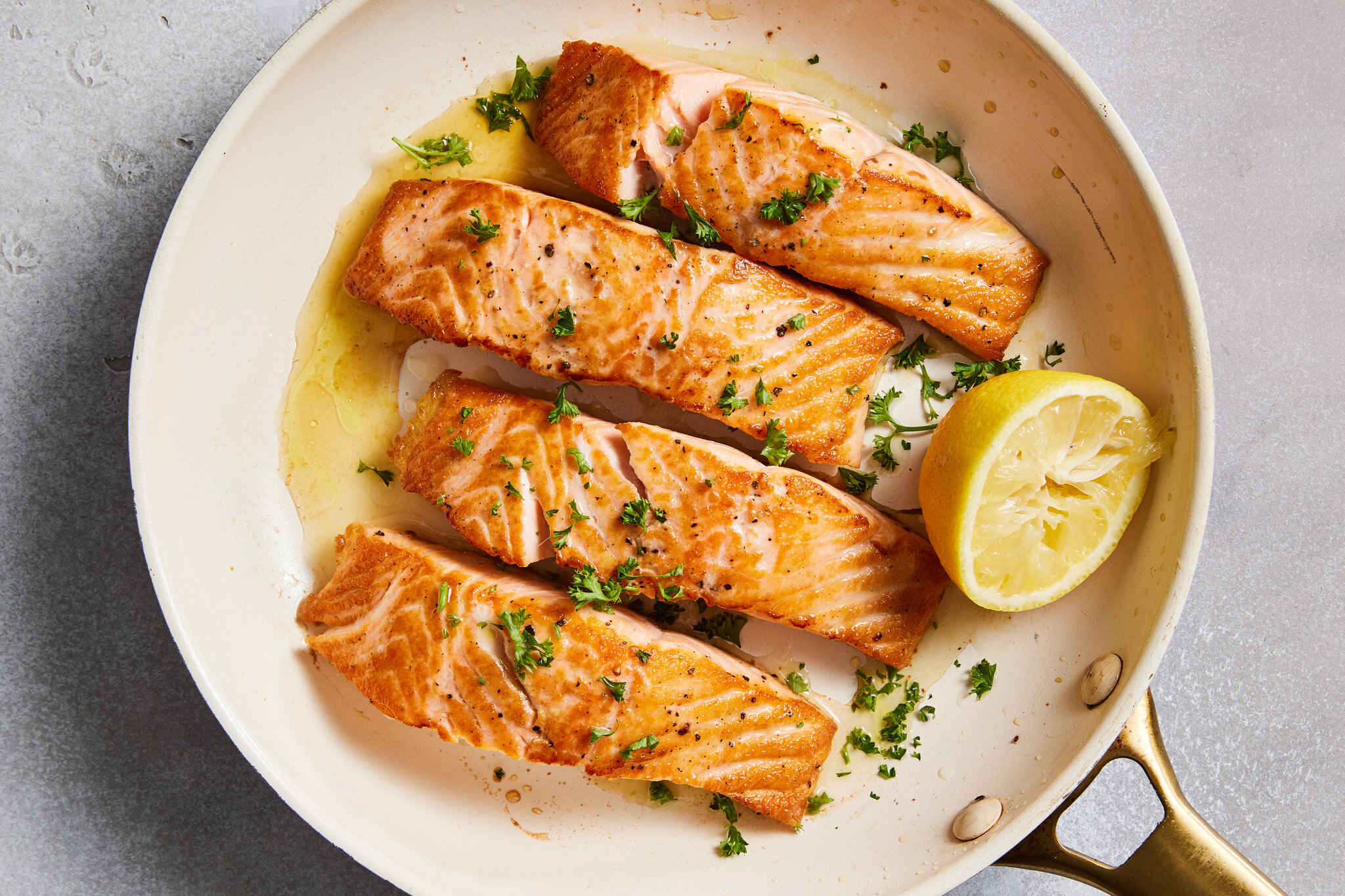
Always cook salmon thoroughly to an internal temperature of 145°F (63°C). The fish should separate into flakes and appear opaque throughout. This cooking standard eliminates potentially harmful bacteria, keeping you safe during pregnancy when your immune system is naturally suppressed.
Safe cooking methods for pregnant women include:
- Baked — Consistent heat, easy to verify internal temperature
- Grilled — High heat ensures thorough cooking
- Pan-seared — Works well with a thermometer check
- Poached — Gentle but effective when cooked through completely
- Broiled — Fast and reliable for fully cooked results
Pro Tip: If you’re cooking a particularly thick fillet at home, it’s helpful to use a thermometer to check your salmon’s internal temperature. Visual checks alone can be misleading with thicker cuts.
Shopping and Storage
When shopping, select fresh salmon that smells clean and mild (never fishy) and has firm flesh. If you use frozen salmon, thaw it properly in the refrigerator — not on the counter — to prevent bacterial growth.
In general, wild salmon is the preferred kind for pregnant people because it typically contains fewer environmental pollutants and contaminants. That said, farmed salmon is still considered safe, so don’t let availability be a barrier.
Trimester Considerations
Salmon is safe across all three trimesters, but the nutritional stakes shift as your pregnancy progresses:
- First trimester: Starting omega-3 supplementation during the first trimester allows for maximum accumulation in fetal tissues. The same applies to food sources. If morning sickness makes salmon unappealing, don’t force it — a quality prenatal supplement can fill the gap.
- Second trimester: This is often when appetite returns. In humans, brain development undergoes its most rapid and complex growth during the last trimester of pregnancy and the first two years after birth — but the second trimester is a great time to establish consistent habits.
- Third trimester: DHA demand is highest. DHA is particularly important in the last trimester when the baby’s brain is growing rapidly and undergoing intensive development. Consistent salmon intake during this period is especially valuable.
Salmon also fits naturally into a diet rich in nutrient-dense foods that support overall health — a goal that matters even more when you’re supporting two people’s nutritional needs.
When to Avoid Salmon Completely
Not all salmon is created equal during pregnancy. The cooking method and preparation style matter as much as the fish itself. Here’s when to say no:
Raw Salmon (Sushi, Sashimi, Poke)
Raw salmon while pregnant is a no-go. While expecting, you should skip the sushi, sashimi, and poke. Raw or undercooked salmon isn’t recommended during pregnancy due to the risk of foodborne illnesses like listeria and parasites. Even freezing sushi-grade fish can kill parasites, but it won’t kill listeria, which can result in pregnancy loss.
Cold-Smoked Salmon (Lox, Gravlax, Refrigerated Smoked Salmon)
Cold-smoked or cured fish — for example, smoked salmon or gravlax, including in sushi — should be avoided unless it has been cooked until steaming hot. You should avoid ready-to-eat cold-smoked or cured fish because it could be contaminated with listeria bacteria.
Pregnant women should be very cautious when it comes to refrigerated smoked seafood such as salmon because it can contain listeria. Pregnant women are advised to avoid all refrigerated smoked seafood unless cooked to an internal temperature of 165°F.
Hot-Smoked Salmon: The Exception
Cold-smoked salmon (like lox) is not recommended during pregnancy because it’s not fully cooked and may carry harmful bacteria. However, hot-smoked salmon that has been fully cooked to a safe temperature is generally considered safe to eat.
Common Mistake: Many pregnant women assume all smoked salmon is the same. It isn’t. Cold-smoked (lox, gravlax) = avoid. Hot-smoked (cooked through) = generally safe. When in doubt, check the label or skip it.
Locally Caught Salmon Without Safety Advisories
If a family member or friend catches salmon locally, check your regional fish advisory before eating it. Check for fish and shellfish advisories to see how often you can safely eat those fish. If there is no advisory, eat only one serving and no other fish that week.
For a full overview of foods and beverages to avoid during pregnancy, salmon in its raw and cold-smoked forms sits alongside other high-risk items that are best left off your plate entirely.
Quick Reference Chart
| Salmon Type / Form | Safe During Pregnancy? | Notes |
|---|---|---|
| Baked, grilled, or pan-seared (cooked to 145°F) | ✅ Yes — Best Choice | 2–3 servings (8–12 oz) per week. Wild or farmed both fine. |
| Canned salmon (fully cooked) | ✅ Yes | Convenient and safe. Check for added sodium. |
| Hot-smoked salmon (cooked through) | ✅ Yes | Cooked to safe temperature. Verify it’s hot-smoked, not cold-smoked. |
| Farmed Atlantic salmon (cooked) | ✅ Yes | Low mercury. Safe and widely available. |
| Wild-caught Pacific salmon (cooked) | ✅ Yes | Slightly higher omega-3s. Preferred when available. |
| Cold-smoked salmon / lox / gravlax | ❌ No | Not fully cooked. Listeria risk. Avoid unless heated to steaming. |
| Raw salmon (sushi, sashimi, poke) | ❌ No | Risk of listeria, parasites. Avoid for entire pregnancy. |
| Refrigerated smoked salmon (store-bought, not heated) | ❌ No | Listeria risk. Avoid unless cooked to 165°F internal temp. |
| Locally caught salmon (no advisory checked) | ⚠️ With Caution | Check local fish advisories first. Limit to one serving that week if no advisory exists. |
| Salmon in restaurant dishes (unknown prep) | ⚠️ With Caution | Confirm it’s fully cooked. Ask your server about preparation method. |
Eating well during pregnancy means knowing which foods truly support you and which carry hidden risks. Salmon — cooked properly — falls firmly in the “support” column. For a broader look at superfoods for heart health, many of the same omega-3-rich choices that benefit your baby also support your cardiovascular system during and after pregnancy.
Frequently Asked Questions
Can I eat salmon every day while pregnant?
You can eat salmon frequently, but daily consumption isn’t recommended. While salmon is a low-mercury fish, you still shouldn’t overdo it — it’s safest to aim for two to three servings of salmon, totaling 8 to 12 ounces, per week. Staying within that range gives you the benefits without unnecessary exposure accumulation.
Is farmed salmon safe during pregnancy, or should I only buy wild-caught?
Farmed and wild salmon are considered safe, healthy choices for pregnant women. Recent research confirms that both varieties have low levels of mercury and other potentially harmful chemicals, allowing you to choose based on preference, availability, and budget without compromising safety. Wild-caught may have a slight edge in omega-3 content, but farmed is absolutely a safe choice.
Can I eat salmon sushi while pregnant?
No. While some experts say you can eat sushi-grade raw salmon if it’s fresh and from a trusted source, the advice from the American College of Obstetricians and Gynecologists (ACOG) and food safety professionals is to avoid all raw or undercooked fish, including sushi and poke, during pregnancy. The risk of listeria and parasites is too serious to take chances.
What about smoked salmon on bagels or in cream cheese?
This depends on the type. “Smoked salmon can be a gray area, since cold-smoked salmon is technically considered ‘undercooked,'” says one OB-GYN. Either avoid it completely or cook it — you could make it the filling for a quiche, for example. Since hot-smoked salmon is cooked, it’s a safer bet. The lox typically found on bagels is cold-smoked and should be avoided unless heated through.
I hate the taste of salmon. How else can I get enough DHA during pregnancy?
You have good options. Other fully cooked, low-mercury varieties include shrimp, pollock, cod, anchovies, canned light tuna, sardines, crab, lobster, scallops, and tilapia. If fish isn’t appealing at all, algae-based supplements may also be a source of omega-3 fatty acids, as this is how salmon gets theirs. You can also find omega-3 supplements at most health or grocery stores. Talk to your OB before starting any supplement.
Does it matter which trimester I’m in when eating salmon?
Salmon is safe in all three trimesters. The nutritional value actually increases in importance as your pregnancy progresses — DHA is particularly important for fetal development of the brain and retina during the third trimester and up to 18 months of life. That said, beginning supplementation or dietary intake at any point during pregnancy still provides meaningful benefits. It’s never too late to start.
Can eating salmon help with postpartum depression?
The omega-3s EPA and DHA support healthy labor and delivery outcomes and have also been shown to support a healthy mood. Studies have shown that EPA and DHA help support mood and well-being in the postpartum period. While salmon alone isn’t a treatment for postpartum depression, its omega-3 content is one reason nutritional support during pregnancy matters beyond just fetal development. Always speak with your healthcare provider about mental health support.
For more on how specific nutrients work together during pregnancy, explore how healing foods and whole plant-based foods can complement a salmon-inclusive diet for a well-rounded approach to pregnancy nutrition. You might also find value in reviewing foods that support liver function, since your liver plays a central role in processing nutrients during pregnancy.