Prasinophobia (Fear of Green): Symptoms, Causes, and When to Seek Help

March 9, 2026
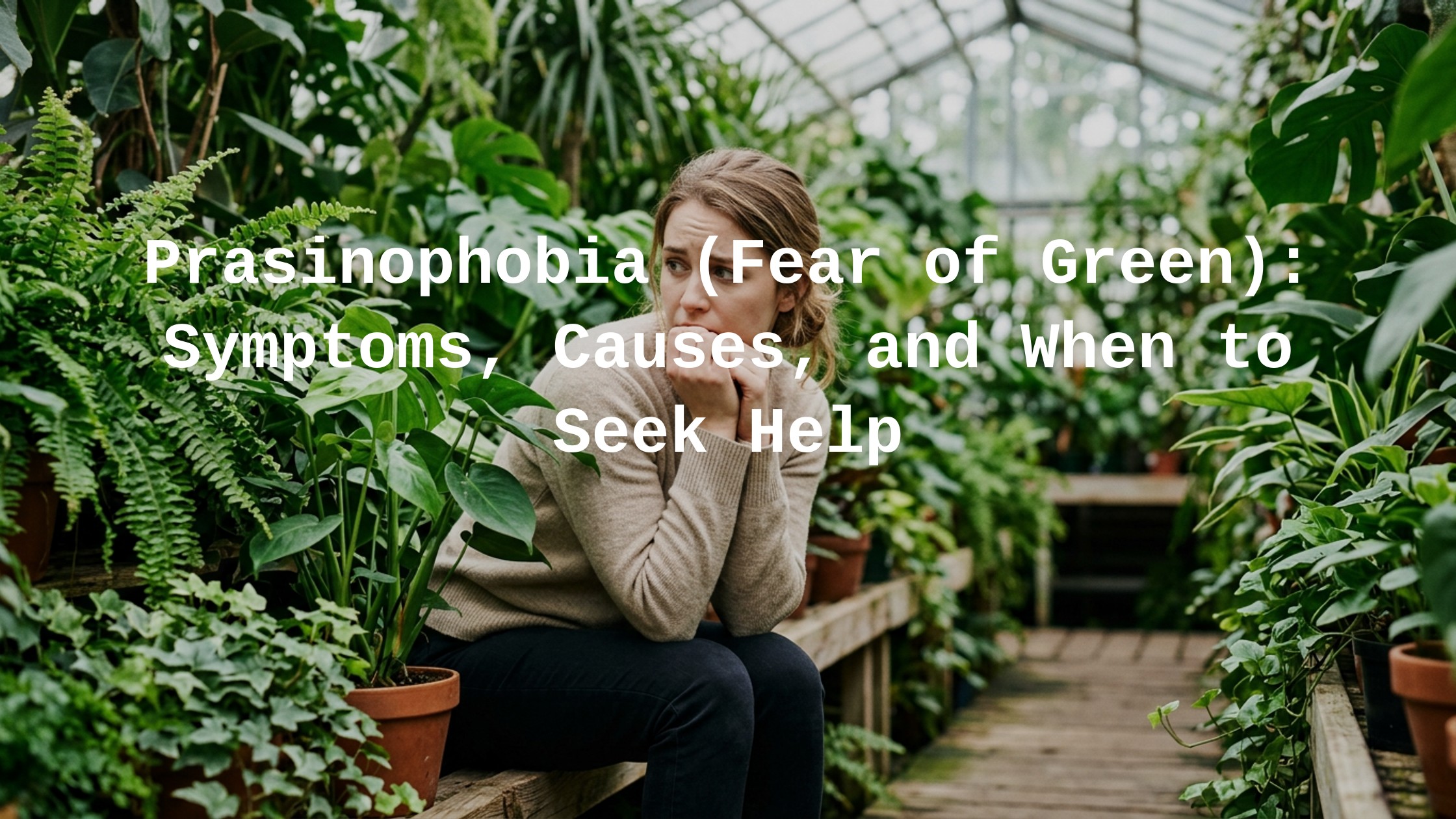
Have you ever felt a sudden wave of dread walking past a grassy park or stepping into a room painted sage green? For most people, green is simply a color — one associated with nature, calm, and growth. But for those living with prasinophobia, even the briefest encounter with the color green can trigger intense fear, panic, and an overwhelming urge to escape. It may sound unusual, but this phobia is real, it is recognized, and it affects people in ways that can quietly reshape their entire daily lives.
Color phobias occupy a lesser-discussed corner of anxiety disorders, yet they carry the same emotional weight as any other specific phobia. Understanding prasinophobia — what drives it, how it presents, and what can actually help — is the first step toward making sense of an experience that many sufferers feel too embarrassed to name out loud.
What Is Prasinophobia?
Prasinophobia is the persistent, irrational fear of the color green. The name is derived from the Greek word prasinos, meaning green, combined with phobos, meaning fear. Like all specific phobias, it is classified under anxiety disorders and involves a disproportionate fear response to a stimulus that poses no real danger.
What makes prasinophobia particularly challenging is how inescapable its trigger is. Green is one of the most prevalent colors in the natural and built environment — from trees, grass, and plants to food packaging, clothing, traffic lights, and interior design. A person with this phobia does not simply avoid a specific animal or situation; they must navigate a world saturated with the very color they fear.
Prasinophobia falls under the broader category of chromophobia, which is the fear of colors in general. Some individuals fear only certain shades of green, such as dark forest green or bright lime green, while others experience distress at any variation of the color. The phobia can exist on its own or alongside other anxiety-related conditions.
Key Insight: Prasinophobia is a type of specific phobia, which means it is diagnosable and treatable. It is not simply a preference or a dislike — it is a clinically significant fear response that interferes with daily functioning.
Symptoms
The symptoms of prasinophobia mirror those seen in other specific phobias and can range from mild discomfort to full-scale panic attacks. They typically fall into three categories: physical, emotional, and behavioral.
Physical symptoms are often the most immediate and alarming. When a person with prasinophobia encounters the color green — or even anticipates encountering it — the body’s fight-or-flight response activates. This can produce:
- Rapid heartbeat or palpitations
- Shortness of breath or hyperventilation
- Sweating, trembling, or shaking
- Nausea or stomach upset
- Dizziness or lightheadedness
- Chest tightness or pain
- Dry mouth
Emotional and cognitive symptoms accompany the physical response and can be equally distressing. These include:
- Overwhelming dread or terror when seeing green
- A feeling of losing control or “going crazy”
- Intense anxiety even when thinking about the color
- Difficulty concentrating in environments where green is present
- A sense of unreality or detachment (derealization)
Behavioral symptoms reflect how the phobia shapes a person’s choices and routines over time. Avoidance is the hallmark behavior of any specific phobia, and with prasinophobia it can become elaborate and exhausting:
- Refusing to go outdoors, especially in parks, forests, or gardens
- Avoiding green foods, clothing, or household items
- Changing routes to avoid green spaces or green-painted buildings
- Declining social invitations that involve outdoor settings
- Experiencing anticipatory anxiety before entering unfamiliar environments
Important Note: Symptoms that significantly interfere with work, relationships, or daily activities — and that have persisted for six months or more — meet the diagnostic threshold for a specific phobia according to the DSM-5. If this sounds familiar, speaking with a mental health professional is a meaningful next step.
Causes
No single cause explains why one person develops prasinophobia while another does not. Research into specific phobias points to a combination of genetic, psychological, and environmental factors that interact in complex ways.
Traumatic or negative experiences are among the most commonly cited origins. A person who experienced a frightening or painful event in a green-dominated environment — such as a serious accident in a forest, a traumatic memory formed outdoors, or an illness that occurred in a green-painted hospital room — may develop a conditioned fear response that the brain subsequently attaches to the color itself. Over time, the brain generalizes this association, and green becomes the trigger rather than the original event.
Learned behavior also plays a significant role. Children who grow up observing a parent or caregiver express extreme anxiety around green environments or green objects may internalize that fear response without ever experiencing a direct traumatic event themselves. This is sometimes called vicarious conditioning — learning fear through observation rather than direct experience.
Genetic predisposition contributes to vulnerability. People with a family history of anxiety disorders, phobias, or panic disorder carry a higher biological risk of developing their own phobic responses. The specific phobia that emerges may differ from those of relatives, but the underlying anxiety sensitivity is inherited.
Pro Tip: Understanding the origin of a phobia — even if only partially — can be a powerful tool in therapy. Tracing the fear back to its source helps therapists design more targeted and effective treatment plans.
Cultural and symbolic associations with green may also feed into the development of this phobia in some individuals. In certain cultural contexts, green carries associations with illness, envy, poison, or supernatural danger. For someone already prone to anxiety, these symbolic layers can reinforce a developing fear response.
Brain chemistry and neurological factors round out the picture. The amygdala — the brain’s fear-processing center — can become hypersensitized in people with anxiety disorders, causing it to flag non-threatening stimuli as dangerous. Once this pattern is established, it can self-reinforce with each avoidance behavior, deepening the phobic response over time.
How Common Is It?
Precise prevalence data for prasinophobia specifically is limited, largely because it is rarely studied in isolation. However, the broader category of specific phobias is well-documented. According to the National Institute of Mental Health , specific phobias affect approximately 12.5% of adults in the United States at some point in their lives, making them one of the most common mental health conditions in the country.
Color phobias, including prasinophobia, are considered rare subtypes within the specific phobia category. They are less frequently reported than animal phobias, situational phobias, or blood-injection-injury phobias, which may partly reflect underreporting rather than true rarity. Many people with color phobias never seek a formal diagnosis, either because they do not recognize their experience as a clinical condition or because they feel embarrassed to discuss it.
Women are statistically more likely to be diagnosed with specific phobias than men, though researchers note this may reflect differences in help-seeking behavior rather than actual prevalence. Specific phobias most commonly develop in childhood or adolescence, though they can emerge at any age following a triggering experience.
Key Insight: The relative rarity of prasinophobia does not diminish its impact. Even uncommon phobias can cause significant distress and functional impairment — and they respond well to the same evidence-based treatments used for more widely recognized phobias.
Treatment and Coping
Prasinophobia, like other specific phobias, is highly treatable. Most people who engage with evidence-based therapies experience meaningful improvement, and many achieve full remission of their phobic symptoms. The key is finding the right approach — ideally with the guidance of a qualified mental health professional.
Cognitive Behavioral Therapy (CBT) is widely regarded as the gold standard for treating specific phobias. CBT works by helping individuals identify and challenge the distorted thought patterns that fuel their fear. A therapist trained in CBT will guide the person through recognizing automatic negative thoughts about green, examining the evidence for and against those thoughts, and gradually replacing fear-based thinking with more accurate, balanced perspectives. Research consistently supports CBT as one of the most effective interventions for phobia-related anxiety, as outlined in resources from the American Psychological Association .
Exposure therapy is often integrated into CBT and involves systematic, gradual exposure to the feared stimulus — in this case, the color green — in a controlled and supportive environment. The process typically follows a hierarchy:
- Looking at photographs or illustrations featuring green objects
- Viewing green colors on a screen or in printed materials
- Being in the same room as green objects from a distance
- Gradually moving closer to green objects or environments
- Directly interacting with green items without distress
Each step is taken only when the previous one no longer produces significant anxiety. Over time, the brain learns that green is not a genuine threat, and the fear response diminishes through a process called habituation.
Virtual reality exposure therapy (VRET) is an emerging and promising option for individuals who find direct exposure too overwhelming to begin with. By using immersive virtual environments, therapists can control the intensity and duration of green-related exposure with precision, allowing the patient to build tolerance in a safe, repeatable setting.
Medication is not typically a first-line treatment for specific phobias, but it can be useful in certain situations. Short-term use of anti-anxiety medications, such as benzodiazepines, may help manage acute panic in unavoidable situations. Beta-blockers can reduce the physical symptoms of anxiety, such as rapid heartbeat and trembling. Selective serotonin reuptake inhibitors (SSRIs) may be prescribed when the phobia co-occurs with generalized anxiety disorder or depression. Medication decisions should always be made in consultation with a psychiatrist or primary care physician.
Mindfulness and relaxation techniques serve as valuable complementary tools. Practices such as diaphragmatic breathing, progressive muscle relaxation, and mindfulness meditation help regulate the nervous system’s response to anxiety triggers. While they do not address the root cause of the phobia, they equip individuals with practical skills for managing acute fear responses in real-world situations.
Pro Tip: Keeping a phobia journal — noting when fear responses occur, what triggered them, and how intense they were — can provide valuable data for a therapist and help the individual track their own progress over time.
Self-help strategies can complement professional treatment, particularly for those in the early stages of seeking help. Joining online support communities for phobia sufferers, reading about the neuroscience of fear, and practicing relaxation techniques daily can all build a foundation for recovery. For families supporting a loved one with prasinophobia, education and patience are essential — avoiding the trigger on their behalf may feel kind, but it reinforces avoidance patterns that sustain the phobia long-term.
Related Phobias
Prasinophobia does not exist in isolation. It belongs to a wider family of color-related and environment-related phobias, and understanding these connections can help individuals and their support networks recognize patterns in anxiety responses.
Chromophobia is the overarching term for the fear of colors in general. A person with chromophobia may experience distress around multiple colors rather than one specific hue. Prasinophobia can be considered a subset of chromophobia when the fear is limited to green, or it may co-exist with fears of other colors.
Xanthophobia is the fear of the color yellow. Like prasinophobia, it involves a strong aversive response to a common environmental color and can create significant challenges in everyday navigation of public and natural spaces.
Erythrophobia refers to the fear of the color red, though this term is also used to describe the fear of blushing. When applied to color fear, it shares structural similarities with prasinophobia in terms of triggers and avoidance behaviors.
Chlorophobia is sometimes used interchangeably with prasinophobia, though some sources distinguish it as a more specific fear of the color green as it appears in plants and vegetation. Individuals with chlorophobia may have no reaction to green paint or green clothing but experience intense distress around living green plant matter.
Anthophobia — the fear of flowers — and botanophobia — the fear of plants — are closely related to prasinophobia in terms of their environmental triggers. Someone with prasinophobia may find that their fear overlaps with these conditions, particularly if green foliage is a primary trigger.
Agoraphobia shares behavioral overlap with prasinophobia in cases where the fear of green spaces leads to avoidance of outdoor environments broadly. While the underlying mechanisms differ, the functional result — withdrawal from public and outdoor spaces — can look similar and may require integrated treatment approaches.
Important Note: Co-occurring phobias are common. A mental health professional can assess whether multiple phobic responses are present and design a treatment plan that addresses them together rather than in isolation.
FAQs
Is Prasinophobia a Real Medical Condition?
Yes. While prasinophobia is not listed by name in the DSM-5, it falls under the diagnostic category of specific phobia — other type. This classification covers phobias that do not fit neatly into the five standard subtypes (animal, natural environment, blood-injection-injury, situational, and other). Mental health professionals can diagnose and treat it using the same criteria applied to all specific phobias.
Can Children Develop Prasinophobia?
Yes. Specific phobias frequently develop during childhood, often following a frightening experience or through learned behavior observed in caregivers. Children may struggle to articulate their fear and instead express it through tantrums, crying, or refusing to engage with green environments or objects. Early intervention with a child psychologist can prevent the phobia from becoming deeply entrenched.
Does Prasinophobia Ever Go Away on Its Own?
In some cases, phobias that develop in childhood do diminish naturally as the individual matures. However, phobias that persist into adulthood rarely resolve without intervention. Avoidance behaviors — which provide short-term relief — actually reinforce the phobia over time by preventing the brain from learning that the feared stimulus is safe. Professional treatment significantly improves outcomes compared to waiting for the phobia to resolve on its own.
How Long Does Treatment Take?
Treatment timelines vary depending on the severity of the phobia, the presence of co-occurring conditions, and the individual’s engagement with therapy. Many people experience significant improvement within 8 to 16 sessions of CBT or exposure therapy. Some individuals respond even more quickly, particularly with intensive exposure protocols. A therapist can provide a more personalized estimate after an initial assessment.
Can Prasinophobia Affect a Person’s Career or Education?
Absolutely. Depending on the severity, prasinophobia can limit career choices, affect performance in green-heavy work environments such as landscaping, agriculture, or healthcare settings with green decor, and interfere with educational participation. It can also impact social relationships and quality of life in ways that extend well beyond simple color avoidance. This is precisely why seeking treatment matters — the phobia’s reach is rarely limited to one area of life. For those navigating anxiety in broader life contexts, exploring resources on lifestyle and wellness topics can offer additional perspective.
Conclusion
Prasinophobia — the fear of the color green — is a specific phobia that deserves to be taken seriously. It is not a quirk, an overreaction, or a matter of personal taste. For those who live with it, the fear is genuine, the avoidance is exhausting, and the impact on daily life can be profound. Green is everywhere, and navigating a world saturated with a feared color requires constant vigilance that takes a real toll on mental and physical well-being.
The encouraging reality is that prasinophobia responds well to treatment. Cognitive behavioral therapy, exposure therapy, and supportive coping strategies have helped countless individuals reclaim their lives from specific phobias. No one has to white-knuckle their way through green spaces indefinitely. With the right support, meaningful recovery is not just possible — it is the expected outcome for most people who engage with evidence-based care.
For anyone who recognizes themselves or a loved one in this article, the most important next step is reaching out to a qualified mental health professional. A proper assessment, a personalized treatment plan, and consistent therapeutic support can make the difference between a life constrained by fear and one lived with genuine freedom. Understanding the phobia is where that journey begins — and that first step has already been taken.