19 Free and Paid Toddler Apps That Turn Screen Time Into Learning Time

February 22, 2026
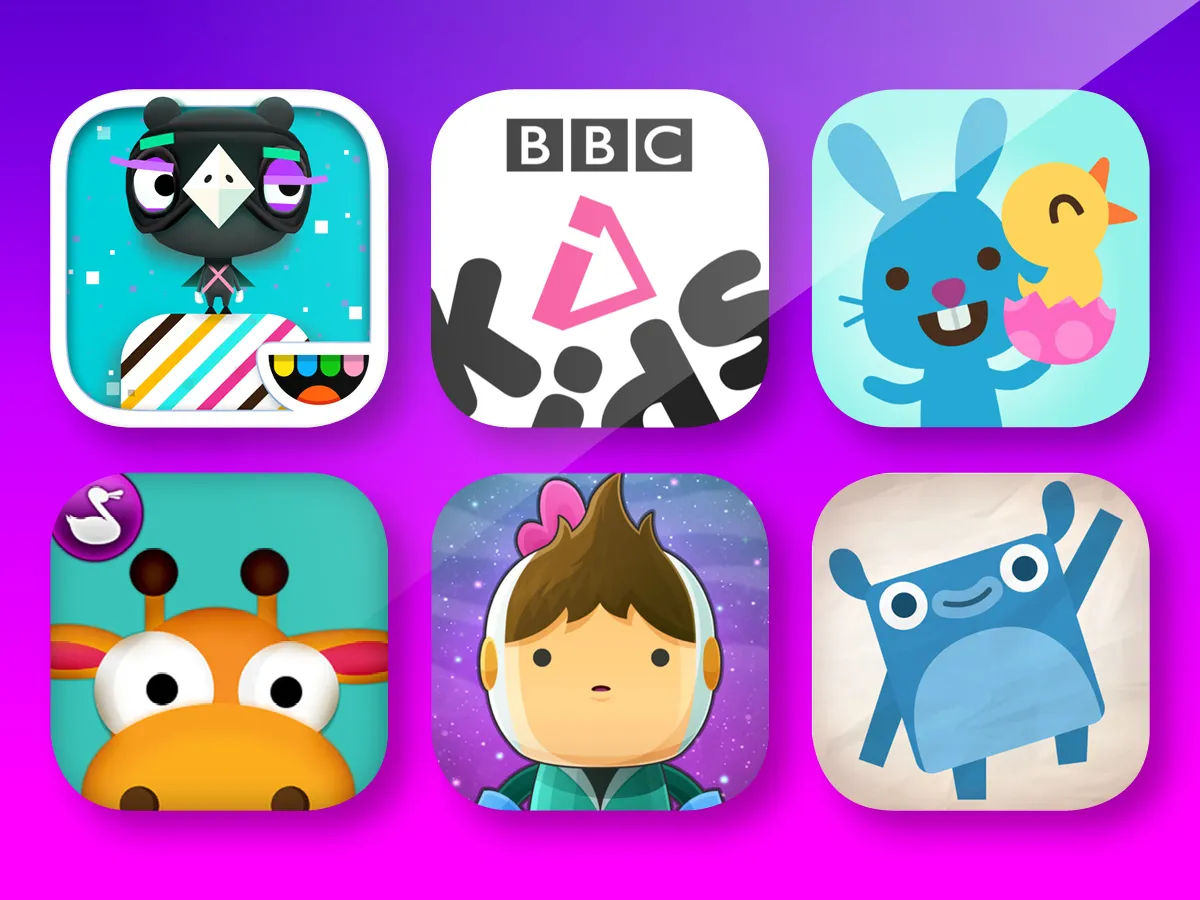
Every parent knows the feeling: you hand your toddler a tablet for a few minutes of peace, and then the guilt sets in. Is this good for them? Are they just watching nonsense? What if there were apps that actually taught something? The good news is that the best apps for toddlers today are nothing like the passive screen time experts warn about.
They’re interactive, age-appropriate, and genuinely designed to build early skills in reading, math, music, and social-emotional development. Whether you’re looking for something free to try tonight or a premium app worth the subscription, this list covers 19 of the best toddler apps across every category your little one might love — vetted for safety, engagement, and real learning value.
1. Khan Academy Kids
If you’re only going to download one app for your toddler, Khan Academy Kids deserves serious consideration. This completely free app covers reading, writing, math, social-emotional learning, and creative activities for children ages 2 through 8. It uses a cast of lovable animal characters to guide kids through thousands of interactive exercises, books, and videos.
The curriculum is built in partnership with learning scientists, and the app is entirely ad-free with no in-app purchases. For parents who want structured, curriculum-aligned learning without spending a dime, this is the gold standard. You can find it on both iOS and Android, and it adapts to your child’s level as they progress, making it one of the most genuinely personalized educational apps for toddlers available today.
Pro Tip: Set up a child profile in Khan Academy Kids so the app can track your toddler’s progress and automatically adjust difficulty — this keeps them challenged without frustration.
2. Lingokids
Lingokids takes a playful approach to early English learning, making it an excellent pick for both native English speakers building foundational literacy and bilingual families introducing English as a second language. The app is designed for children ages 2 to 8 and covers letters, numbers, colors, shapes, and vocabulary through songs, games, and interactive activities.
The free version gives you a solid taste of the content, while the premium subscription unlocks the full library of over 1,500 activities. What sets Lingokids apart is its “Playlearning” methodology, which is grounded in research showing that children absorb language most effectively through play.
Characters like Cooper the Duck and Cowy the Cow keep toddlers engaged across sessions, and parents get a companion app to monitor progress. It’s one of the most polished interactive apps for young children in its category.
3. Endless Alphabet
Endless Alphabet is a vocabulary-building app that manages to be genuinely funny while teaching toddlers words they’ll actually remember. Each word is introduced through a short, silly animation featuring googly-eyed monsters, and then your child drags the letters into place to spell it out — each letter making its phonetic sound as it’s placed. The app covers hundreds of vocabulary words, from simple ones like “celebrate” to surprisingly advanced terms that build a rich word bank early.
There are no timers, no scores, and no pressure — just exploration at your toddler’s pace. It’s a paid app with no subscription required, making it a one-time purchase that delivers lasting value. Parents consistently praise it for holding even the shortest attention spans, and it pairs beautifully with the next app on this list.
Key Insight: Endless Alphabet focuses on vocabulary rather than basic phonics, which means it complements letter-sound apps rather than replacing them. Use it alongside a phonics-focused app for a more complete early literacy experience.
4. Endless Numbers
From the same developers as Endless Alphabet, Endless Numbers applies the same monster-driven, pressure-free approach to early math concepts. Toddlers drag numbers into place, watch silly animations that illustrate what each number means, and build number sense through repetition and play.
The app covers numbers 1 through 100 and introduces concepts like counting, addition, and number patterns in a way that feels like entertainment rather than instruction. Like its alphabet counterpart, it’s a one-time paid purchase with no ads or in-app purchases.
If your child already loves Endless Alphabet, downloading Endless Numbers is an easy decision — the familiar characters and interaction style make the transition seamless. Together, these two apps form one of the strongest pairs of toddler apps for iPad and iPhone users will find in the App Store.
5. Starfall ABCs
Starfall ABCs has been a trusted name in early literacy for over two decades, and its app version brings that same phonics-first approach to mobile devices. The app walks toddlers through the alphabet letter by letter, using songs, animations, and interactive activities to connect each letter with its sound.
It’s particularly strong for children who are just beginning to recognize letters and need lots of repetition in a low-pressure environment. The free version covers the core alphabet content, while a subscription unlocks additional reading activities.
What makes Starfall stand out is its methodical, research-backed approach — it doesn’t rush children through content but instead builds genuine phonemic awareness at a developmentally appropriate pace. For parents focused specifically on early reading readiness, this is one of the most reliable free toddler apps available.
6. Fish School
Fish School by Duck Duck Moose is a bright, beautifully animated app that teaches letters, numbers, shapes, colors, and matching skills through an underwater world of swimming fish.
Toddlers tap and interact with schools of fish that form letters and numbers, and the whole experience feels more like watching a nature documentary come to life than sitting through a lesson. It’s designed for children ages 2 to 6 and is available as a one-time paid purchase.
The app has won multiple awards for educational design, and it’s easy to see why — the visual quality is exceptional, and the learning concepts are woven into the animations so naturally that toddlers absorb them without realizing they’re being taught. It’s a particularly strong pick for visual learners and children who respond well to color and movement.
Pro Tip: Fish School works especially well on tablets where the larger screen lets toddlers fully appreciate the animations. If you’re choosing between phone and tablet for toddler apps, tablet wins for visually rich apps like this one.
7. ElePant
ElePant is a newer entry in the toddler app space, but it’s quickly earned a reputation for thoughtful design and genuine developmental value. The app focuses on creativity and fine motor skill development, guiding toddlers through drawing, coloring, and simple creative activities centered around an adorable elephant character.
What makes ElePant worth your attention is its emphasis on process over product — toddlers are encouraged to explore and create freely rather than complete tasks correctly. This approach aligns with early childhood education research showing that open-ended creative play builds problem-solving skills and emotional resilience.
The app is available on iOS and is designed with a clean, distraction-free interface that keeps toddlers focused on the creative activity rather than chasing notifications or rewards.
8. Peekaboo Barn
Peekaboo Barn is one of the classic toddler apps, and it remains one of the best introductory apps for the very youngest users — children as young as 12 to 18 months.
The concept is beautifully simple: a barn door opens, an animal peeks out, and your toddler hears the animal’s name and sound. Tapping the screen advances the game, which makes it one of the first apps many toddlers can operate independently. It teaches animal names and sounds, builds cause-and-effect understanding, and introduces the concept of interactive play with a screen.
It’s a paid app, but the price is minimal for what is genuinely one of the most age-appropriate digital experiences available for babies and very young toddlers. The art style is warm and friendly, and the pacing is perfectly matched to how young children process new information.
9. Peek-a-Zoo
From the same developers as Peekaboo Barn, Peek-a-Zoo expands the concept into a more interactive experience for slightly older toddlers. Instead of just naming animals, Peek-a-Zoo asks children to identify animals by their emotions — “Find the happy animal!” — which introduces early social-emotional vocabulary in a playful way.
This emotional literacy component makes it genuinely distinctive in a crowded market of animal-identification apps. Children learn to recognize and name feelings like happy, sleepy, surprised, and silly, which are foundational concepts for empathy and self-regulation.
It’s a paid app that pairs naturally with Peekaboo Barn, and together they create a progression that takes children from basic animal recognition through to emotional vocabulary — a surprisingly rich learning arc for two simple-looking apps.
Key Insight: Emotional literacy — the ability to name and recognize feelings — is one of the strongest predictors of social success in early childhood. Apps like Peek-a-Zoo that build this vocabulary early give toddlers a genuine developmental advantage.
10. PBS Kids
The PBS Kids app is one of the best free toddler apps available, full stop. It brings together content from beloved shows like Daniel Tiger’s Neighborhood, Curious George, Wild Kratts, and Sesame Street in a single ad-free, safe environment. Beyond video content, the app includes interactive games tied to each show’s characters and themes, covering everything from math and literacy to science and social-emotional learning.
Because PBS Kids content is developed with educational advisors and grounded in child development research, you can feel confident that what your toddler is watching and playing actually supports their growth.
The app is completely free, requires no subscription, and is available on iOS, Android, and most smart TV platforms. For parents looking for safe apps for toddlers that require zero financial commitment, PBS Kids is the obvious starting point.
11. TinyBee
TinyBee is a subscription-based app designed specifically for children ages 1 to 5, with a strong emphasis on Montessori-inspired learning principles. The app offers over 100 activities covering fine motor skills, cognitive development, sensory exploration, and early academics — all presented through a calm, unhurried interface that feels noticeably different from the flashy, overstimulating design of many toddler apps.
Activities include pouring, sorting, matching, and tracing, mirroring the hands-on work children do in Montessori classrooms. For parents who follow or are curious about Montessori methods, TinyBee offers a rare digital experience that actually aligns with those principles rather than contradicting them. The subscription cost is reasonable, and the depth of content justifies it for families who use the app regularly.
Pro Tip: TinyBee works best as a complement to hands-on Montessori activities rather than a replacement. Use it during transitions or travel when physical materials aren’t available, and keep the physical play as the primary experience at home.
12. Sago Mini World
Sago Mini World is a subscription app that bundles together a large collection of Sago Mini games — a beloved series known for its gentle, open-ended play experiences designed for toddlers ages 2 to 5. Individual Sago Mini apps like Sago Mini Friends, Sago Mini Doodlecast, and Sago Mini Ocean Swimmer have long been praised by parents and early childhood educators for their calm pacing, lack of pressure or scoring, and focus on imagination over achievement.
The World subscription gives you access to the entire library, which makes it significantly better value than buying individual apps. The characters are charming, the interactions are intuitive enough for very young toddlers, and the play experiences encourage creativity and exploration. It’s one of the most parent-trusted names in the toddler app space, and for good reason.
13. Pok Pok
Pok Pok (formerly Pok Pok Playroom) is a subscription app that has earned near-universal praise from parents, educators, and child development experts alike. It offers a collection of open-ended digital toys — a xylophone, a set of blocks, a drawing canvas, a marble run — that behave like real physical toys rather than games with goals or rewards.
There are no instructions, no win states, and no timers. Children simply explore and discover, which is exactly how toddlers learn best. The design philosophy is rooted in the work of developmental psychologists, and it shows.
Pok Pok is one of the rare apps that screen time researchers actually recommend, because it supports the kind of self-directed, intrinsically motivated play that builds executive function and creativity.
It’s available on iOS and is worth every penny of the subscription for families who prioritize quality over quantity in their app choices. For a deeper look at what makes toddler apps worth downloading, this roundup of the best iPhone apps for toddlers covers additional picks across categories.
Key Insight: Pok Pok is designed around “loose parts play” — a concept from early childhood education where open-ended materials lead to richer, more creative play than structured toys. The digital equivalent turns screen time into something that actually mirrors healthy offline play.
14. Piano Pals
Piano Pals introduces toddlers to music through a colorful, animal-themed piano interface that makes playing feel immediately rewarding. The app is designed for children ages 2 and up and focuses on exploration and musical discovery rather than formal instruction.
Toddlers tap on keys to hear notes, follow along with simple songs, and gradually build an intuitive sense of melody and rhythm. The animal characters that correspond to each key give young children a memorable way to connect sounds with visual cues, which supports early auditory processing and memory.
Piano Pals is available as a free download with optional in-app content, making it an accessible entry point for families who want to nurture musical interest without committing to a paid music app right away.
15. Piano Kids
Piano Kids takes the musical exploration concept a step further, offering a more structured early music education experience for toddlers and preschoolers. In addition to a full piano keyboard, the app includes drums, xylophone, and other instruments, along with guided songs and music lessons designed for young beginners.
Children can record their own musical creations, which adds a creative ownership element that keeps them engaged over multiple sessions. The app also includes a music theory section that introduces concepts like notes and rhythm in age-appropriate ways.
It’s available as a paid download with no ongoing subscription, making it a one-time investment for families who want a more comprehensive early music app. Together, Piano Pals and Piano Kids form a natural progression — start with Pals for pure exploration, then move to Kids when your toddler is ready for more structure.
Pro Tip: Sit with your toddler during music apps whenever possible. Singing along, clapping rhythms, and making it a shared activity dramatically increases the developmental benefit and turns screen time into genuine bonding time.
16. Prodigy Math
Prodigy Math is a game-based math platform that wraps curriculum-aligned math practice inside an adventure role-playing game. While it’s best known as a tool for school-age children, the foundational levels are accessible to advanced preschoolers and toddlers who are already showing strong number sense.
Children create a wizard character and battle monsters by answering math questions, which makes the practice feel like play rather than work. The free version is genuinely useful, covering a wide range of math skills, while a premium membership unlocks additional game content.
Prodigy is used by millions of children and is aligned to curriculum standards across multiple countries, giving parents confidence that the math practice is meaningful. For families also interested in tracking broader health and development metrics, health apps for Android can complement the educational tools you’re already using.
17. Todo Math
Todo Math is purpose-built for early math learners, covering counting, number recognition, addition, subtraction, and early measurement for children ages 2 to 8. The app offers a free version with core content and a subscription that unlocks the full curriculum, which spans kindergarten through second-grade math concepts.
What makes Todo Math particularly strong is its daily mission structure — each day, children complete a short set of activities that review previous concepts while introducing new ones, building a consistent practice habit without overwhelming young learners.
The interface is clean and friendly, the characters are engaging without being distracting, and the difficulty adjusts based on your child’s performance. For parents who want a math-focused app that grows with their toddler through the early elementary years, Todo Math offers one of the most complete progressions available.
Common Mistake: Many parents download math apps expecting instant results. Early math apps like Todo Math work best when used consistently for short sessions — 10 to 15 minutes daily — rather than long, infrequent sessions. Consistency matters far more than duration at this age.
18. Baby Flash Cards for Toddlers
Baby Flash Cards for Toddlers does exactly what the name suggests, but it does it with enough polish and variety to stay engaging far longer than a simple flashcard app might suggest. The app covers animals, vehicles, food, colors, shapes, and everyday objects through bright, clear images paired with spoken words and sounds.
For very young toddlers who are in the early stages of vocabulary acquisition, the repetition and visual clarity of flashcard-style learning is genuinely effective — and this app delivers it in a format that holds attention.
It’s available as a free download with optional premium content, making it one of the most accessible free toddler apps for families just beginning to explore educational apps. The simplicity is a feature, not a limitation — for toddlers under two, a clean, distraction-free interface is exactly what supports focused learning.
19. Bubbles
Bubbles rounds out this list as one of the most delightfully simple — and surprisingly effective — apps for very young toddlers. The app displays colorful bubbles on the screen that pop when tapped, producing satisfying sounds and visual effects. That’s it. And for children between 12 and 24 months, that simplicity is precisely the point.
Bubbles builds cause-and-effect understanding, develops fine motor control through tapping and swiping, and introduces early color recognition — all through an interaction so intuitive that even the youngest toddlers can engage with it independently.
It’s typically available as a free or very low-cost download, making it a zero-risk starting point for parents who are just beginning to explore screen time with their youngest children. Think of it as a digital stepping stone — the first app that teaches toddlers how to interact with a touchscreen before they’re ready for anything more structured.
Key Insight: The best first app for a toddler isn’t necessarily the most educational one — it’s the one that teaches them how to use a touchscreen confidently. Simple apps like Bubbles build the interaction skills that make every other app on this list more effective.
How to Choose the Right Apps for Your Toddler
With so many options available, narrowing down which apps actually belong on your toddler’s device comes down to a few key questions. First, consider your child’s age and developmental stage — apps designed for 2-year-olds look and function very differently from those built for 4-year-olds, and using age-appropriate tools makes a significant difference in engagement and learning outcomes.
Second, look for apps that are interactive rather than passive. The research on screen time consistently shows that active engagement — tapping, dragging, responding, creating — produces far better developmental outcomes than passive watching.
Third, check for ads and in-app purchases. The best toddler apps are either completely free with no monetization, or they’re upfront paid apps or subscriptions with no hidden costs. Unexpected ads or purchase prompts during a toddler’s session are both disruptive and inappropriate for this age group.
It’s also worth thinking about the balance of app types across your toddler’s device. A healthy app diet might include one literacy app, one math or numbers app, one creative or music app, and one open-ended play app — rather than loading up on five versions of the same alphabet game. Variety across developmental domains gives toddlers a richer learning experience and keeps engagement high over time.
If you’re building out a device specifically for your toddler, this guide to the best Android apps for toddlers and the companion iPhone toddler app guide can help you build a well-rounded collection tailored to your device of choice.
| App | Best Age Range | Focus Area | Cost | Platform |
|---|---|---|---|---|
| Khan Academy Kids | 2–8 years | Literacy, Math, SEL | Free | iOS, Android |
| Lingokids | 2–8 years | English Language | Free / Premium | iOS, Android |
| Endless Alphabet | 2–6 years | Vocabulary | Paid | iOS, Android |
| Endless Numbers | 2–6 years | Early Math | Paid | iOS, Android |
| Starfall ABCs | 2–5 years | Phonics, Literacy | Free / Premium | iOS, Android |
| Fish School | 2–6 years | Letters, Numbers, Shapes | Paid | iOS, Android |
| ElePant | 2–5 years | Creativity, Fine Motor | Paid | iOS |
| Peekaboo Barn | 1–3 years | Animals, Cause & Effect | Paid | iOS, Android |
| Peek-a-Zoo | 2–4 years | Emotional Literacy | Paid | iOS, Android |
| PBS Kids | 2–8 years | Multi-subject | Free | iOS, Android, Smart TV |
| TinyBee | 1–5 years | Montessori, Fine Motor | Subscription | iOS, Android |
| Sago Mini World | 2–5 years | Imagination, Play | Subscription | iOS, Android |
| Pok Pok | 2–6 years | Open-ended Play | Subscription | iOS |
| Piano Pals | 2–5 years | Music Exploration | Free / In-app | iOS, Android |
| Piano Kids | 2–6 years | Music Education | Paid | iOS, Android |
| Prodigy Math | 4–8 years | Math | Free / Premium | iOS, Android |
| Todo Math | 2–8 years | Early Math | Free / Subscription | iOS, Android |
| Baby Flash Cards | 1–3 years | Vocabulary, Objects | Free / Premium | iOS, Android |
| Bubbles | 1–2 years | Fine Motor, Cause & Effect | Free | iOS, Android |
Making Screen Time Work for Your Family
The American Academy of Pediatrics recommends limiting screen time for children ages 2 to 5 to one hour per day of high-quality programming, and the apps on this list are exactly the kind of high-quality content that makes that hour count. But the research also shows that how you use apps with your toddler matters as much as which apps you choose.
Co-viewing and co-playing — sitting with your child, asking questions, and talking about what they’re seeing — significantly boosts the learning transfer from screen to real life. A toddler who learns the word “enormous” from Endless Alphabet and then hears you use it at the dinner table is far more likely to retain and use that word than one who encounters it only on a screen.
Setting consistent limits also helps toddlers develop a healthy relationship with devices from the start. Using built-in parental controls on your device, scheduling app time as part of a predictable daily routine, and always transitioning off screens with a warning rather than an abrupt end all reduce the meltdowns that often accompany screen time transitions.
The goal isn’t to eliminate screens — it’s to make them one purposeful tool among many in your toddler’s day. When the apps are this good, that’s a goal that’s genuinely within reach. For parents exploring the broader world of family-friendly technology, you might also find value in resources like mental health apps for Android as you navigate the emotional demands of parenting toddlers.
Important Note: Screen time guidelines from pediatric organizations are meant to be helpful frameworks, not sources of parental guilt. A toddler who spends 90 minutes on a high-quality educational app on a busy day is doing fine. What matters most is the overall pattern of your child’s day — outdoor play, reading, conversation, and hands-on exploration should anchor the day, with apps playing a supporting role.
The 19 apps on this list represent some of the best that the toddler app market has to offer — from completely free options like Khan Academy Kids and PBS Kids to premium picks like Pok Pok and Sago Mini World that are worth every penny of their subscription cost. Whatever your budget, your toddler’s interests, or your parenting philosophy, there’s something here that will turn the next screen time session into something you both feel good about.