
Wisconsin road trips reward you in ways that few other states can match. From the moment you cross the state line, you have access to some of the most varied terrain in the Midwest — glacial bluffs, ancient sea caves, lakeshore cliffs, waterfall-fed gorges, and city neighborhoods packed with museums, breweries, and architectural icons.
Whether you’re mapping a long weekend loop around Madison, chasing waterfalls in the north woods, or planning a full summer circuit from Milwaukee to the Apostle Islands, tourist attractions in Wisconsin fill every mile with something worth stopping for.
According to World Atlas, roughly 113 million tourists visit Wisconsin every year, contributing an estimated $25 billion to the state’s economy. That’s not a fluke — it’s the result of an extraordinary mix of natural beauty, cultural heritage, and outright fun.
This guide walks you through 40 of the best stops on the road, organized from south to north so you can build a logical route, or cherry-pick the destinations that match your travel style.
1. Wisconsin Dells
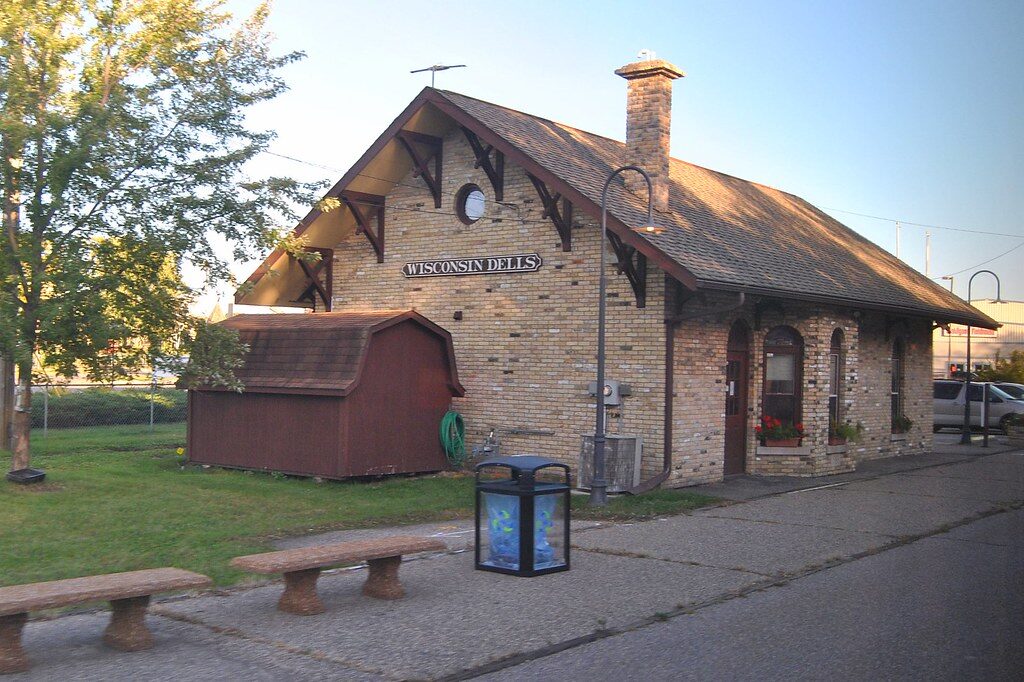
No road trip through the state starts without at least a glance at Wisconsin Dells. Known as the Waterpark Capital of the World , the Dells draws roughly 4 million visitors a year and generated over $2 billion in tourism economic impact in 2023, according to the Wisconsin Dells Visitor and Convention Bureau. The parks are the obvious draw — Noah’s Ark, America’s largest outdoor waterpark at 70 acres, and Wilderness Resort, whose combined indoor/outdoor waterpark space spans the equivalent of twelve football fields — but the natural side of the Dells is just as compelling. Narrated boat tours through the Wisconsin River’s sandstone gorges and duckboat rides through the rock formations add a completely different dimension to the trip.
Pro Tip: If you’re visiting with younger kids, Land of Natura offers a chlorine-free, naturally filtered lake with five waterslides flowing down a 90-foot hill — a refreshing alternative to traditional waterpark crowds.
2. Apostle Islands National Lakeshore
Head to Wisconsin’s far northern tip and you’ll find one of the most dramatic National Park units in the Great Lakes region. Apostle Islands National Lakeshore encompasses 21 islands and 12 miles of mainland shoreline on Lake Superior, the largest and coldest of the Great Lakes.
The sea caves carved into the sandstone cliffs are the signature attraction — accessible by kayak in summer and on foot across the frozen lake in winter, when ice formations turn the cave walls into something you’d expect to see on another planet. Nine historic lighthouses dot the islands, and guided lighthouse tours run throughout the summer season via the Apostle Islands Cruise Service.
| Season | Best Activity |
|---|---|
| Summer | Kayaking the sea caves, lighthouse tours |
| Fall | Hiking island trails, foliage viewing |
| Winter | Ice cave walks across frozen Lake Superior |
| Spring | Birdwatching, early paddling season |
3. Door County Peninsula
Door County gives you five state parks, 19 county parks, and a coastline that stretches along both Green Bay and Lake Michigan — all packed into a single peninsula. The combination of cherry orchards, fishing villages, art galleries, and waterfront hiking trails has made it one of the most-visited destinations in the Midwest. Peninsula State Park and Newport State Park (Wisconsin’s only designated Dark Sky Park) bookend the peninsula nicely. In between, the town of Sister Bay and the scenic Niagara Escarpment cliffs give you plenty of reasons to slow down. If you’re traveling in fall, the color along the shoreline roads is outstanding.
Key Insight: Newport State Park earned its Dark Sky designation due to minimal light pollution — pack a blanket and spend an evening stargazing from the shore. Few places in Wisconsin offer a clearer view of the Milky Way.
4. Lambeau Field (Green Bay)
Wisconsin takes its football seriously, and nowhere is that clearer than at Lambeau Field . The home of the Green Bay Packers has been a pilgrimage site for NFL fans since it opened in 1957, and the stadium’s reputation as “the frozen tundra” is well earned. Year-round guided tours take you onto the field itself, through the locker room, and into the Packers Hall of Fame, where decades of memorabilia chronicle 13 world championships. Outside, the Walk of Legends stretches one mile and features 24 steel-engraved statues honoring the players and coaches who built the franchise’s legacy.
5. Harley-Davidson Museum (Milwaukee)
Milwaukee is the birthplace of Harley-Davidson, and the Harley-Davidson Museum spans 130,000 square feet of history, design, and engineering heritage. More than 450 motorcycles are on display, tracing the brand from its 1903 origins to current production models. The museum opened in 2008 and draws both hardcore enthusiasts and curious first-timers equally well. The Motor Bar & Restaurant on site is a good stop for lunch, and the campus sits along the Menomonee River, within easy walking distance of several other Milwaukee landmarks.
6. Milwaukee Art Museum
The Milwaukee Art Museum is as much a work of architecture as it is a home for 30,000 works of art. The Santiago Calatrava-designed Quadracci Pavilion on the Lake Michigan waterfront opens a movable brise soleil that spreads to a 217-foot wingspan each morning — a genuine spectacle worth timing your visit around. Inside, the collection spans ancient to contemporary, with particular strengths in American decorative arts, German Expressionism, and folk art. Admission is free to Wisconsin residents on select days, and the lakeside sculpture garden makes for a natural extension of the visit.
7. Milwaukee Public Museum
The Milwaukee Public Museum is one of the country’s oldest natural history museums, and its recreated environments set it apart from most. Walk-through dioramas of a Costa Rican rainforest, a 19th-century European village, and ancient civilizations have remained crowd favorites for generations. A full-scale model of a Wisconsin cave lets you experience underground geology without leaving the building, and the dinosaur fossil collection — including a mastodon skeleton — gives the museum serious scientific credibility. The Streets of Old Milwaukee exhibit, a life-size recreation of late 1800s city blocks, is particularly popular with families.
8. Summerfest Grounds (Milwaukee)
Henry Maier Festival Park, better known as the Summerfest Grounds, holds the title of the world’s largest music festival site. Each June and July, Summerfest transforms the 75-acre lakefront park into an 11-stage concert destination drawing hundreds of thousands of fans over multiple weekends. Outside of Summerfest season, the grounds host ethnic festivals, Polish Fest, Irish Fest, and a packed calendar of events that fills the Milwaukee summer calendar from Memorial Day through Labor Day. Even if you’re not catching a major show, a walk along the lakefront promenade here offers excellent views of Lake Michigan.
9. Cave of the Mounds
Discovered in 1939 during a blasting operation at a limestone quarry, Cave of the Mounds has earned the nickname “Jewel Box of Wisconsin” for its colorful, intricate formations. A constant underground temperature of 50 degrees makes it a cool refuge on hot summer days, and the cave’s paved, lighted walkways make it accessible for visitors of all ages and mobility levels. Above ground, the property includes a butterfly garden, gemstone mining sluice, fossil dig, and hiking trails. It’s a National Natural Landmark, and its proximity to both Taliesin and the House on the Rock makes it an easy addition to a Driftless Region day trip.
10. House on the Rock
Built atop a 60-foot chimney of rock near Spring Green, the House on the Rock is one of Wisconsin’s most genuinely strange and unforgettable attractions. Alex Jordan Jr. began construction in 1945, and what started as a personal retreat evolved into a 14-building complex packed with the world’s largest carousel (with 269 animals, none of them horses), a 200-foot-long Infinity Room cantilevered over the treetops, automated orchestras, and room after room of antiques and oddities. Budget at least three hours — the sheer volume of collections is overwhelming in the best possible way.
Common Mistake: Many visitors only book tickets for the first section and run out of time before reaching the Infinity Room. Purchase the full tour admission to make sure you see the whole property.
11. Taliesin (Frank Lloyd Wright home)
A few miles from the House on the Rock, Taliesin offers a completely different kind of awe. This was Frank Lloyd Wright’s primary home, studio, and school in the hills of Wisconsin’s Driftless Region — a living architectural laboratory where he spent decades refining his organic architecture principles. Designated a National Historic Landmark and UNESCO World Heritage Site, the estate contains multiple Wright-designed structures set into the hillside above the Wisconsin River valley. Several tour formats are available, from a one-hour estate overview to a four-hour behind-the-scenes experience. The surrounding landscape of ridges, prairies, and river views is extraordinary in every season.
12. Devil’s Lake State Park
Wisconsin’s largest and most visited state park covers 9,217 acres of the ancient Baraboo Range, where 1.6-billion-year-old quartzite bluffs rise 500 feet above a crystal-clear, 360-acre lake. The park receives over three million visitors annually, drawn by nearly 30 miles of hiking trails, two swimming beaches, rock climbing, kayaking, and camping at 407 sites across three campgrounds. Iconic rock formations like Devil’s Doorway and Balanced Rock line the bluff trails, and the park contains Native American effigy mounds in bear, lynx, and bird shapes. In winter, cross-country skiing, snowshoeing, and a popular sledding hill keep the park busy year-round.
13. Parfrey’s Glen State Natural Area
Managed by Devil’s Lake State Park, Parfrey’s Glen holds the distinction of being Wisconsin’s first designated State Natural Area. The trail leads through a narrow sandstone gorge where moss-covered walls close in overhead and a creek cuts through the canyon floor. The hike is roughly two miles round-trip and relatively easy, making it accessible for most visitors. The canyon microclimate supports rare plant species that wouldn’t survive in the surrounding uplands. Visit on a weekday morning in early fall for the best combination of color, solitude, and photography conditions.
14. Amnicon Falls State Park
In Douglas County near Superior, Amnicon Falls State Park packages an outsized amount of beauty into a compact footprint. The Amnicon River drops through three major waterfalls — Upper Falls, Lower Falls, and Snake Pit Falls — within a short walking distance, all connected by a covered wooden bridge dating to 1932. The park’s geology is volcanic, with ancient lava flows forming the riverbed. Swimming is popular below the falls during summer, and the campground is small enough to feel peaceful even on busy weekends.
15. Pattison State Park
Pattison State Park , also in Douglas County, is home to Big Manitou Falls — Wisconsin’s tallest waterfall at 165 feet, and the fourth-tallest waterfall east of the Rocky Mountains. The falls are impressive year-round, but the spring runoff period turns them into a thundering curtain of water. Little Manitou Falls, a short walk away, offers a more intimate view. Swimming, camping, and miles of hiking trails round out the park’s offerings, and the proximity to Amnicon Falls makes pairing the two an obvious choice for a northern Wisconsin waterfall road trip.
16. Circus World Museum (Baraboo)
Baraboo was the winter home of the Ringling Brothers Circus for nearly three decades, and the Circus World Museum preserves that legacy on the original grounds along the Baraboo River. The collection of over 200 historic circus wagons is the largest in the world, and the museum operates daily circus performances during the summer season with live animals, aerialists, and clowns. The adjacent CWA Big Top is the same size as a working circus tent. Outside of peak season, the museum’s exhibits and wagon restoration shop are still worth a stop, particularly for families traveling with children who may not have ever seen a traditional circus performance.
17. Wisconsin State Capitol (Madison)
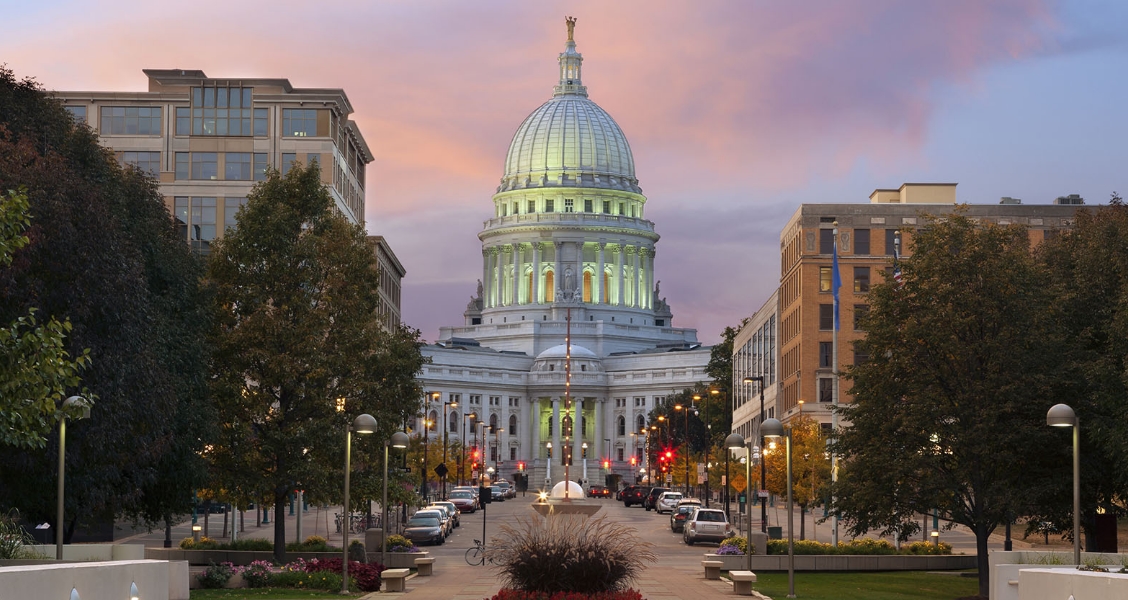
Madison’s skyline is anchored by the Wisconsin State Capitol, whose dome rises 187 feet — tall enough to be visible from miles away, and protected by state law from being overshadowed by new construction. The building is a Beaux-Arts masterpiece completed in 1917, built entirely from granite, marble, and limestone sourced from around the world. Free guided tours run throughout the week, taking visitors through the legislative chambers, governor’s conference room, and up to an observation deck with panoramic views of Lake Mendota, Lake Monona, and the UW-Madison campus. Saturday mornings from late spring through fall, the adjacent Capitol Square hosts what many consider the largest producer-only farmers market in the United States.
Pro Tip: Time your Capitol visit for Saturday morning, then walk directly to the Dane County Farmers’ Market on the surrounding square — it’s one of the best food experiences in Wisconsin, full stop.
18. Olbrich Botanical Gardens (Madison)
On Madison’s east side, Olbrich Botanical Gardens spreads across 16 acres of outdoor gardens and a glass-enclosed Thai Pavilion that is one of only a handful of its kind outside of Thailand. The outdoor gardens are free year-round and transition beautifully through every season, from tulip season in spring to the rose garden and pollinator-filled prairie in summer. The tropical conservatory is a particular draw in winter, when Madison’s cold makes a humid, flowering greenhouse feel like a destination in itself.
19. Henry Vilas Zoo (Madison)
Henry Vilas Zoo is free — always has been, always will be, thanks to a clause in the original 1904 donation to the city of Madison. That alone makes it worth visiting, but the zoo’s resident population of polar bears, primates, big cats, and South American birds adds genuine substance to the no-cost entry. The zoo sits along the shore of Lake Wingra, and the surrounding park makes for a pleasant walk before or after your visit. It’s one of the few remaining free municipal zoos in the United States, and the compact layout means you can see everything in two to three hours without feeling rushed.
20. Lake Mendota
Lake Mendota is the largest of Madison’s four interconnected lakes and forms the northern boundary of the UW-Madison campus. The Memorial Union Terrace, operated by the university and open to the public, sits directly on the water and has been one of Wisconsin’s most beloved gathering spots since 1928. Rent a canoe, sailboat, or kayak from the pier, catch a free outdoor concert on summer evenings, or simply sit with a drink and watch the sunset over the water. The lake is also surrounded by miles of public trails that connect to Madison’s broader bike path network.
21. Lake Geneva
An hour south of Milwaukee, Lake Geneva has drawn Chicago and Milwaukee visitors to its shores since the 1870s, when wealthy industrialists built grand summer estates along the bluffs. The 21-mile Geneva Lake Shore Path runs around the entire lake and passes the historic mansions up close — a unique walking experience that you won’t find at most Midwestern lakes. Downtown Lake Geneva offers excellent dining, boutique shopping, and easy access to boat tours and kayak rentals. The Yerkes Observatory in nearby Williams Bay adds a scientific footnote to the trip for those interested in astronomy.
22. Pictured Rocks (Lake Superior shoreline)
While Wisconsin’s Pictured Rocks are distinct from Michigan’s Pictured Rocks National Lakeshore, the Lake Superior shoreline in Bayfield County offers similarly dramatic sandstone cliffs stained with mineral streaks of orange, red, and brown. The best access is by kayak from the town of Cornucopia or via boat tour departing from Bayfield. The cliffs are most vivid on overcast days when the contrast between stone and water is heightened. Pair this stop with the Apostle Islands for a complete Lake Superior experience.
23. Madeline Island
The only one of the 22 Apostle Islands accessible by regular ferry service, Madeline Island is also the largest, covering 14,000 acres. The town of La Pointe — the oldest European settlement in Wisconsin, with roots dating to the 1600s — has a small-town feel that draws artists, kayakers, and history buffs. Big Bay State Park on the island’s northern end has one of the finest sand beaches on Lake Superior, and the Madeline Island Museum tells the story of the island’s Ojibwe heritage and fur trade history. In winter, when the lake freezes, an ice road connects the island to the mainland, adding an element of adventure to the visit.
24. Chequamegon-Nicolet National Forest
The Chequamegon-Nicolet National Forest spreads across 1.5 million acres of northern Wisconsin — the largest national forest in the eastern United States. It contains 411 lakes, over 1,200 miles of rivers and streams, and hundreds of miles of trails for hiking, mountain biking, snowmobiling, and cross-country skiing. The North Country National Scenic Trail passes through the forest, and the Porcupine Lake Wilderness is one of the few federally designated wilderness areas in the state. The forest anchors a stretch of northwoods Wisconsin that feels genuinely remote, particularly in the shoulder seasons.
25. Ice Age National Scenic Trail
Wisconsin is the only state in the country with a National Scenic Trail dedicated entirely to its own geological history. The Ice Age Trail follows the terminal moraine of the last glacial advance — the physical edge of where glaciers stopped 10,000 to 15,000 years ago — for 1,200 miles across the state. Segments pass through dozens of state parks and natural areas, making it easy to access short day hikes or string together multi-day backpacking trips. The trail passes through Devil’s Lake State Park, Kettle Moraine State Forest, Horicon Marsh, and dozens of other Wisconsin landmarks covered in this guide.
Key Insight: You don’t need to hike the entire trail to appreciate it. The Ice Age Trail Alliance publishes a free atlas that breaks the route into manageable segments by county, making it easy to find a section near your road trip route.
26. Potawatomi State Park
At the base of Door County’s peninsula on the Green Bay side, Potawatomi State Park offers bluff-top views of Sturgeon Bay that are among the finest water views in the state park system. The park’s observation tower adds additional elevation to the already impressive ridge, and the 9 miles of hiking trails wind through forests and along the shoreline. It’s a quieter entry point to Door County than the more famous Peninsula State Park, and the proximity to Sturgeon Bay’s maritime museums and restaurants makes it a natural launching pad for the peninsula.
27. Peninsula State Park
Peninsula State Park covers 3,776 acres on the Green Bay side of Door County and is one of Wisconsin’s most-visited state parks. The Eagle Tower observation deck delivers views across the bay toward Michigan, and the park’s combination of bluff trails, shoreline paths, and forest roads gives hikers and cyclists something for every preference. A historic lighthouse, nature center, golf course, and amphitheater with a summer outdoor theater season round out the offerings. Sunset at Eagle Bluff over the bay is one of Door County’s most photographed moments.
28. Newport State Park
Wisconsin’s only designated wilderness state park sits at the northern tip of Door County and shares the peninsula’s best attribute — Lake Michigan shoreline — without the crowds. Newport’s trails wind through old-growth northern forests to quiet cobblestone beaches. Because it’s a wilderness park, mountain biking and camping are available but developed amenities are minimal, which is precisely the appeal. The Dark Sky designation means stars visible here on a clear night rival what you’d see in remote national parks. Backpack-in campsites require advance reservations and are worth booking weeks ahead.
29. Green Bay Botanical Garden
Just minutes from Lambeau Field, the Green Bay Botanical Garden offers 47 acres of themed gardens that peak in different seasons — the Children’s Garden and rose garden in summer, the scarecrow festival in fall, and a massive holiday lights display from November through January. The garden’s horticultural programming and seasonal events make it worth a return visit in multiple seasons, and the café on-site is a solid option for lunch.
30. National Railroad Museum (Green Bay)
The National Railroad Museum in Green Bay holds one of the most significant railroad collections in North America, including General Dwight D. Eisenhower’s personal World War II command train and Union Pacific’s Big Boy, one of the largest steam locomotives ever built. The outdoor collection spans acres of track, and seasonal train rides give visitors a chance to experience operating railroad equipment firsthand. The museum is particularly popular with families traveling with kids, but the Eisenhower train display alone warrants a stop for any history enthusiast.
31. EAA AirVenture Museum (Oshkosh)
Oshkosh hosts what is widely recognized as the world’s largest airshow each summer — EAA AirVenture draws over 600,000 aviation enthusiasts and pilots to Wittman Regional Airport for a week each July. Year-round, the EAA Aviation Museum on the grounds houses over 200 aircraft spanning from early biplanes to warbirds to experimental homebuilt designs. Cockpit access, flight simulators, and hands-on exhibits make this one of the more interactive aviation museums in the country. If you can schedule your road trip to coincide with AirVenture, the airshow performances and camping atmosphere on the grounds create an experience unlike anything else in Wisconsin.
32. Kettle Moraine State Forest
The Kettle Moraine State Forest stretches across two separate units in eastern Wisconsin and traces the glacial landscape the Ice Age Trail follows — kettles (depressions left by buried ice blocks), moraines (ridges of glacial debris), and eskers (sinuous gravel ridges). The Southern Unit near Eagle draws mountain bikers to its extensive trail network and hikers to the Nordic and Scuppernong trail systems. The Northern Unit around Dundee and Fond du Lac adds backcountry camping and excellent fall foliage to the mix. Together, the two units offer over 100 miles of trails for nearly every non-motorized outdoor pursuit.
33. Horicon Marsh
Horicon Marsh is the largest freshwater cattail marsh in the United States, covering 32,000 acres in Dodge County. In fall, it hosts one of the most impressive wildlife spectacles in the Midwest, when hundreds of thousands of Canada geese and ducks stage here during migration. The marsh is home to nesting redhead ducks, American white pelicans, northern harriers, and red-tailed and rough-legged hawks. Canoe and kayak launches provide access to the interior of the marsh, and the Horicon Marsh Education and Visitor Center on the National Wildlife Refuge side offers interpretive programs throughout the year.
34. Old World Wisconsin (Eagle)
Old World Wisconsin , operated by the Wisconsin Historical Society near the town of Eagle, is a 600-acre living history museum that recreates the 19th-century immigrant communities that shaped the state. Costumed interpreters work heritage breeds of livestock, tend period gardens, and demonstrate the trades and domestic skills of Norwegian, German, Polish, and Finnish settlers. The site’s sheer scale — over 60 historic buildings spread across a working agricultural landscape — sets it apart from most living history museums, and the tram system connecting the different ethnic areas makes navigation manageable.
35. Pabst Mansion (Milwaukee)
The Pabst Mansion in Milwaukee’s Avenues West neighborhood preserves the 1892 Flemish Renaissance home of beer baron Captain Frederick Pabst and his wife Maria. The 37-room mansion has 14 fireplaces, ornate ironwork salvaged from the original Pabst Brewery, and rooms decorated with original family furnishings. Hour-long guided tours walk you through the history of the Pabst brewing empire and the family’s influence on Milwaukee’s Gilded Age development. The mansion’s architecture has been compared to the Biltmore Estate in Asheville, and the attention to period detail throughout the restoration is impressive.
36. Discovery World (Milwaukee)
Discovery World on Milwaukee’s lakefront is a science and technology museum that does a particularly good job of connecting exhibits to the city’s actual industrial and maritime history. The S/V Denis Sullivan, a full-scale recreation of a 19th-century Great Lakes schooner, is docked adjacent to the museum and operates educational sailing programs on Lake Michigan. Inside, interactive exhibits cover freshwater ecology, technology innovation, and entrepreneurship, making it one of the better science museums in the region for older children and teens.
37. Bradford Beach (Milwaukee)
On Lake Michigan’s western shore, Bradford Beach gives Milwaukee a genuine urban beach experience that most Midwestern cities can only envy. The city-maintained beach runs along Lincoln Memorial Drive and draws crowds from late spring through September for swimming, beach volleyball, and the adjacent Beer Garden at Bradford Beach, which operates seasonally. The lakefront path extends north to Atwater Park and south toward Discovery World and the Milwaukee Art Museum, making Bradford Beach the natural anchor for a lakefront walking or biking day.
38. Kohler-Andrae State Park
South of Sheboygan, Kohler-Andrae State Park stretches along two miles of Lake Michigan shoreline backed by a system of sand dunes that make it one of the most scenic lakefront parks in Wisconsin. The Dunes Cordwalk trail winds through the dune ecosystem and is one of the best nature walks in the eastern part of the state. The campground runs right along the shoreline, making it one of the most desirable state park camping reservations in Wisconsin. The adjacent Sheboygan area is also home to the John Michael Kohler Arts Center , a nationally recognized contemporary arts venue worth combining into the same stop.
39. Bay Beach Amusement Park (Green Bay)
Bay Beach is one of the country’s last remaining municipal amusement parks, and its ride tickets have stayed at remarkably low prices for decades — most rides cost between 25 and 50 cents per ticket. The park sits on the Green Bay shoreline and operates from late spring through Labor Day, with classic rides including the Zippin Pippin wooden roller coaster and the historic Scrambler. Bay Beach Wildlife Sanctuary, adjacent to the park, offers free access to native Wisconsin wildlife exhibits and walking trails. The combination of the two makes this a genuinely exceptional value stop for families.
40. Wisconsin Maritime Museum (Manitowoc)
Manitowoc was one of America’s most significant submarine-building cities during World War II, and the Wisconsin Maritime Museum preserves that history alongside a broader story of Great Lakes maritime commerce. The USS Cobia, a restored Balao-class submarine moored at the museum’s dock, is open for self-guided tours through the torpedo rooms, crew quarters, and control room. The interior is tight and authentic, giving visitors a visceral sense of what submarine service actually involved. The museum’s Great Lakes model collections and interactive exhibits on shipbuilding and navigation round out the experience.
41. Planning Your Wisconsin Road Trip
Wisconsin’s 40 stops here span the full length of the state, from Lake Geneva in the south to the Apostle Islands in the north — a driving distance of roughly 400 miles along the most direct route. Most visitors find that thematic loops work better than attempting the full route in one trip:
- Southern Loop: Wisconsin Dells, Baraboo-area parks, Spring Green, Madison, Lake Geneva, Milwaukee
- Door County & Green Bay Loop: Green Bay, Lambeau Field, Door County, Sturgeon Bay, return via Horicon Marsh
- Northern Adventure Loop: Apostle Islands, Madeline Island, Amnicon Falls, Pattison State Park, Chequamegon-Nicolet National Forest
- Culture & Cities Loop: Milwaukee, Oshkosh, Green Bay, Madison
Wisconsin’s state parks system requires a state park sticker for vehicle entry, and a single annual sticker covers all 66 parks and forests — well worth the investment if you plan to visit more than two or three parks on a single trip.
Whatever route you choose, Wisconsin rewards you with a generosity that’s hard to find elsewhere in the Midwest. The landscapes are older than almost anywhere on the continent, the people are as friendly as advertised, and the list of reasons to stop keeps growing with every mile.